Blaze added delivery to a retail POS. DabDash built delivery from the start. Here is what that difference actually costs a delivery-first cannabis operator in time, money, and complexity.
Blaze has built a genuinely impressive stack. Starting from a dispensary POS launched in California in 2016, the company has added delivery dispatch, an e-commerce menu, a website builder, payment processing, and now an AI budtender called Herbie. If you need all of that in one platform, Blaze has an answer for every question.
But here is the question Blaze never quite answers: what if you only need delivery?
Blaze added delivery to a retail POS. DabDash built delivery from scratch. For operators who do not have a storefront, do not want POS hardware, and do not need retail checkout workflows, the difference matters more than any feature checklist suggests.
1. Blaze Started as a Retail POS
Blaze was founded in California in 2016 as a dispensary point-of-sale system. Their product was built around a retail floor: a dispensary counter, iPads or tablets as terminals, receipt printers, barcode scanners, and an inventory system designed for budtenders checking customers in at the door.
Delivery came later. Their dispatch module, their Ice Cream Truck model support, their driver tracking — all of it was layered onto a platform that was already a mature retail POS when those features arrived. That sequence matters because it shapes how the whole system works. Delivery in Blaze is accessed through the same interface as in-store checkout, inventory management, compliance reporting, and payment processing. Those features exist whether you need them or not.
For a dispensary that runs both a storefront and a delivery fleet, that breadth is the point. For a delivery-only operator, that same breadth is overhead — extra screens, extra configuration, extra things to train staff on, and extra cost for capabilities that will never be used.
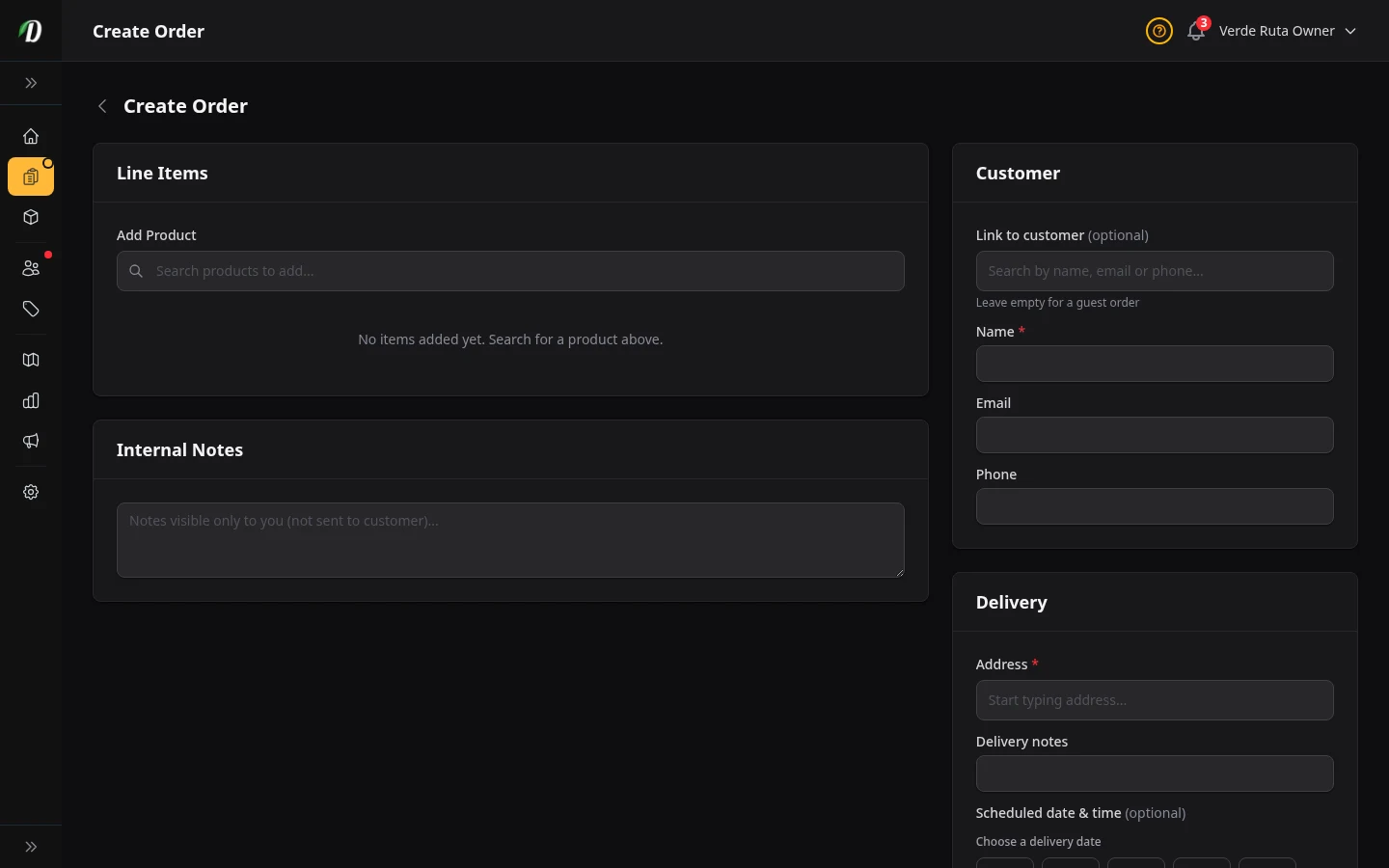
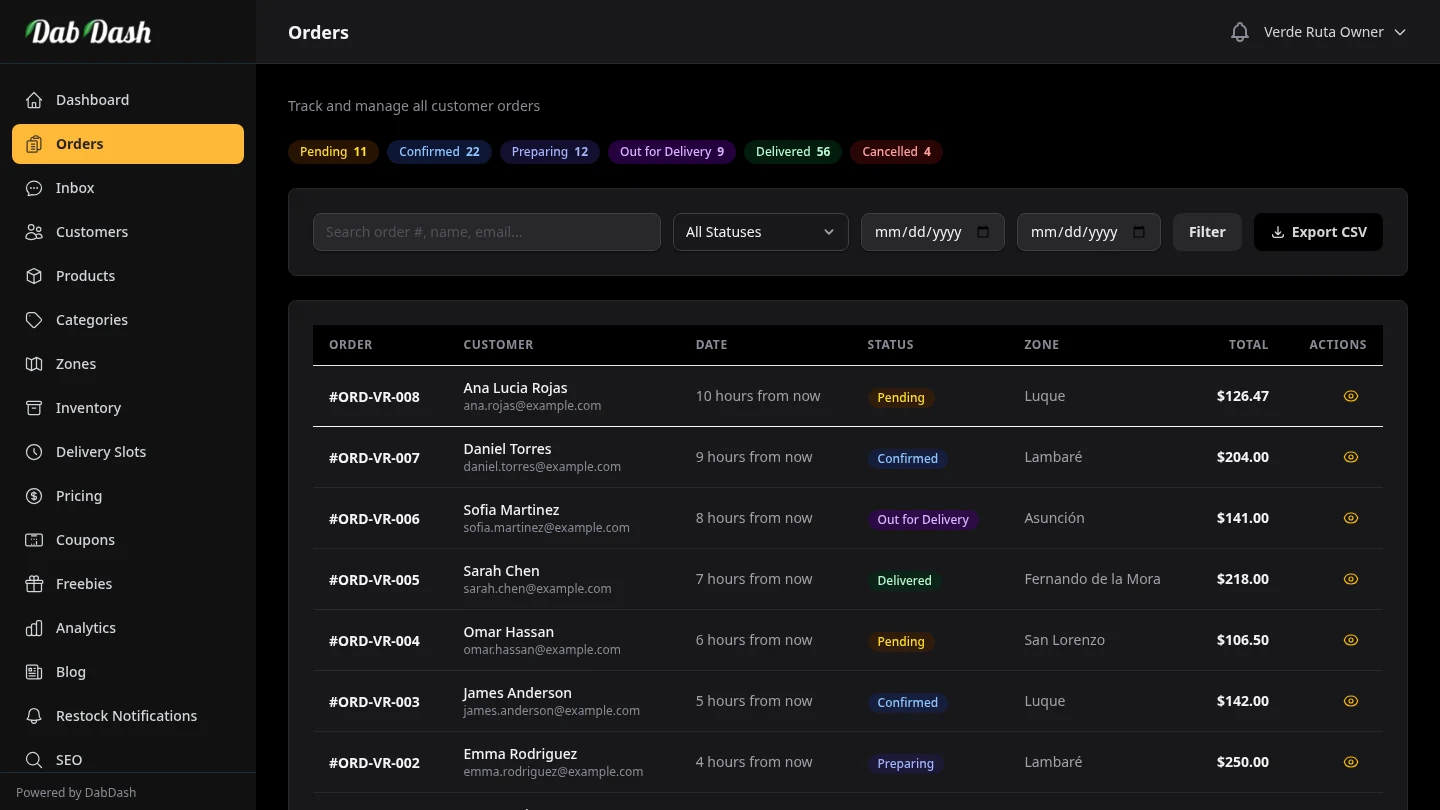
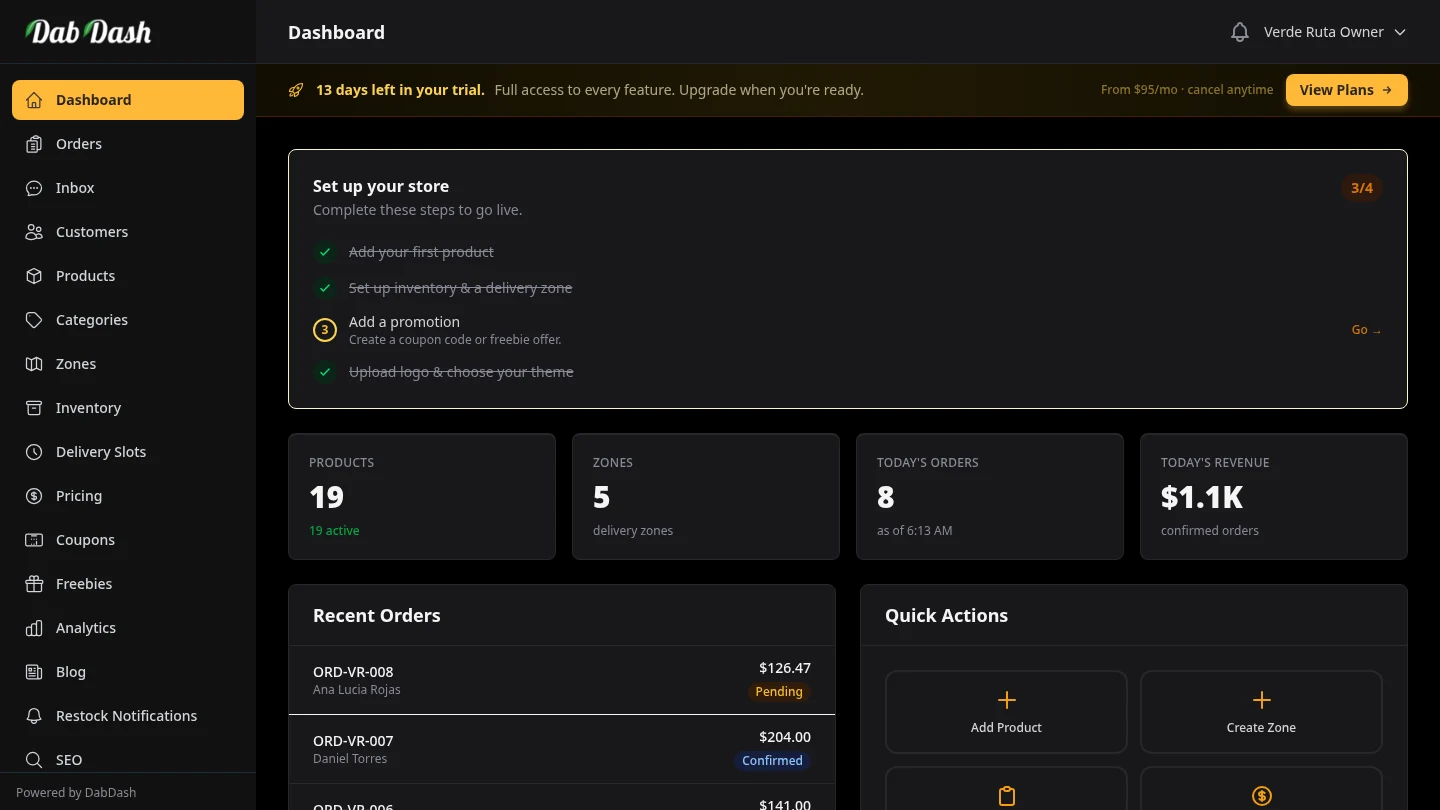
Creating a delivery order in DabDash — no POS terminal, no in-store checkout, no hardware. Just the tools you actually need.
2. The Hardware Question
Blaze markets itself as hardware-agnostic — the system runs on iPads, Android tablets, or web browsers, and they sell compatible peripheral packages including receipt printers and barcode scanners. A single-location setup with a tablet, printer, and scanner typically runs several hundred to several thousand dollars in upfront hardware costs.
For an in-store dispensary, that hardware is essential. For a delivery operator, it raises a simple question: why are you buying a receipt printer for a driver who is never in your building?
The "hardware-agnostic" framing is accurate but incomplete. If your use case is purely delivery — an online menu, customer orders, a driver with a phone — the hardware conversation should never come up at all. On DabDash, it does not. There is no hardware category. Your driver uses their phone. Your vendor admin runs in any browser. Nothing ships to your address before you take your first order.
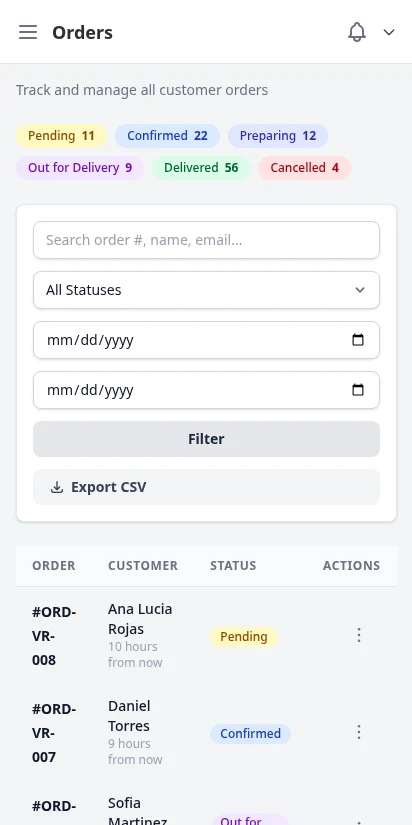
Mobile — light mode. Manage every active order from your phone.
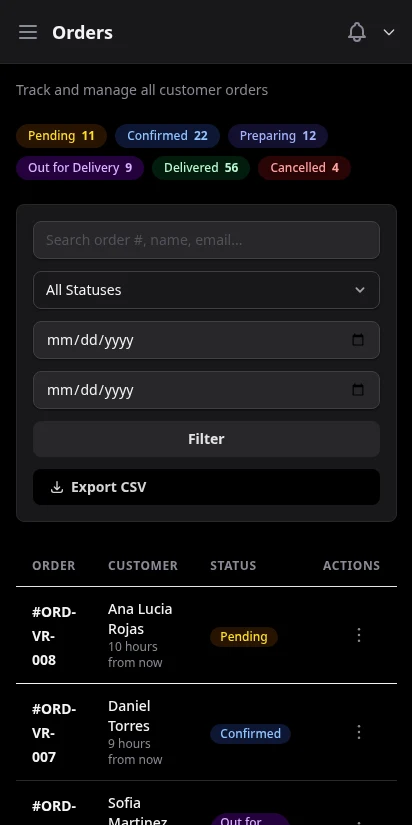
Mobile — dark mode. No receipt printer. No barcode scanner. No counter.
3. How Blaze Pricing Actually Works
Blaze does not publish pricing publicly. Their website directs every inquiry to a sales demo, after which pricing is quoted based on the number of locations, modules selected, and contract length. Third-party review platforms report base software costs starting around $500/month, with e-commerce, payment processing, and multi-location dispatch priced as additional modules on top of that base.
Here is what that means in practice:
POS software: custom pricing, demo required
E-commerce / online menu (BLAZE ECOM): separate module, separate cost
Delivery dispatch (BLAZE DISPATCH): separate module, separate cost
BLAZEPAY payment processing: separate module with transaction fees
Herbie AI budtender: add-on to BLAZE ECOM
Each module is a genuine product with genuine development behind it. But if you are a delivery operator who only needs the e-commerce menu and the dispatch module, you may find yourself in the awkward position of paying for a full POS platform in order to access the two pieces you actually use.
DabDash pricing is one flat monthly rate. Storefront, delivery zone management, order management, and driver dispatch are included. There is no module to add, no sales call to take, and no hardware invoice waiting at the end of the onboarding process.
4. The Ice Cream Truck Model — What It Is and What It Requires
Blaze is one of the few cannabis platforms that explicitly supports the Ice Cream Truck delivery model, and it is worth explaining what that means. In traditional ("pizza-style") delivery, a driver picks up individual orders from a fulfillment hub and delivers them one at a time. In the Ice Cream Truck model, a driver loads a curated inventory kit into their vehicle and fulfills orders on the go — just like an ice cream truck carries its full stock and sells from the van.
This is a genuinely useful model for high-volume California-style delivery operations where drivers cover large service areas and staying close to a hub is impractical. Blaze's inventory and dispatch system supports it: drivers are assigned kits, orders are dynamically dispatched to drivers already in the field, and the in-vehicle inventory serves as a live menu for the driver's service zone.
But the Ice Cream Truck model requires infrastructure: per-kit inventory tracking, live driver manifests, real-time order assignment, and compliance reconciliation for in-vehicle cannabis stock. That is real complexity, and Blaze handles it well. The question is whether you need it. Most delivery operators working in a defined local area, fulfilling a manageable daily order volume from a single hub, do not need dynamic in-vehicle dispatch. They need a clean online menu, a simple order queue, and a way to confirm delivery. The Ice Cream Truck model is the right answer to a specific problem. It is not the right answer to every delivery operation.
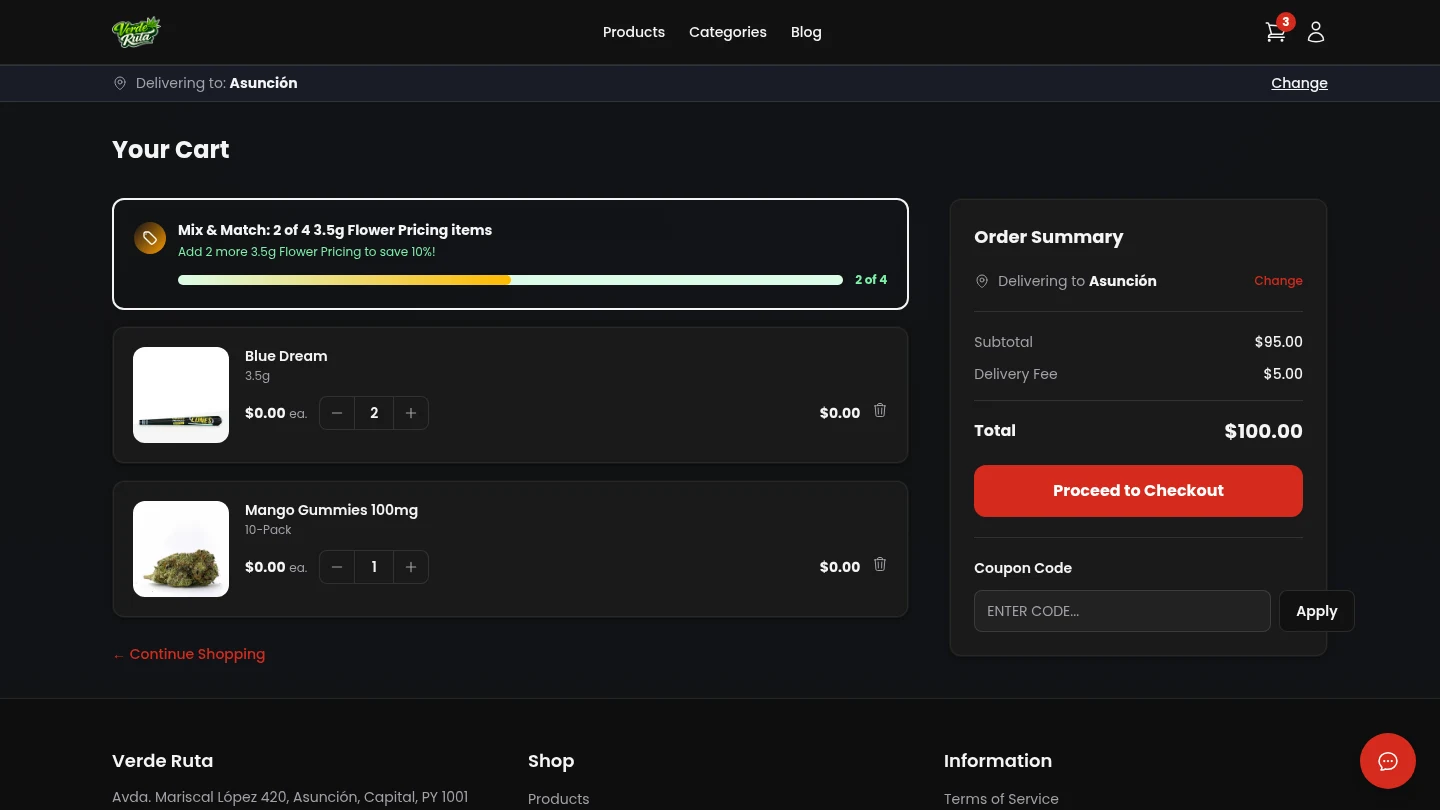
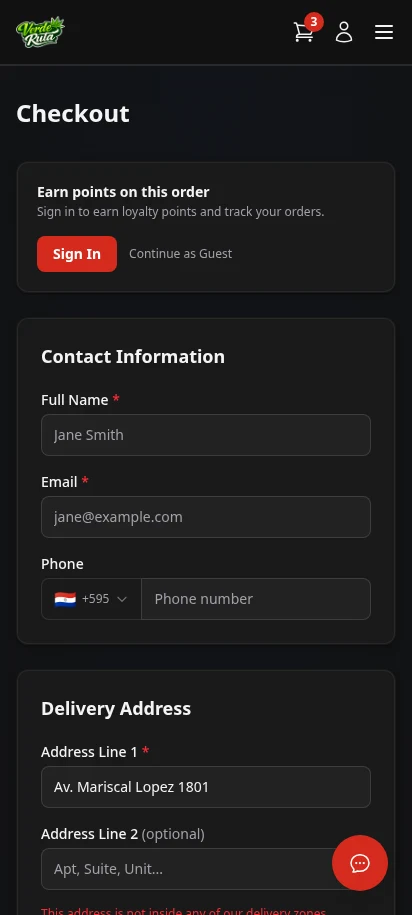
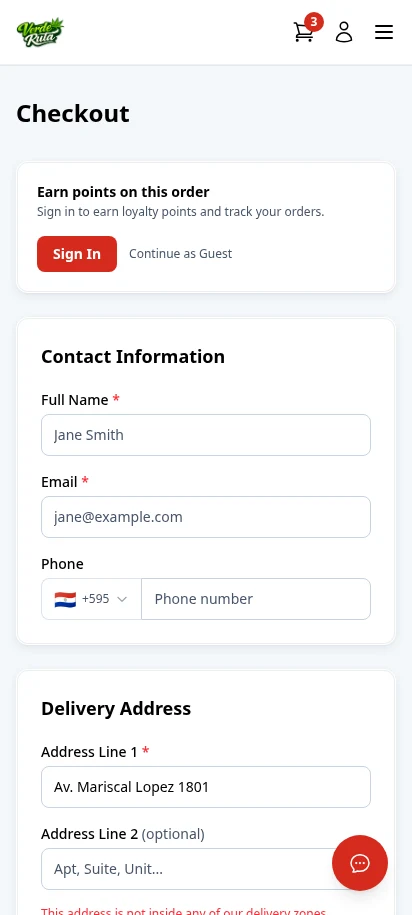
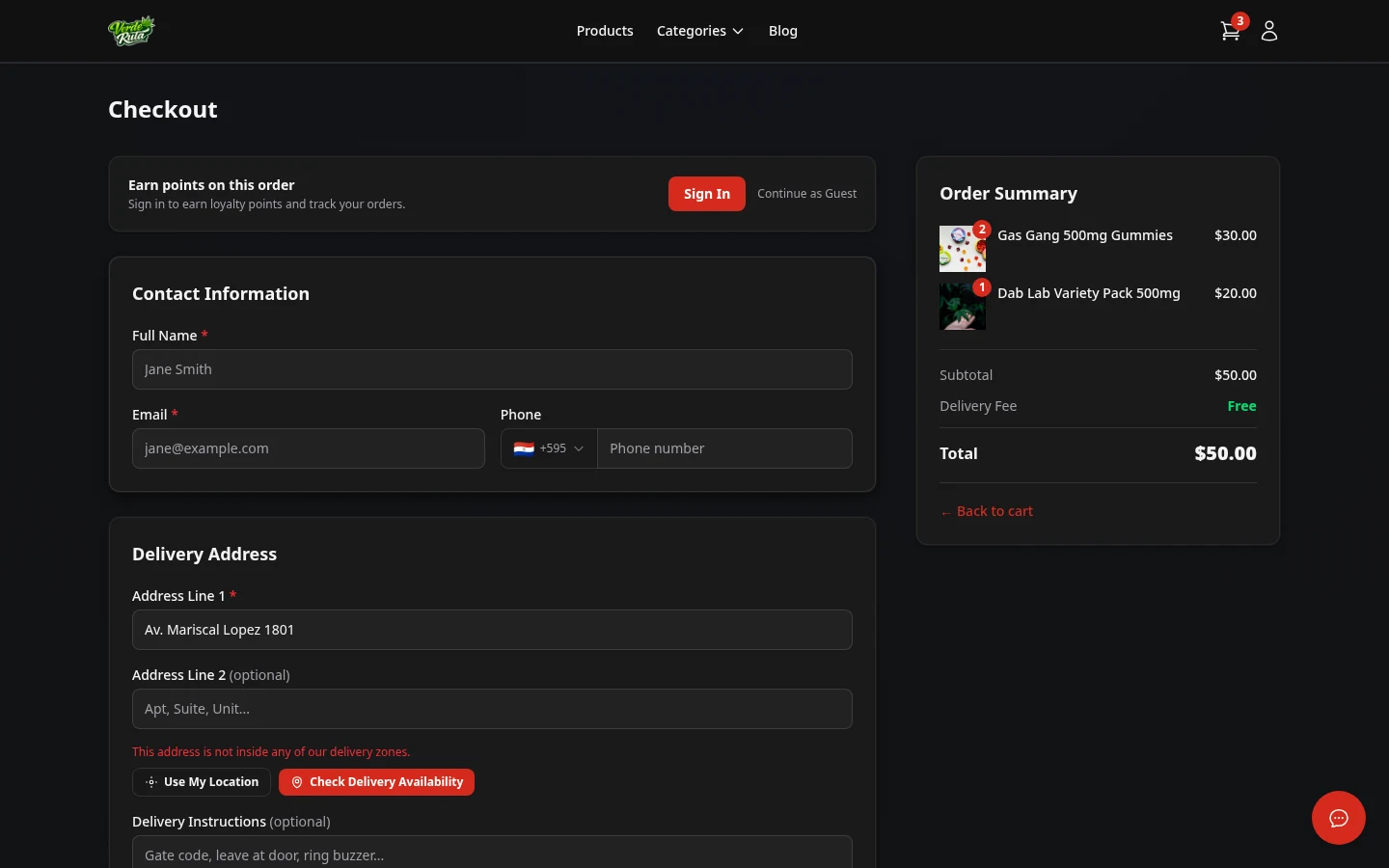
Simple checkout flow for customers — add products, confirm address, pay the driver in cash.
5. Herbie AI — Useful Feature or Marketing Layer?
Blaze's most recent headline is Herbie, an AI budtender announced in early 2026 and embedded into their BLAZE ECOM product. The pitch is compelling: a customer can tell Herbie "I'm going to a concert and want to feel social but not anxious," and Herbie parses that intent against live inventory to recommend the right product. It remembers a customer's last three orders for fast re-ordering, fills product catalog gaps with known terpene and effect data, and adjusts recommendations based on local purchase trends.
That is a genuinely interesting feature for a high-volume dispensary running hundreds of SKUs where customers regularly feel overwhelmed by choice. Whether it moves the needle for a focused delivery operator with a tightly curated menu of 50–150 products is a different question.
What is clear is that Herbie is an add-on to BLAZE ECOM, which is itself a module on top of the base platform. You are not buying Herbie. You are buying a full cannabis POS suite, then the e-commerce module, and then the AI layer on top of it. For operators whose primary goal is to rank on Google and convert local searches into cash deliveries, the AI recommendation engine is several layers downstream from the problems that actually matter.
6. Storefront SEO — Close, But Not Quite Native
Blaze made a deliberate decision to move away from iframes for their BLAZE ECOM product — and they are right to be proud of it. iFrame-based menus, still common among cannabis eCommerce platforms, are invisible to Google. Product pages inside an iframe are not indexed, which means every product page, strain page, and category page your customers search for returns a competitor's result instead of yours.
BLAZE ECOM uses a proxy-based integration rather than an iframe. Your domain's DNS is configured with two records that route product pages through Blaze's system while appearing to live on your domain. It is technically superior to an iframe. But it is also a DNS dependency — those two records must stay intact indefinitely for the integration to function. If your domain host changes, your DNS is updated incorrectly, or something upstream in Blaze's proxy breaks, your entire online menu goes down.
The integration also requires WordPress, Duda, Squarespace, or Webflow as your content management system. If you are not on one of those platforms, you need a custom integration solution.
DabDash storefronts are hosted natively on your subdomain from day one. There are no DNS records to manage, no CMS dependency, no proxy architecture to maintain. Your product pages are rendered server-side, fully indexed by Google, and permanently part of your web presence.
Mobile — dark mode. Your storefront is live on your subdomain with no DNS setup required.
Mobile — light mode. Checkout converts. Cash at the door.
7. Cash on Delivery vs. Payment Processing
Blaze has invested heavily in payment infrastructure. Their BLAZEPAY product supports cashless ATM, ACH payments via Stronghold, and debit processing for in-store transactions. The company clearly views payment processing as a core part of their platform and a meaningful revenue line.
Cannabis banking remains genuinely complicated. ACH workarounds, cashless ATM schemes, and debit processing through cannabis-friendly processors have a documented track record of abrupt terminations, frozen accounts, and regulatory scrutiny. Every month a cannabis operator runs a cashless payment system is a month where payment infrastructure could disappear without warning.
DabDash is Cash on Delivery only. Orders are placed online and paid by the customer in cash when their driver arrives. No payment processor, no interchange fee, no fintech intermediary. The oldest and most reliable transaction in retail — cash changes hands at the door. For operators who have been through a payment processor termination, the simplicity is not a limitation. It is the point.
8. Support Hours Don't Match Cannabis Hours
Multiple independent reviews of Blaze's customer support flag the same issue: support operates on business hours, and cannabis does not. One reviewer on a software comparison platform noted that "once you have an issue, they take time to get stuff ironed out once it flops" and described support availability as operating on "banker's hours." Another flagged that "customer service takes weeks to get back to you with answers."
This is not unique to Blaze — it is a recurring tension for enterprise software companies serving an industry that operates 7 days a week, often into the evening. But it is worth naming explicitly: a system outage at 7pm on a Friday has a different cost for a cannabis delivery operator than it does for a business that closes at 5pm.
The Quick Breakdown
Feature
Blaze
DabDash
Built for
Retail POS + delivery added on
Delivery-first cannabis operators
Hardware required
Optional but sold; POS terminal setup needed for in-store
None — any browser, any device
Pricing model
Custom quote; multiple modules priced separately
One flat monthly rate, all-in
Online storefront
BLAZE ECOM add-on; proxy-based DNS integration; requires WordPress/Duda/Squarespace/Webflow
Native, included, no CMS dependency
Ice Cream Truck delivery
Yes — enterprise-grade kit dispatch
Scheduled delivery per zone
AI features
Herbie AI (add-on to ECOM module)
Clean, fast, no AI overhead
Payment model
BLAZEPAY ACH, cashless ATM, debit processing
Cash on delivery — no processor risk
Storefront SEO
Proxy-based (better than iframe, requires DNS records)
Blaze is a serious platform for serious multi-location retailers. If you operate a dispensary with a physical storefront, a delivery fleet, a kiosk menu, and a need for in-store POS terminals, Blaze's all-in-one suite genuinely reduces the number of vendors you need to manage. Their Ice Cream Truck dispatch is purpose-built for high-volume California-style delivery at scale, and Herbie AI adds a layer of personalization that a large dispensary with hundreds of SKUs could legitimately use.
If you are also processing cashless payments, running marketing automations, and building a custom website, Blaze has a module for each of those too.
Who Should Use DabDash
DabDash is for operators who want to run delivery and nothing else — cleanly, quickly, and without paying for capabilities they will never use. If the words "POS terminal," "barcode scanner," and "cashless ATM integration" are not relevant to your business model, you do not need to work around them.
DabDash gives you a Google-indexed delivery storefront, zone-based delivery management, order dispatch, and a COD checkout flow. Your subdomain is live from the moment you sign up. Your driver uses their phone. Your customers order on any device and pay cash at the door.
No modules. No hardware quote. No DNS records to configure before your first order.
Common Questions About DabDash vs. Blaze: Is Your Delivery Software Actually Built for Delivery?
Quick answers to the most common follow up questions readers search after exploring this topic.
Is DabDash a good alternative to Blaze for delivery-only operators?
Yes — particularly if you do not operate a physical storefront. Blaze was built as a retail POS and later added delivery features. Its pricing model requires a sales demo, and delivery dispatch, e-commerce, and AI features are all separate modules. DabDash is built exclusively for delivery: your storefront, order management, and driver operations are all included at one flat monthly rate with no hardware and no demo required.
What is Blaze's "Ice Cream Truck" delivery model?
The Ice Cream Truck model refers to a delivery method where drivers load a full inventory kit into their vehicle and fulfill orders on the go — rather than returning to a hub for each delivery. Blaze supports this through their dispatch and kit management system. It is purpose-built for high-volume operations covering large service areas. For delivery operators working from a single hub with a manageable daily order volume, this level of complexity is typically not needed.
How much does Blaze cannabis software cost?
Blaze does not publish pricing publicly. A sales demo is required for a quote. Third-party review platforms report starting costs around $500/month for the base POS, with delivery dispatch, e-commerce, payment processing, and AI features each priced as separate modules. The total cost for a delivery operator accessing all relevant modules is custom-quoted based on location count and contract length.
Does Blaze require POS hardware?
Blaze is designed to be hardware-agnostic, running on iPads, Android tablets, and web browsers. For in-store operations they sell compatible peripherals including receipt printers and barcode scanners. For delivery-only operators, no hardware is strictly required to use the delivery and e-commerce modules — but the platform is sized and priced around the full POS suite regardless.
What is Herbie AI in Blaze?
Herbie is an AI budtender launched by Blaze in early 2026, embedded into their BLAZE ECOM product. It is a conversational assistant that recommends products based on a customer's stated mood, preferences, and purchase history. It can also fill catalog gaps with known terpene and effect data. Herbie is an add-on to the ECOM module, which is itself a module on top of the base platform.
Is Blaze's online menu SEO-friendly?
Better than an iframe — but not fully native. BLAZE ECOM uses a proxy-based DNS integration rather than an iFrame, which means product pages can be indexed by Google. However, the integration requires two DNS records to remain configured on your domain and requires WordPress, Duda, Squarespace, or Webflow as your CMS. DabDash storefronts are server-side rendered natively on your subdomain with no DNS configuration, no CMS dependency, and full Google indexability from day one.
Does Blaze support cash on delivery (COD)?
Blaze's payment infrastructure is primarily built around BLAZEPAY — their cashless ATM, ACH, and debit processing products. Cash collection at the door is a delivery workflow reality but not a featured payment integration. DabDash is built exclusively for cash on delivery: customers order online and pay the driver in cash at the door, with no payment processor, no interchange fees, and no risk of merchant account termination.
How quickly can I launch with DabDash vs. Blaze?
DabDash operators typically take their first order the same day they sign up — no hardware, no DNS configuration, no implementation call, and no CMS integration required. Blaze onboarding involves a sales demo, contract negotiation, module configuration, DNS setup for the e-commerce integration, and CMS alignment. Most Blaze implementations take several weeks from initial demo to first live order.