Shopify prohibits cannabis, payment processors are unreliable, delivery zones aren't natively supported, and account termination is always a risk. Cannabis delivery needs a platform built for cannabis, not retrofitted to it.
Shopify is brilliant at what it does: selling socks, books, and jewelry to global audiences. Its themes are gorgeous, its app ecosystem is powerful, and its SEO tools are best-in-class. But cannabis delivery is a different problem altogether, and building your dispensary on Shopify is a continuous risk management exercise with real consequences.
Every cannabis operator considering Shopify faces the same uncomfortable reality: Shopify's business model and payment processing infrastructure were not built for the cannabis industry. And when compliance collides with commerce, operators learn this lesson in the worst way—with a termination notice and frozen funds.
The Fundamental Problem: Cannabis Is Prohibited
Let's start with the clearest fact: Shopify explicitly prohibits cannabis (THC-containing products) on its platform. This isn't a gray area. Shopify's Terms of Service outlaw cannabis dispensaries and cannabis-derived products. Period.
For operators in legal cannabis markets, this creates an immediate problem: your core business model is against Shopify's ToS. You are technically violating the terms every day your store exists.
The CBD Gray Area: Technically Allowed, Practically Risky
Shopify does allow CBD (hemp-derived cannabidiol) if it contains less than 0.3% THC by dry weight and complies with all federal, state, and local laws. On paper, this sounds like an opening for operators.
The reality is much riskier:
Shopify Payments doesn't support CBD. You cannot use Shopify's native payment processor for any cannabis-related product. You must find a third-party payment processor willing to work with a high-risk industry.
Payment processors can drop you overnight. Even if you find a processor that accepts cannabis or CBD, they reserve the right to terminate your account without warning if regulations shift, if they reassess risk, or if payment networks pressure them. Operators report getting 5-day notices to find a new processor or watch their account close.
Shopify has conducted mass purges. In 2023, Shopify shut down hundreds of Delta-8 THC sellers, removing products and terminating accounts in a coordinated campaign. CBD operators have also reported sudden store closures.
Legal gray zones shift quickly. A product that's legal in your state today might be reclassified tomorrow. Shopify's compliance team doesn't have time to negotiate with every CBD seller—they terminate first.
For operators in markets where cannabis (not just CBD) is legal, attempting to use Shopify by mislabeling your products as "CBD" or finding technical workarounds is playing with fire. Shopify has sophisticated automated detection and manual review processes. Account termination usually follows.
Payment Processing: The Practical Nightmare
Even if you navigate Shopify's policies, payment processing for cannabis and CBD remains a perpetual headache:
No native Shopify Payments support. You need a third-party payment processor, integration is messy, and you'll pay higher fees (often 4%+ plus additional risk surcharges).
Limited processor availability. The universe of payment processors willing to work with cannabis or CBD is small. Your options are expensive and often unreliable.
Sudden account termination without recourse. Payment networks (Visa, Mastercard) apply pressure on processors to drop high-risk categories. A processor that accepts you today can freeze your account and hold your funds for 120+ days based on a policy update.
Customer payments are cash-only or via risky processors. Many operators end up running cash-on-delivery (COD) anyway because payment processors are too unstable. But COD wasn't built into Shopify—it requires workarounds.
This is not a hypothetical problem. Operators report having their primary payment processor terminated mid-season, forcing them to scramble to migrate customers to a backup processor (if one exists) or risk losing sales for days.
Delivery Management: Bolted On, Not Built In
Shopify's native fulfillment and delivery features are designed for traditional eCommerce: shipping to addresses, local pickup, and carrier-calculated rates for general merchandise.
Cannabis delivery is different:
Age verification at checkout. Customers must prove they're 21+ before completing an order. This is not a Shopify native feature. You need a third-party app, and integrating age gates with checkout is clunky at best.
Delivery zones with stock awareness. Your inventory is location-based. You deliver only to certain neighborhoods or zip codes. Shopify doesn't natively understand delivery zones—it understands shipping to addresses. Setting up zone-aware delivery requires custom development or unreliable apps.
Driver management and compliance tracking. Cannabis delivery involves compliance reporting, driver licenses, vehicle tracking, and state-specific requirements. Shopify fulfillment tools assume you ship via UPS/FedEx. Building compliance infrastructure on top of Shopify is a DIY project.
Real-time delivery slot availability. Customers need to select a delivery slot based on your driver schedule and zone capacity. Shopify doesn't natively support this. You'll be integrating third-party apps and custom code.
Shopify was built for dropshipping and warehouse fulfillment. Cannabis delivery is hyper-local, zone-driven, and heavily regulated. Every delivery feature you need requires additional apps, custom code, or both.
Account Termination: It Happens, and It's Sudden
The unspoken fear that haunts every cannabis operator on Shopify is account termination. Here's how it typically unfolds:
You're running a successful CBD or cannabis-adjacent store on Shopify.
Shopify's automated systems or a manual compliance review flags your store.
You receive an email: your account is suspended or terminated, effective immediately.
Your store goes offline. Your products are hidden. Your customers can't order.
Your funds are held for 120 days (per Shopify's standard policy).
You have limited appeal options and little recourse.
Shopify doesn't need to justify the termination. The ToS give them broad latitude. Even if you believe you've complied with every rule, you're arguing with an automated system and a support team that has thousands of merchants. Your appeal disappears into the void.
This has happened to large, legitimate CBD companies. It will happen to you if you rely on Shopify and your product category gets reclassified or reprioritized on Shopify's risk list.
Cannabis delivery is not just eCommerce with stricter rules. It's a fundamentally different business model:
Hyper-local geography. You don't ship nationally. You deliver to specific zip codes within a few miles of your retail location. Delivery zones, not shipping routes.
Real-time compliance. Every order touches reporting requirements, age verification, driver licensing, and state-specific rules. Compliance isn't an afterthought—it's the core architecture.
Cash on delivery. Most cannabis operators use COD because payment processing is unreliable. The ordering system and driver app must support COD natively, with reconciliation and floats built in.
Stock by location. You manage inventory per location (retail store) and serve specific zones from each location. Shopify's inventory model doesn't align with this.
Regulatory accountability. You need audit trails, reporting, and compliance hooks that Shopify doesn't provide. You're one compliance failure away from losing your state license.
Generic eCommerce platforms like Shopify are not equipped to solve these problems. They solve them by saying "cannabis is prohibited"—not because they're anti-cannabis, but because the business model and liability don't align.
DabDash: Built for Cannabis Delivery, Not Retrofitted to It
DabDash took a different approach. Every feature was built specifically for cannabis delivery operators:
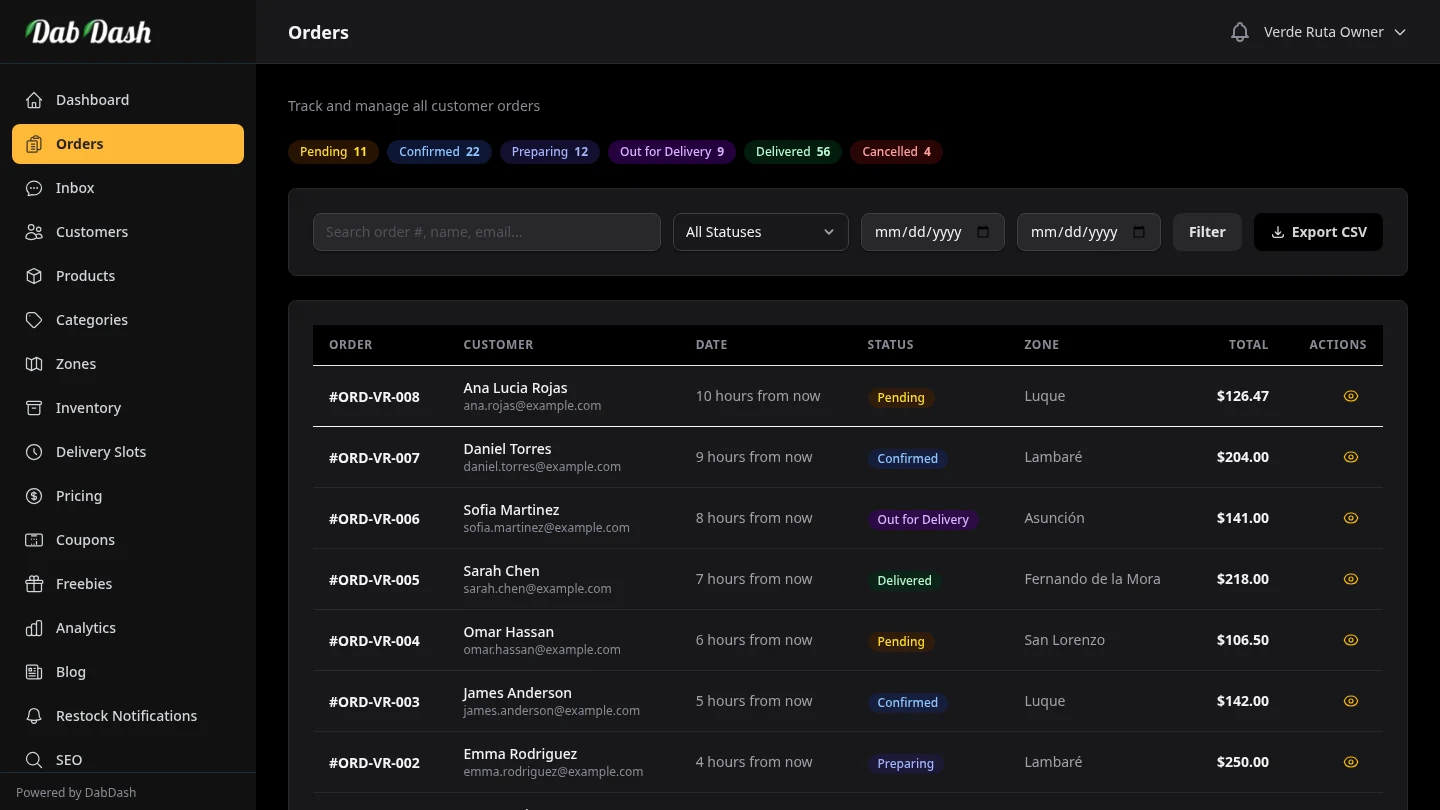
Cash on delivery, built in. COD isn't an app bolt-on. It's the native payment model. Drivers reconcile cash in real-time, floats are calculated automatically, and reporting is built for vendor accounting.
Delivery zones with stock awareness. Define your service area by drawing polygons on a map. Inventory syncs to zones automatically. Customers see only what you have in their delivery area. Age-verified checkout is standard.
No ToS risk. DabDash was built for cannabis from the ground up. Your store will never be terminated because payment processors change their minds or Shopify policy shifts. You own your business data, your customer list, and your compliance history.
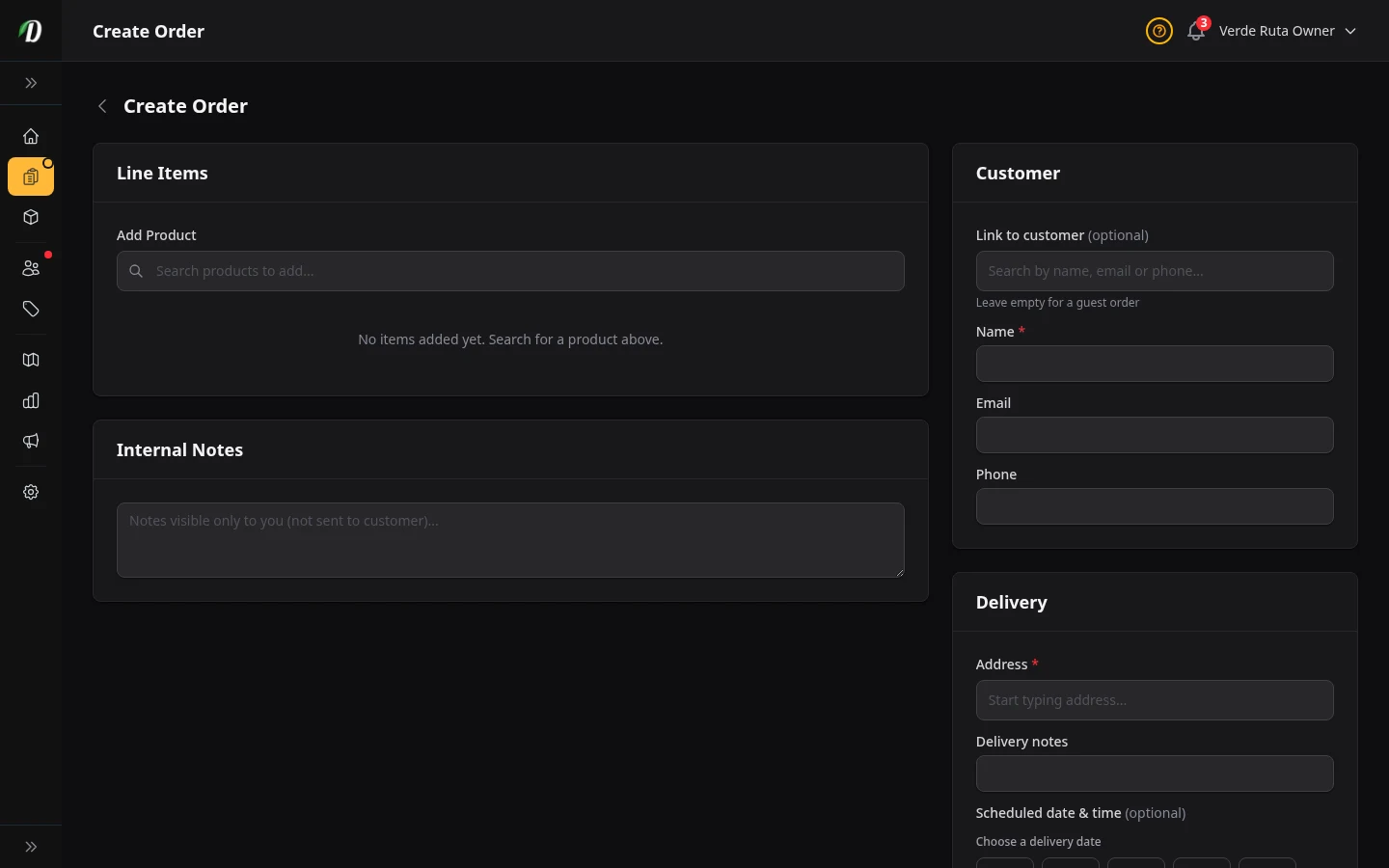
Compliance built in. Age verification, delivery slot restrictions, inventory tracking, order reconciliation, and audit trails are native features. You're not piecing together apps. You're using a system designed by operators who understand the rules.
Driver app included. Customers see estimated delivery times based on driver availability and zone load. Drivers have a native app for navigation, cash reconciliation, and proof of age verification. It's all connected.
SEO-indexed storefront. Your store is a public, SEO-indexed website (not hidden behind Shopify's Managed Markets restrictions). Customers find you on Google. You own your brand presence.
DabDash doesn't solve the problem by prohibiting cannabis. It solves the problem by being designed for cannabis from the start.
The Hidden Cost of Shopify for Cannabis
Running a cannabis delivery operation on Shopify isn't just risky—it's expensive when you factor in the real costs:
Third-party payment processor: 3.5% – 5%+ fees (vs. 2.9% for Shopify Payments on lower-risk categories)
Age verification app: $100 – $300/month
Delivery zone / fulfillment app: $200 – $500/month
Driver app (custom or third-party): $500+ /month or a custom build ($5,000+)
Compliance and reporting integrations: Custom development, $2,000 – $10,000+
Risk of account termination: Priceless (and terrifying)
Operators building on Shopify often end up spending as much on workaround apps and custom development as they would on a purpose-built platform. And they still live with the threat of termination.
The Real Angle: Shopify Didn't Build for This
To be fair to Shopify: it's not a villain. Shopify built an incredible platform for legal, mainstream eCommerce. It's generous with features, affordable at scale, and genuinely well-designed.
But cannabis delivery is outside Shopify's core competency and compliance risk tolerance. Shopify's payment infrastructure, app ecosystem, and compliance framework are optimized for general merchandise, not for a regulated industry where the business model is hyper-local, compliance-heavy, and payment-processing-unfriendly.
The mistake operators make is thinking they can bolt cannabis onto a generic platform. You can't. Cannabis delivery needs a platform that was designed for cannabis delivery.
Bottom Line
Shopify is brilliant for selling socks. For cannabis delivery, it's a compromise that introduces risk without solving the real problems. Account termination, payment processor churn, ToS violations, and compliance gaps are not theoretical—they're part of the operational reality for operators trying to force-fit cannabis into Shopify.
DabDash was built to eliminate these headaches. No ToS risk. Cash on delivery, native. Delivery zones with built-in compliance. An entire infrastructure designed for cannabis delivery operators, not retrofitted to them.
If you're evaluating platforms for your cannabis delivery business, choose one that was designed for your business, not for socks.
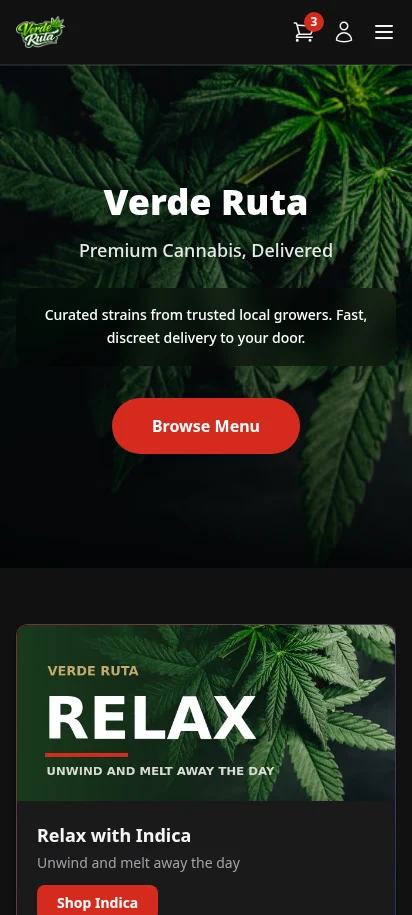
Customers browse your delivery menu — auto-detected location, native age gate.
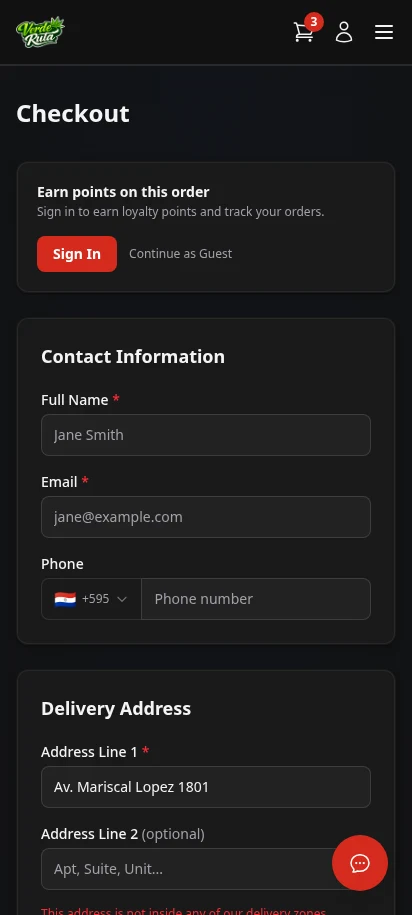
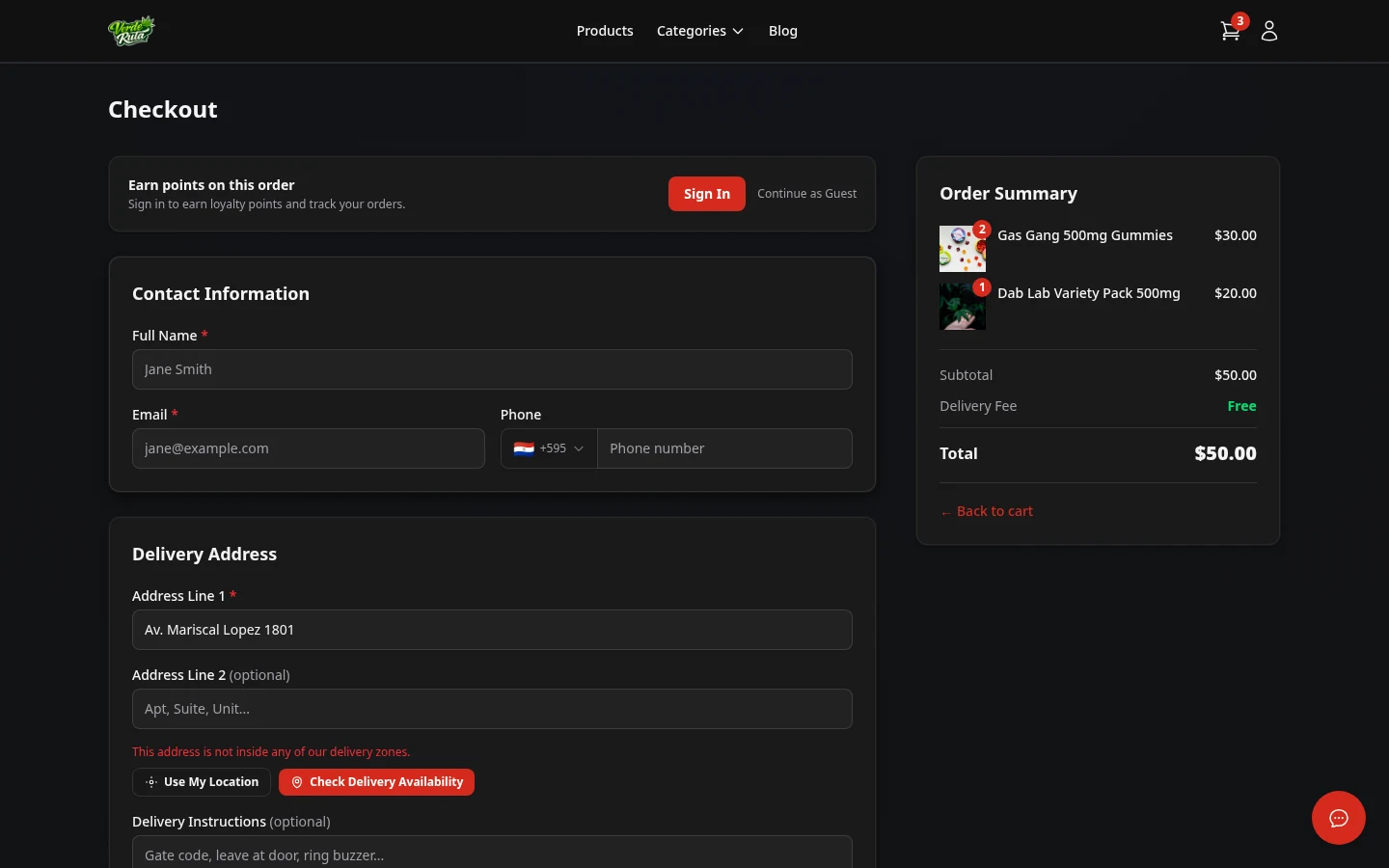
Checkout with cash on delivery — no payment processor risk, no ToS violations.
FAQ
Common Questions About DabDash vs. Shopify: Why Cannabis Delivery Operators Can't Rely on Generic eCommerce
Quick answers to the most common follow up questions readers search after exploring this topic.
Can you legally sell cannabis on Shopify?
No. Shopify explicitly prohibits cannabis (THC-containing products) in its Terms of Service. Cannabis dispensaries are not allowed. CBD (hemp-derived, under 0.3% THC) is technically allowed but not supported by Shopify Payments, leaving you dependent on risky third-party payment processors.
Has Shopify shut down cannabis stores?
Yes. Shopify has terminated hundreds of cannabis and CBD accounts, including a mass purge of Delta-8 THC sellers. Terminations often happen with little warning, funds are frozen for 120 days, and appeals have limited success. Even legitimate CBD stores have been closed.
What payment processors work for cannabis on Shopify?
Shopify Payments does not support cannabis or CBD. You must use a third-party processor. However, these processors are expensive (3.5% – 5%+ fees), unreliable (they can terminate you suddenly), and often don't integrate smoothly with Shopify. Many operators default to cash on delivery because payment processing is too unstable.
Does Shopify have native delivery zone management?
No. Shopify was built for national/international shipping, not hyper-local delivery. Cannabis delivery zones require custom development or third-party apps. Real-time delivery slot availability, zone-aware inventory, and driver management are not native to Shopify.
Does Shopify include age verification for cannabis?
No. Age verification at checkout is not a Shopify native feature. You must use a third-party app ($100 – $300/month) and integrate it with your checkout. For cannabis operators, this is a critical compliance requirement that Shopify doesn't support natively.
What's the real cost of running cannabis delivery on Shopify?
Beyond Shopify's base plan, you'll pay for: a payment processor ($150+ /month in fees), age verification app ($100 – $300/month), delivery zone/fulfillment app ($200 – $500/month), driver app ($500+ /month or custom build), and custom compliance integrations. Total: often $1,000 – $2,000+/month in workarounds. That's before your risk of account termination.
Why doesn't Shopify support cannabis delivery?
Cannabis is a regulated, high-risk product category. Shopify's payment processors, compliance infrastructure, and liability model aren't built for it. Rather than solve the problem, Shopify prohibits it. That's a rational business decision for Shopify, but it means cannabis operators need a different platform.
What's better than Shopify for cannabis delivery?
Purpose-built platforms like DabDash, designed specifically for cannabis delivery. DabDash includes cash on delivery natively, delivery zone management, age-verified checkout, compliance reporting, and a driver app—all built in, no risky payment processor dependency, no ToS termination risk. You can focus on running your business instead of fighting platform limitations.