Cova is built for retail dispensary checkout counters — not delivery vans. Before you sign a contract, here is what the hardware bill, the add-on eCommerce fees, and the missing delivery tools actually cost a delivery-first cannabis operator.
Cova's pitch is hard to argue with on paper: the most compliance-certified cannabis POS on the market, government-approved in fifteen US states and four Canadian provinces, with real-time Metrc sync baked in from day one.
For a twenty-store MSO with a dedicated compliance team and a budget for enterprise software rollouts, that pitch makes sense. For a delivery-first operator trying to rank on Google, move product fast, and keep overhead low? Cova is a sophisticated solution to problems you do not have — and an expensive distraction from the ones you do.
Here is what the sales presentation leaves out.
1. Cova Was Built for Cell Phone Stores
This is not a criticism. It is just the history. Cova is a spinoff of iQmetrix, a company that has spent decades building point-of-sale systems for wireless carrier retail stores. In 2018, iQmetrix created Cova as a cannabis-specific spinoff, raised $8 million in seed funding, and brought their retail-floor expertise into the dispensary space.
That DNA shapes every product decision Cova makes. Their hardware lineup reads like an inventory checklist for a Sprint store: Android tablets, receipt printers, barcode scanners, ID scanners, cash drawers. They offer four hardware bundle packages, three tablet options, six printer options, and eight scanner options. All of it is optimized for a customer who walks through a dispensary door, browses a display case, and checks out at a counter.
That is not delivery software. That is a retail checkout line built from the ground up for brick-and-mortar storefronts.
If your business model is delivery — a driver, a van, a menu on a phone, and a customer at their front door — you are buying infrastructure for a store model you do not operate.
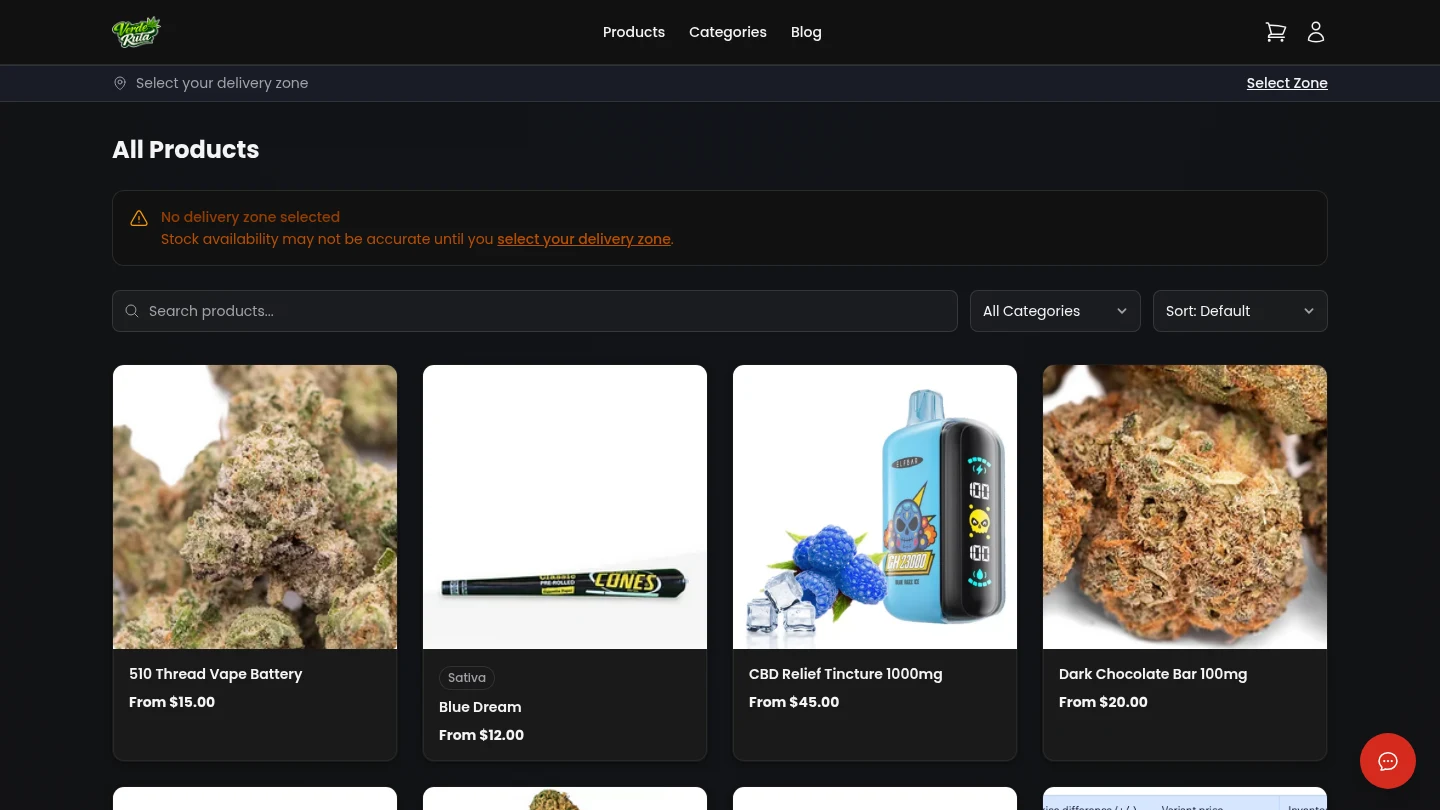
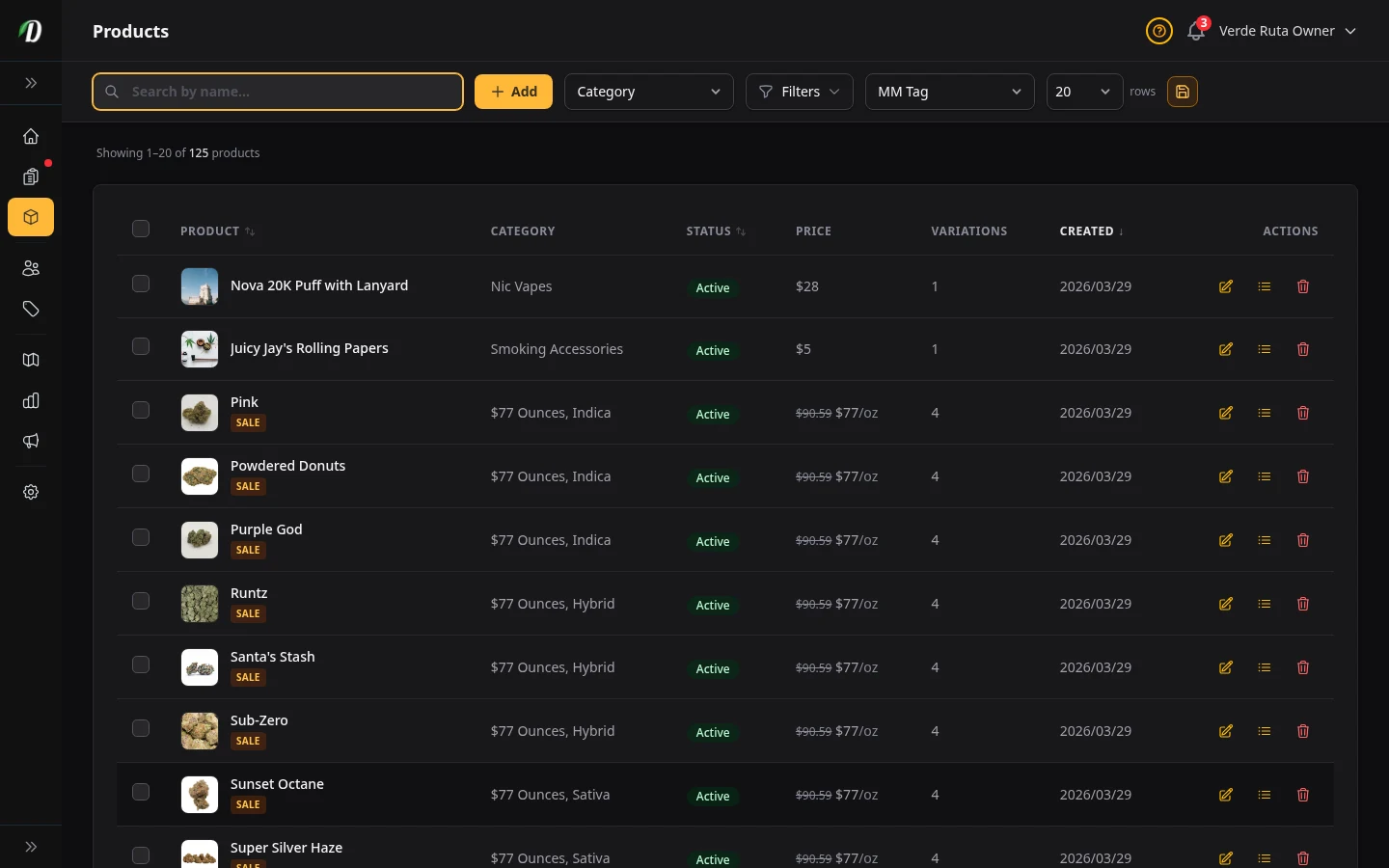
DabDash storefront — built for delivery. No hardware required. Your menu is live the moment you upload it.
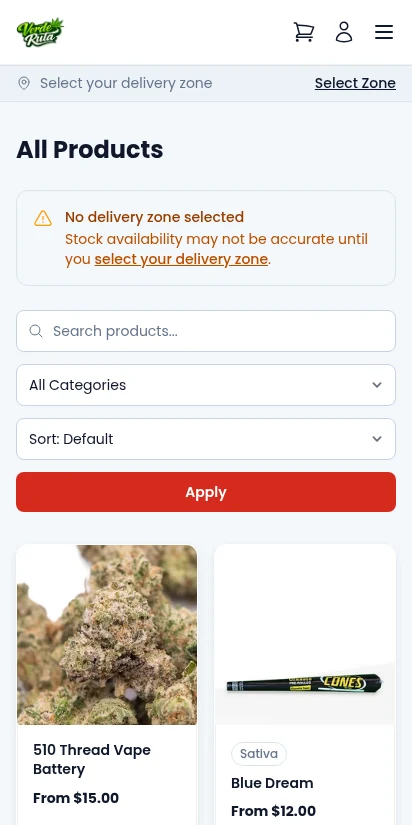
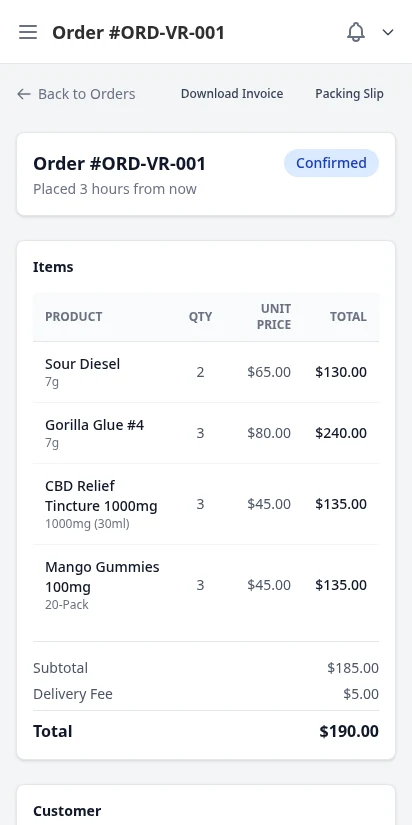
Mobile — light mode. Your full menu, ready to order from any phone.
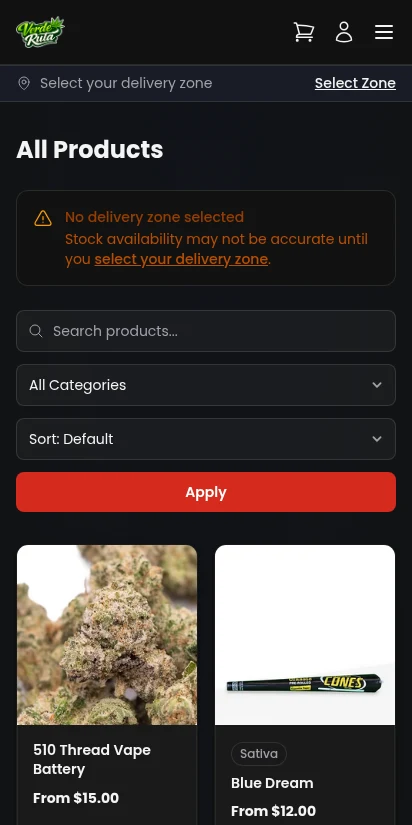
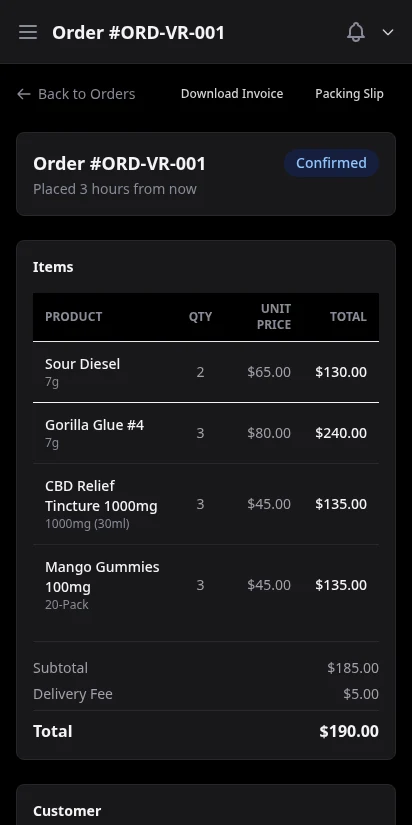
Mobile — dark mode. Same experience, no hardware, no counter required.
2. The Real Price Tag Before You Sell Your First Gram
Cova publishes its pricing. Let us do the math together.
Software (US, monthly):
Boutique tier (up to 2 terminals): $389/month
Powerhouse tier (up to 4 terminals): $599/month
eCommerce add-on: $149–$199/month extra — not included in any plan
That last line deserves a second read. Cova's online store is a separate product they launched in late 2022. Before that year, Cova had no native eCommerce at all — operators using Cova for years were relying entirely on third-party platforms like Dutchie or Jane for their online menus. Today, the online store costs $149 or more per month on top of your base subscription. Operators in some markets, including New York, have reported needing separate eCommerce solutions entirely because Cova's add-on is not available everywhere.
Hardware (before you open a single order):
Small single-location setup: $1,000–$5,000 in Android tablets, printers, scanners, and cash drawers
Enterprise implementation: $10,000–$50,000 for a full rollout
What you are looking at for a small delivery operator in year one:
Cost Item
Cova
DabDash
Monthly software
$389–$599
One flat price
Online store / eCommerce
+$149–$199/month extra
Included
Hardware upfront
$1,000–$5,000+
$0
Delivery management
Third-party required (extra cost)
Included
iOS support for POS
No — Android only
Any device
Implementation time
Weeks to months
Minutes
One more hardware detail worth flagging: Cova's POS runs on Android only. If your operation already owns iPads or iPhones, they cannot run the POS. You will need to purchase new Android hardware to use the system you are paying $389 a month for.
3. Your Online Store Is a Paid Add-On. Your Delivery Is Someone Else's Problem.
Cova is genuinely proud that their eCommerce product does not use iframes — they actively call out Dutchie and Jane for iframe-based menus that Google cannot index. That is a fair point. But there is an important footnote: until 2022, Cova had no eCommerce product at all. Operators on Cova were sending customers to Dutchie or Jane for their online menus. The "no iframe" story is a recent development — and it costs extra.
More critically, Cova has no native delivery management. Their system assumes a customer walks into a dispensary, shows ID at the door, picks products off a shelf, and checks out at a counter. For delivery operations — dispatch, driver routing, COD confirmation, order status updates — Cova requires third-party integrations. You are bolting delivery onto a retail POS. That means more vendors, more monthly fees, more points of failure, and more time spent on software coordination instead of running your business.
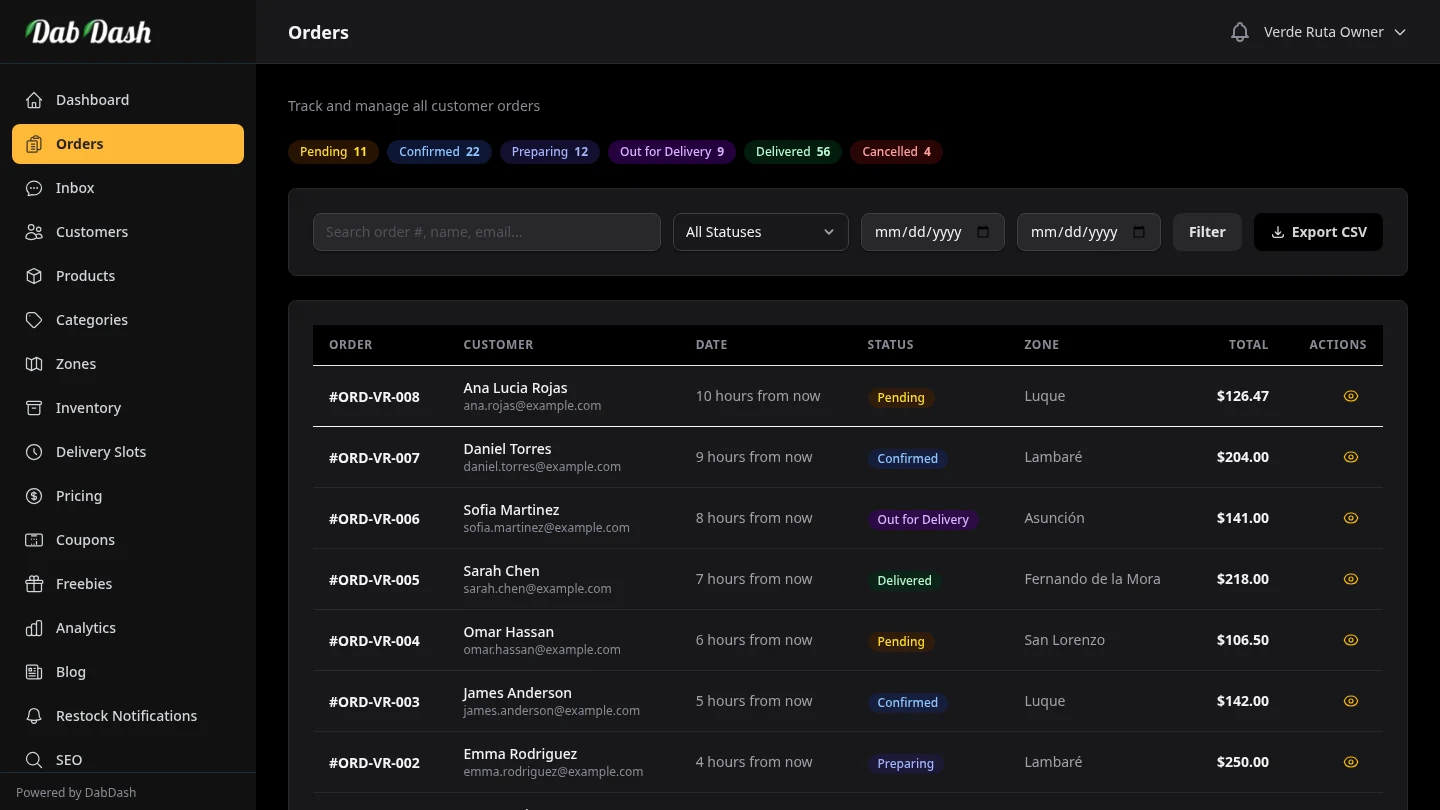
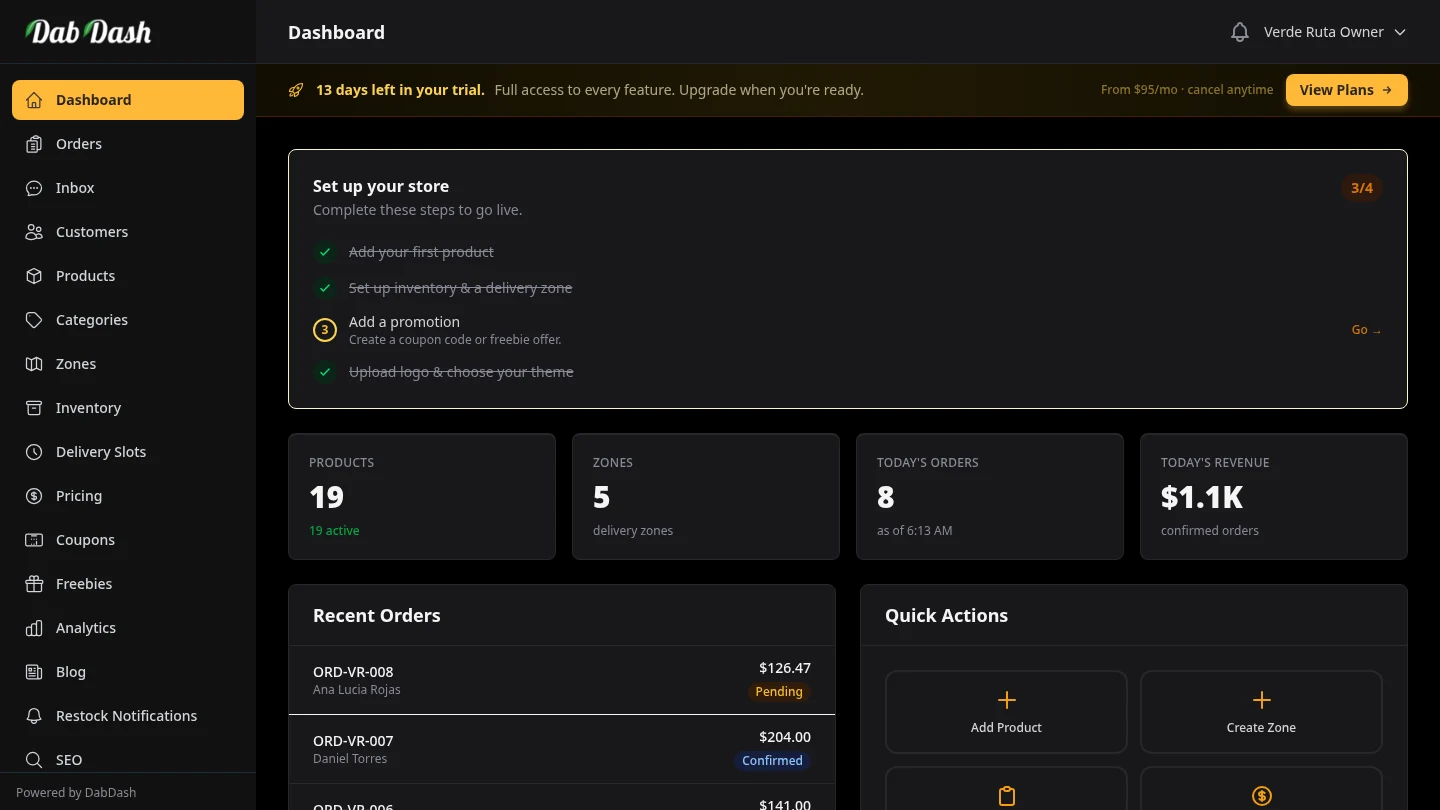
Manage your full catalog from one place — no scanner, no counter, no Android tablet required.
On DabDash, delivery is not a bolt-on. It is the core. Your storefront, order management, delivery tracking, and driver operations are all built around the same assumption: your customer is at home and your driver is on their way.
4. Cash is King — No Payment Maze
Cova has invested heavily in what they call "Cova Pay" — a cashless ATM and debit processing product that saves $40–$100/month off your software subscription if you use it. That discount exists because cashless ATM processing generates interchange revenue for Cova. It is not a feature; it is a business model.
Cannabis banking is still complicated. Cashless ATM schemes, ACH workarounds, and debit processing through cannabis-friendly payment processors carry risks — account freezes, processor terminations, chargebacks, and ongoing regulatory scrutiny. Every month you run a cashless payment system in cannabis is a month where your payment infrastructure could disappear overnight.
DabDash is Cash on Delivery only. Your driver delivers the order. Your customer pays in cash. You keep every dollar without a processing fee, an interchange cut, or a fintech middleman. No bank integration, no payment processor relationship, no risk of a frozen merchant account. The oldest, most reliable transaction in retail: cash changes hands at the door.
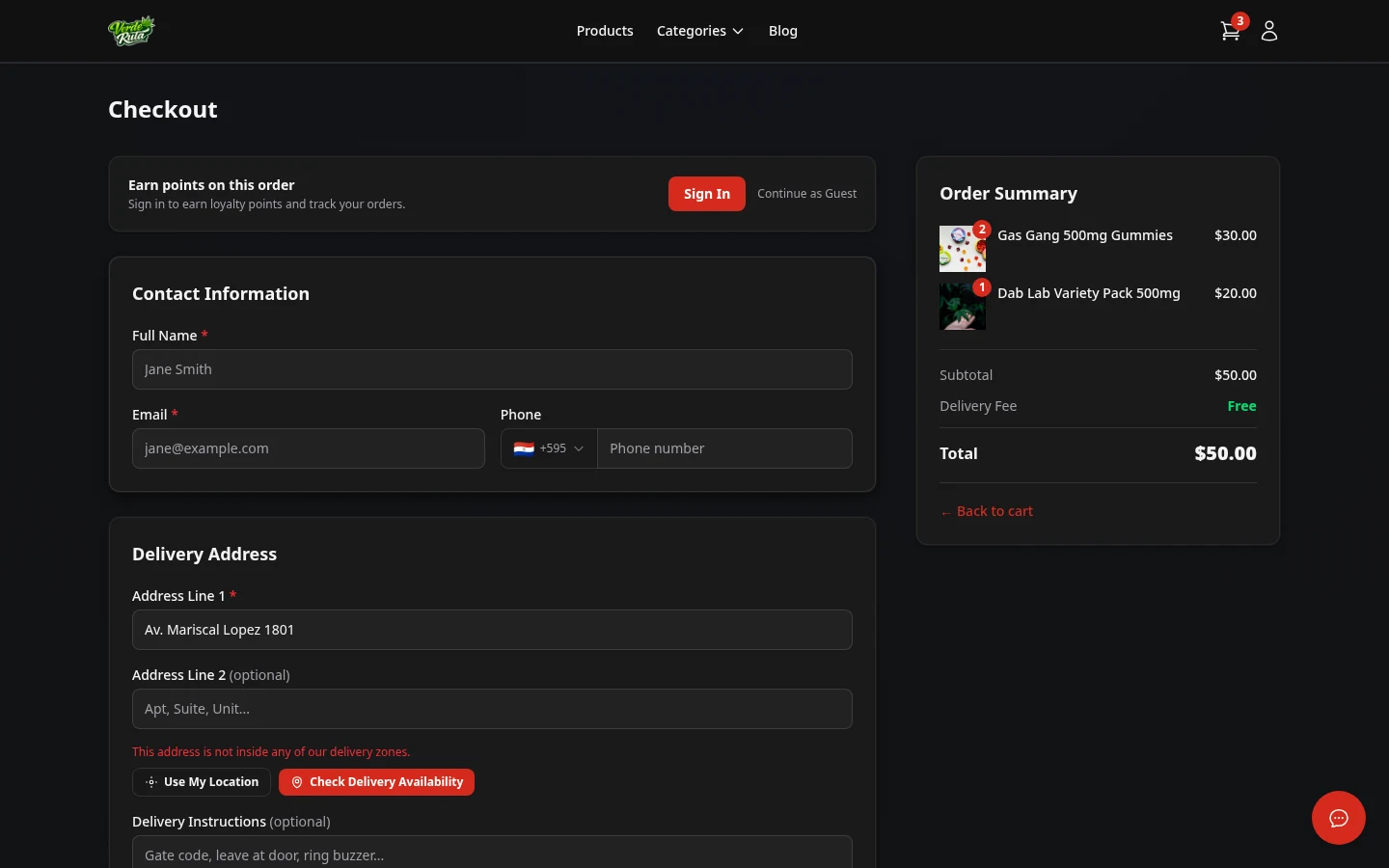
Checkout is simple. Customers confirm their order, and pay the driver in cash at the door.
Mobile — light mode. Every order detail your driver needs, on any phone.
Mobile — dark mode. No special hardware. Your driver's phone is all they need.
5. Launch Tonight, Not Next Quarter
Getting Cova running requires hardware procurement, Android device setup, implementation calls with their onboarding team, compliance configuration for your specific state's reporting requirements, and staff training on a system built to handle in-store checkout workflows. User reviews describe implementation as slow and support as difficult to reach. One operator wrote that Cova's support team was "arrogant" and "customer service is non-existent." Another noted that "the system is NOT user friendly" and reporting was "awful." A third flagged that the check-in tablet "hardly works, which causes lines and impatience."
That is the reality of enterprise retail POS software — powerful when it works, expensive and slow to fix when it does not.
DabDash works differently. You sign up, upload your products, set your delivery zones, and you are live. No hardware to ship. No Android devices to configure. No compliance officer call to schedule. If you can fill out a form, you can run a DabDash store. Most operators are taking their first order the same day they sign up.
The Quick Breakdown
Feature
Cova
DabDash
Built for
Brick-and-mortar retail dispensaries
Delivery-first cannabis operators
Hardware required
Yes — $1,000–$5,000+ (Android only)
None
Online store
+$149–$199/month add-on
Included
Native delivery
Not supported — third-party required
Core feature
Payment model
Cashless ATM / debit processing
Cash on delivery (COD)
iOS support
No POS on iOS
Any device
Setup time
Weeks to months
Same day
Google-indexed storefront
Yes — at extra cost
Yes — included
The Bottom Line
Cova is genuinely good software — for the customer it was designed for. If you are running a multi-location adult-use dispensary in a Metrc state, need enterprise compliance reporting, and have the budget and team to manage a hardware rollout, Cova delivers on its promise.
But if you are a delivery-first operator — or a single-location shop that wants to reach customers online and keep overhead lean — you are paying for a system that was built for a cell phone store checkout counter. You will spend more than you need to, wait longer than you should, and still need additional software to handle the delivery workflow that is your entire business.
DabDash is built for exactly one thing: getting delivery orders to your customers and cash back into your hands, as simply as possible.
Common Questions About DabDash vs. Cova: Is Your "Compliance" Software Actually a Sales Killer?
Quick answers to the most common follow up questions readers search after exploring this topic.
Is DabDash a good alternative to Cova for delivery operators?
Yes — especially if your business is delivery-first. Cova was built by iQmetrix, a telecom retail POS company, and its architecture assumes customers walk into a physical dispensary. It requires Android hardware, charges extra for eCommerce, and does not natively support delivery operations. DabDash is built exclusively for delivery: your storefront, orders, and driver operations are all included with no hardware required.
Does Cova have built-in delivery management?
No. Cova does not natively support delivery operations. Their system is designed for in-store checkout at a dispensary counter. Delivery functionality requires third-party integrations, which add cost and complexity on top of your existing Cova subscription.
How much does Cova POS actually cost?
Cova's base software starts at $389/month (Boutique, up to 2 terminals) or $599/month (Powerhouse, up to 4 terminals). Their eCommerce product costs an additional $149–$199/month and is not included in any plan. Hardware (Android tablets, receipt printers, barcode scanners, cash drawers) typically runs $1,000–$5,000 for a small setup. A small operator's first-year total cost often reaches $7,000–$10,000 before taking a single order.
Does Cova require proprietary hardware?
Yes. Cova's POS requires Android hardware — tablets, printers, and barcode scanners. They sell hardware bundles directly and offer multiple tablet and printer options. This upfront hardware investment is required before you can run the software, and it represents a significant cost for operators who do not already own compatible Android devices.
Can I use Cova POS on an iPad or iPhone?
No. Cova's POS software runs on Android only. iPads can be used for a self-serve kiosk menu, but the core POS system requires Android tablets. If your operation already uses Apple hardware, you will need to purchase new Android devices to run Cova.
Does Cova handle online ordering and eCommerce natively?
Not in their base plans. Cova launched their eCommerce product in late 2022 — for years before that, operators using Cova for their POS relied on third-party platforms like Dutchie or Jane for online menus. Today, Cova eCommerce costs $149–$199/month extra and is not available in all markets. Some operators in certain states have reported needing separate eCommerce solutions entirely.
How quickly can I get started with DabDash compared to Cova?
DabDash operators typically go live the same day they sign up — no hardware to configure, no implementation calls to schedule, no compliance officer consultations. Cova implementations range from several weeks to months depending on the size of the operation, hardware procurement timelines, and state-specific compliance configuration.
Does DabDash process credit cards or online payments?
No — and that is by design. DabDash is Cash on Delivery only. Customers place their order online, and pay the driver in cash when their order arrives. This eliminates payment processing fees, the risk of merchant account freezes, and the compliance complexity of cashless ATM or debit processing schemes that are common in the cannabis industry.