Flowhub is a compliance-first retail POS built for multi-location dispensaries. For a delivery-only operator, you pay for retail infrastructure you will never use — then add Onfleet on top for delivery. Here is what the real cost looks like, and what a delivery-first alternative actually offers.
Flowhub is genuinely excellent software — if you run a multi-location dispensary in a Metrc state and your biggest daily problem is keeping your compliance manifest in sync with your retail floor. It was built from the ground up for that exact operator, and it shows in every screen.
If that is not you — if you run a delivery-first operation, you do not have a retail floor, and your compliance exposure is a delivery manifest rather than a point-of-sale audit trail — then you are paying for infrastructure you will never use. This post breaks down what Flowhub costs, what it is genuinely built for, and where the mismatch shows up for delivery operators.
What Flowhub Actually Is
Flowhub launched in Denver in 2015, positioning itself as the first Metrc-integrated cannabis POS. That heritage still defines the product. The core architecture is a retail point-of-sale designed to sync every transaction to state traceability systems in real time. Flowhub processes over $3 billion in cannabis sales annually across roughly 900 dispensaries, almost all of them brick-and-mortar retail locations in Metrc-regulated US states.
The product roadmap reflects that customer base. In 2023, Flowhub released Metrc Retail ID integration. In 2024, it launched its Nug Pro mobile scanner — an iPhone-based tool for speeding up budtender check-ins and inventory audits. Native ecommerce only arrived in July 2025, roughly a decade after the company launched. Delivery management leans on an Onfleet integration rather than native route optimization.
None of that is a criticism. It is a description of a product that has made deliberate choices about who it serves. The question for you is whether your business matches that customer profile.
The Real Cost of Flowhub
Flowhub does not publish pricing. What you will find across review sites and operator communities puts the monthly software cost somewhere between $399 and $499 per location, billed annually, with the final number depending on your negotiation and feature tier. That number does not include:
Hardware. Flowhub runs on Mac, Windows, iOS, and Android. You source and buy your own terminals, receipt printers, barcode scanners, and ID verification hardware. For a small delivery operation, that can mean $1,000 to $3,000 upfront before you process a single order.
Onfleet. If you want last-mile route optimization — driver assignments, customer tracking links, delivery proof — you need an active Onfleet account. Onfleet's pricing starts at $149/month for small teams and climbs quickly with volume. That is a second SaaS bill stacked on top of Flowhub.
Ecommerce. Flowhub Ecommerce launched in 2025. If your integration predates that, you were using a third-party menu provider — Dutchie, Jane, or another — adding yet another monthly cost and an iframe that blocks Google from indexing your products.
Implementation. Third-party analysts cite implementation costs reaching $50,000 for complex deployments. Even straightforward setups involve onboarding time, Metrc API key configuration per employee, and compliance permission setup that a small shop will likely need help with.
Add it up conservatively — $450/month for Flowhub, $150/month for Onfleet, $100/month for a menu provider if you predate the native ecommerce launch — and a delivery operation is looking at $700 or more per month before a single dollar hits the register. That is the compliance POS tax.
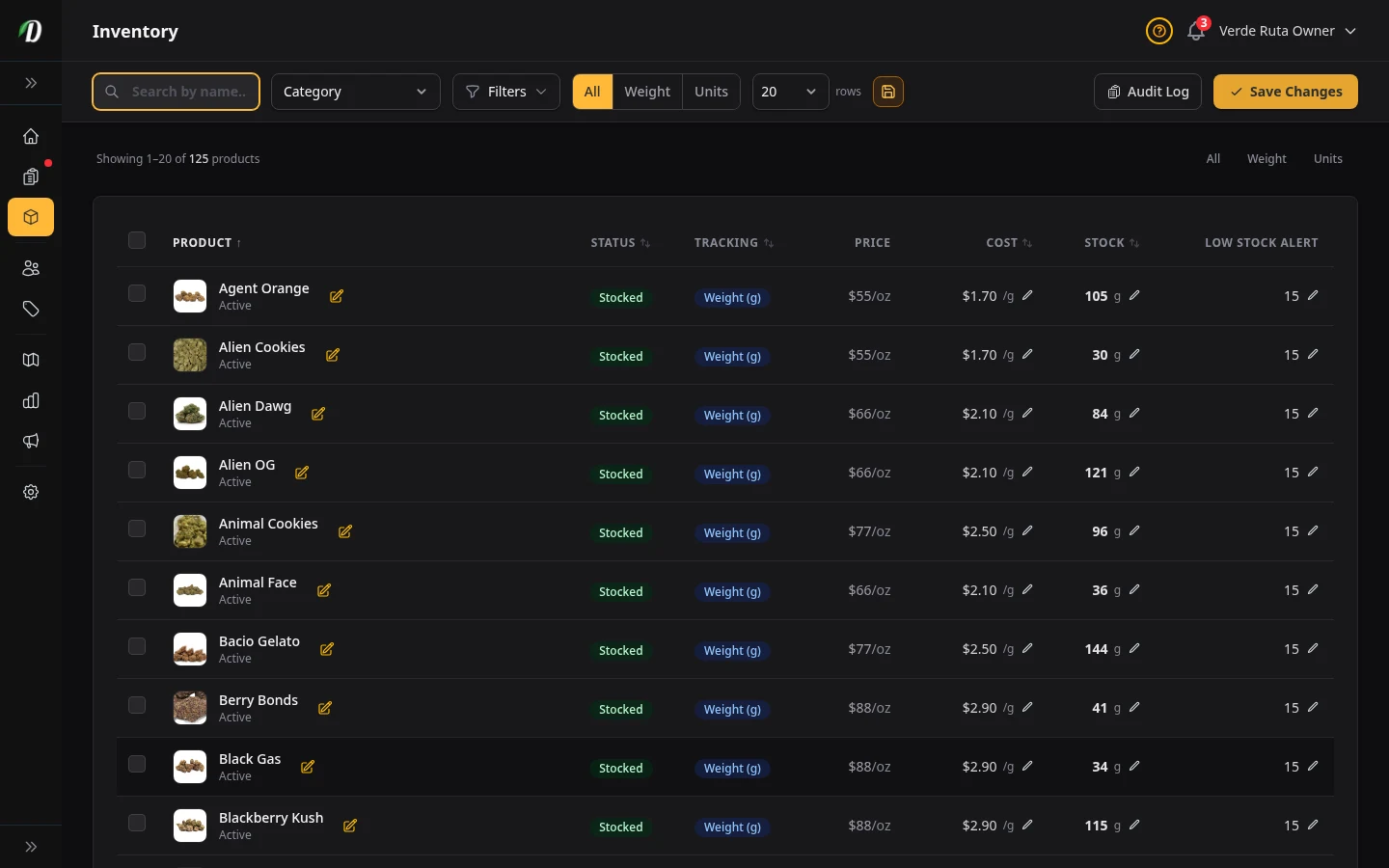
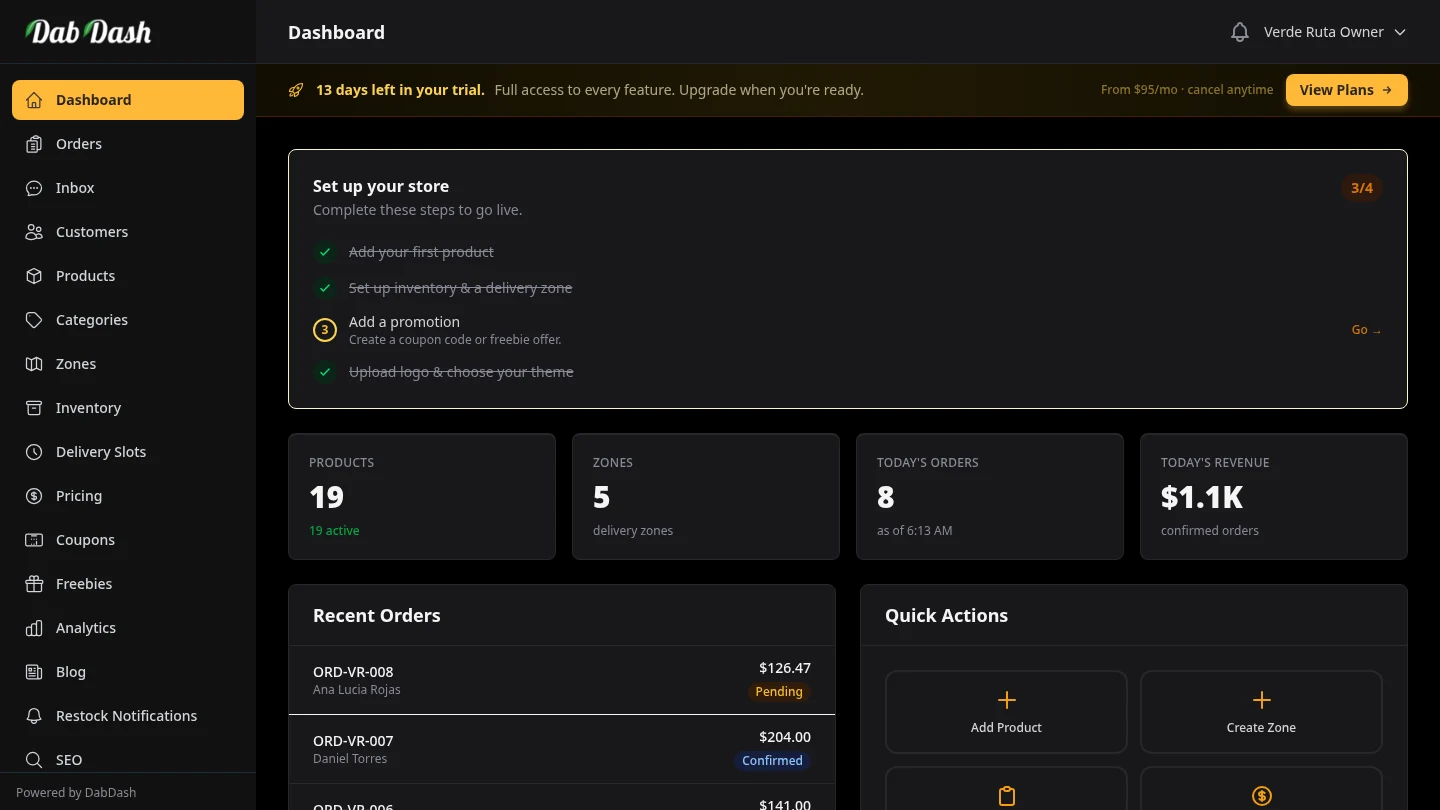
DabDash inventory management — products, stock, and pricing in one screen, no compliance middleware required.
The Metrc Overhead Problem
Flowhub's deepest strength is also its biggest source of friction for operators who do not need it. The Metrc integration is comprehensive by design: every employee who touches inventory needs their own Metrc API key, specific compliance permissions assigned in both Flowhub and in Metrc itself, and correct role configuration before they can push or pull package data.
For a multi-location retail dispensary with a compliance officer, an inventory manager, and a team of budtenders, that infrastructure makes sense. It protects you from audit exposure and automates the tedious parts of state reporting.
For a delivery operation with three drivers and an owner-operator doing everything else, it is a tax on your time. Your compliance surface is a delivery manifest — a document that says which products left the building, in which vehicle, headed to which customer. That is meaningfully simpler than a retail floor with dozens of daily transactions hitting the state system in real time. You are configuring enterprise compliance infrastructure for a small-business compliance problem.
Real operators who have used Flowhub report specific friction points: Metrc tags merging incorrectly across products, inventory falling out of sync with the state system, and the kind of support experience you get when you open a ticket about a compliance mismatch and wait for a response that addresses a different question. One reviewer gave Flowhub a 2/10 likelihood to recommend, citing: "There is no way to speak to someone, the Urgent email does not get a response."
Delivery: Bolted On, Not Built In
This is the clearest structural difference between Flowhub and a platform built for delivery operators.
Flowhub's delivery workflow works like this: a customer places an online order (via Flowhub Ecommerce or a third-party menu), the order appears in Flowhub's order management dashboard, you create a Metrc sales delivery manifest, and then — if you want driver assignment, route optimization, and customer tracking links — you push the order to Onfleet, which handles the last mile in its own separate interface.
That is two interfaces, two logins, and two monthly bills to complete what a delivery-first platform should do in one screen. It also means your compliance manifest and your delivery logistics live in separate systems that need to stay in sync. When they do not — a driver marks a delivery complete in Onfleet before the Metrc manifest closes, for example — you have a discrepancy to resolve manually.
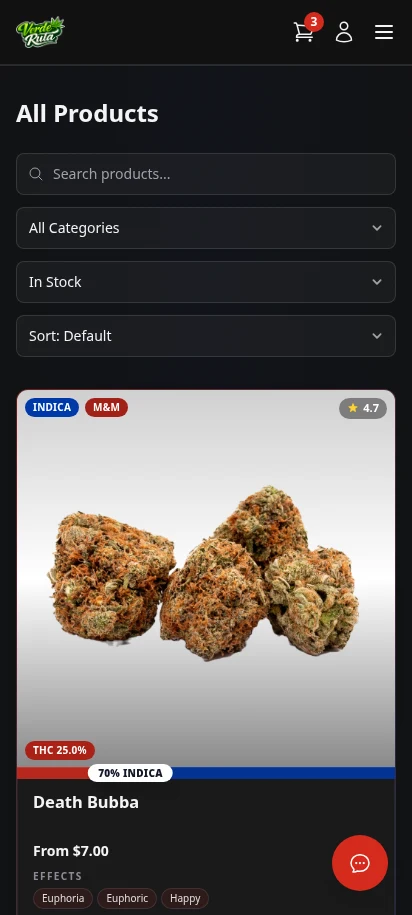
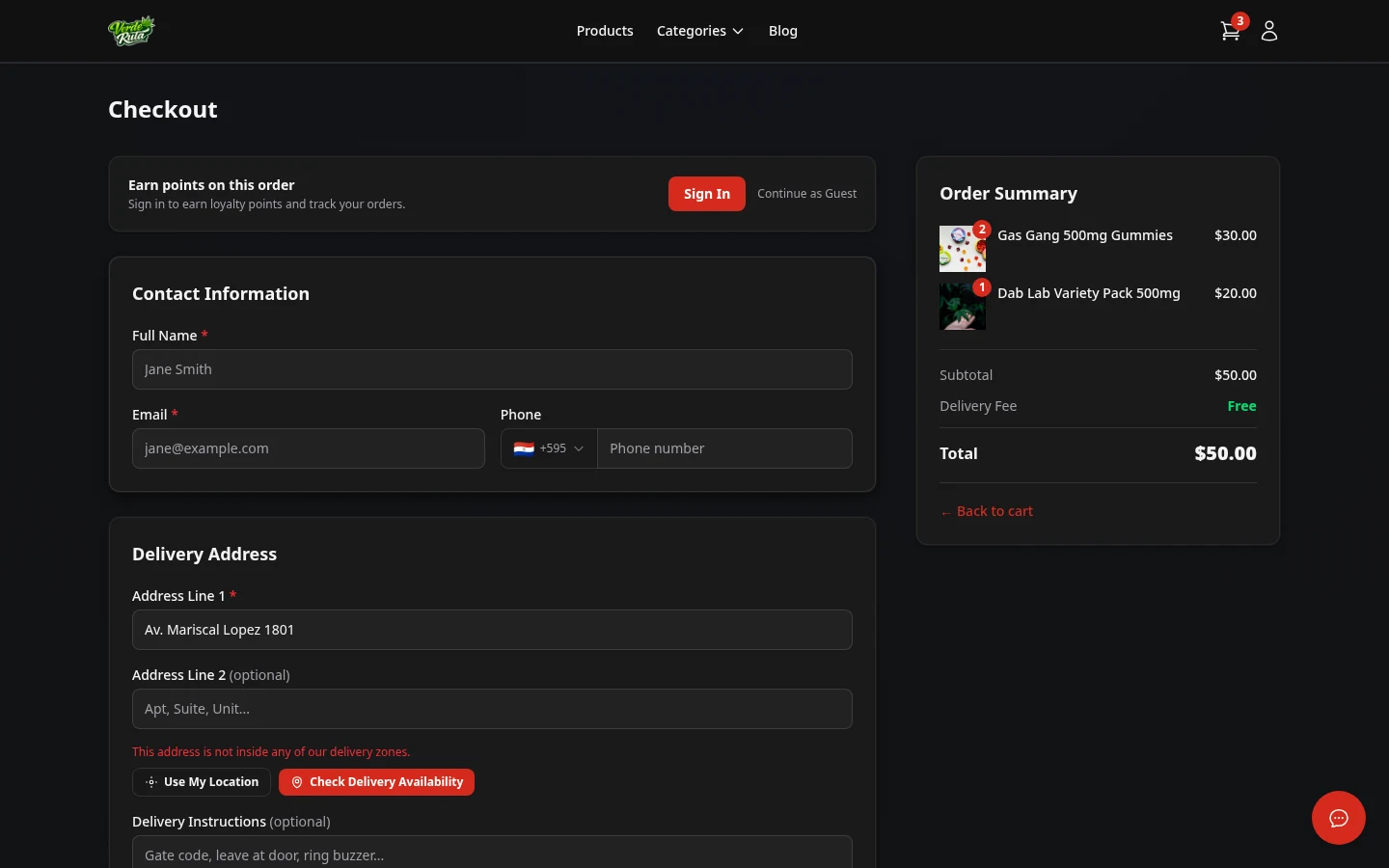
DabDash storefront — dark theme, mobile-first, fully indexed by Google.
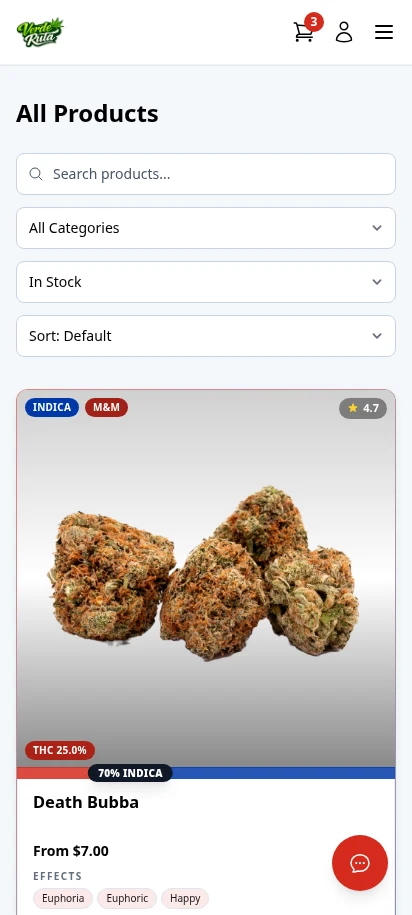
DabDash storefront — light theme. Your brand colors, your subdomain, built for search.
Online Menus and SEO: A Recent Addition
Flowhub Ecommerce only launched in July 2025. Before that, Flowhub operators who wanted online ordering had to connect a third-party menu provider. The typical choice was Dutchie or Jane — both of which serve your menu through an embedded iframe. That means your product pages live on someone else's domain, not yours. Google crawls the iframe host, not your storefront. Your menu drives traffic to a shared marketplace, not to your brand.
Flowhub Ecommerce is now native, which is progress. But it launched with ACH pre-payment as the lead feature — solving a payments problem specific to US states that allow cashless debit or ACH at retail. For Canadian delivery operators, or for anyone running a cash-on-delivery model, that feature is irrelevant.
DabDash builds SEO into the foundation. Every product, every category, and every location page is server-rendered HTML with a real URL on your domain. Google indexes your menu the same way it indexes any other website. Your customers find you through search, not through a marketplace you share with every other dispensary in your city.
Who Flowhub Is Actually Built For
To be direct about this: Flowhub is a well-built product for a specific customer. That customer is a multi-location retail dispensary in a Metrc-regulated US state, with a compliance officer, a dedicated inventory team, a retail floor that processes dozens of transactions a day, and the budget to support $400 to $500 per month in software costs plus hardware and integration fees.
If that describes your operation, Flowhub's deep Metrc integration, retail POS workflows, and multi-location support will serve you well. It has earned its position in the market.
If you run a delivery operation — no retail floor, a smaller team, a simpler compliance footprint — you are buying a retail POS that happens to have a delivery integration bolted on. The compliance machinery that makes Flowhub powerful for multi-location retail creates overhead that does not serve your business model.
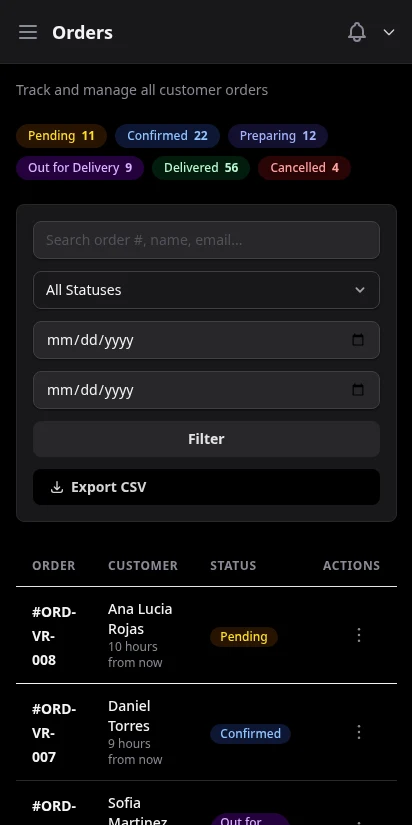
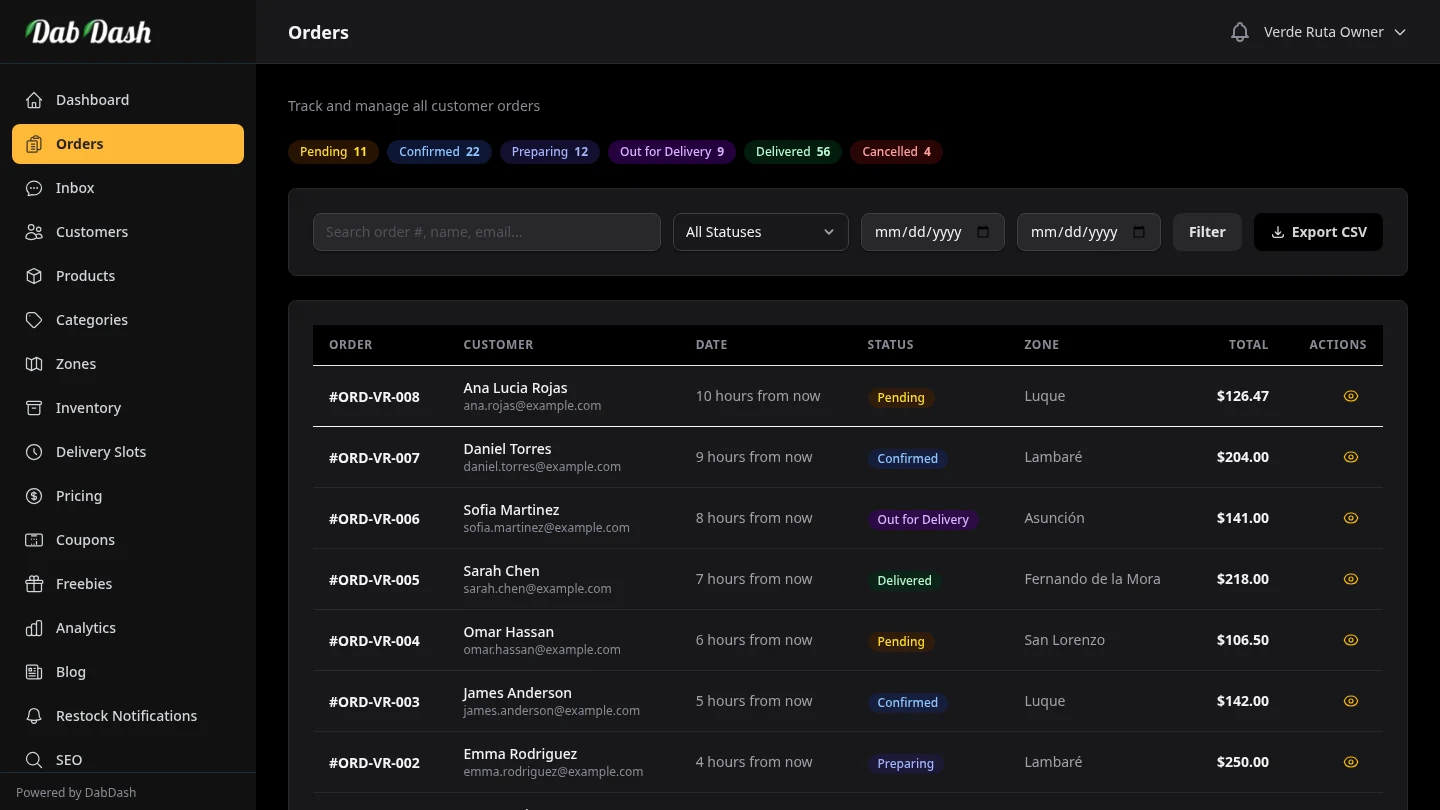
DabDash order management — dark theme, delivery-first, built for mobile operators.
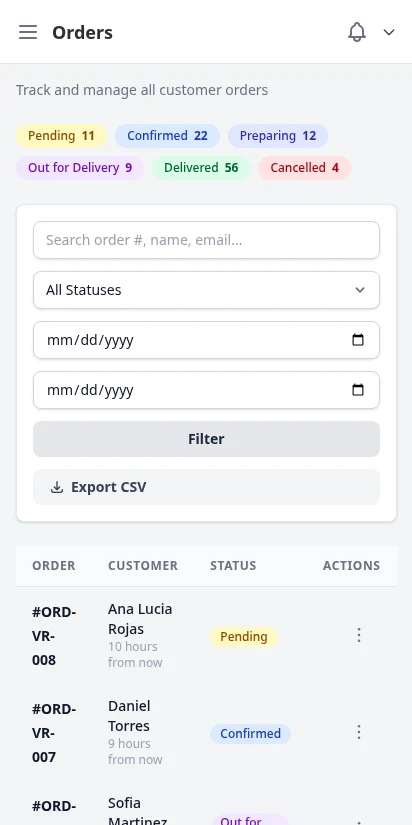
DabDash orders — light theme. One screen, every active order, no second app required.
DabDash vs. Flowhub: Feature Comparison
Feature
Flowhub
DabDash
Pricing
~$399–$499/month (quote-based)
Transparent, published pricing
Retail POS
Yes — core product
No — delivery-first only
Delivery management
Via Onfleet integration (separate cost)
Native, included
Online storefront / menu
Launched July 2025 (native); third-party before
Native, SEO-indexed, on your domain
SEO indexability
Dependent on ecommerce setup
Server-rendered HTML, fully crawlable
Metrc / compliance
Deep, real-time, multi-employee setup required
Delivery manifests, not retail-floor compliance
Hardware required
Yes — terminals, scanners, printers
No — runs in any browser
Customer payments
ACH, cashless debit, Flowhub Pay
Cash on delivery — no payment processing fees
Zone-based delivery areas
Not native
Yes — draw polygons, auto-detect customer zones
Free trial
Not available
Available
The Bottom Line
Flowhub has earned its reputation as the compliance-first cannabis POS. If you are running a multi-location retail dispensary in a Metrc state, it is a defensible choice. The Metrc integration is deep, the retail workflows are polished, and the recent ecommerce launch means the product is catching up to where the market has been heading.
For delivery operators, the math is different. You are paying retail-POS pricing for a delivery workflow that requires a second paid service (Onfleet) to function at full capability. You are configuring compliance infrastructure designed for retail floors that process hundreds of transactions a day, for a business model where your compliance surface is a delivery manifest. And until recently, you were shipping your menu through someone else's domain.
DabDash was designed for the operator Flowhub was not built for. No hardware to buy, no compliance middleware to configure, no delivery integration to bolt on from a separate vendor. Your storefront is on your domain, indexed by Google, and your orders and delivery workflows live in the same screen your drivers check. You pay for what you use, and you only pay once.
If you want to see how it compares on your actual numbers, start a free trial and have your store live before the end of the day.
FAQ
Common Questions About DabDash vs. Flowhub: Does Your Delivery Shop Really Need a $500/Month Compliance POS?
Quick answers to the most common follow up questions readers search after exploring this topic.
What is the best Flowhub alternative for cannabis delivery operators?
DabDash is built specifically for delivery-first cannabis operators. Unlike Flowhub, which is a retail POS with delivery bolted on through an Onfleet integration, DabDash includes delivery management natively, has no hardware requirements, and ships your storefront as SEO-indexed HTML on your own domain.
How much does Flowhub cost per month?
Flowhub does not publicly list its pricing. Based on operator reviews and third-party sources, monthly software costs run between $399 and $499 per location, billed annually. That figure excludes hardware, the Onfleet integration for last-mile delivery (which starts at $149/month separately), any ecommerce menu provider, and onboarding or implementation fees.
Does Flowhub support cannabis delivery?
Flowhub supports delivery through an integration with Onfleet, a separate paid service for route optimization and driver management. Flowhub handles Metrc delivery manifests natively, but last-mile logistics — driver assignment, route optimization, customer tracking links — require an active Onfleet account. That means two separate interfaces and two monthly bills for a complete delivery workflow.
Is Flowhub built for delivery-only cannabis businesses?
No. Flowhub was designed from the ground up as a retail point-of-sale for brick-and-mortar dispensaries in Metrc-regulated US states. Its core strengths — deep Metrc sync, retail floor transaction processing, multi-employee compliance permissions, and hardware terminal support — are most valuable for multi-location retail operators. Delivery is a supported workflow, but it requires a third-party integration and is not the primary use case the product was built for.
Does Flowhub require hardware?
Flowhub runs on Mac, Windows, iOS, and Android and is compatible with standard retail hardware including receipt printers and barcode scanners. While the software itself is cloud-based, most retail deployments require physical terminals, printers, and ID scanners. The Nug Pro mobile check-in tool is an iPhone-based accessory designed specifically for budtender workflows. DabDash requires no hardware and runs in any browser.
What are the most common Flowhub complaints?
Operators who have reviewed Flowhub frequently mention Metrc tag syncing errors (products falling out of alignment with the state system), support responsiveness issues (one reviewer cited a 2/10 recommendation score specifically due to unresponsive support), system reliability problems during peak hours, and the complexity of compliance configuration for smaller teams.
When did Flowhub launch its native ecommerce solution?
Flowhub launched Flowhub Ecommerce in July 2025. Before that, operators who wanted online ordering needed to connect a third-party menu provider such as Dutchie or Jane. Many of those integrations served the menu through an iframe embedded on the retailer's website, which limits Google's ability to index product pages for organic search.
What does DabDash offer that Flowhub does not?
DabDash is built around the delivery operator's workflow rather than a retail floor. Key differences: delivery management is native with no Onfleet or third-party requirement; the storefront is server-rendered HTML on your own domain, fully indexed by Google; zone-based delivery area mapping with automatic customer zone detection is built in; there are no hardware requirements; pricing is transparent and publicly listed; and the platform is available with a free trial.