Leafly built the internet's best cannabis strain encyclopedia — but paying for a Leafly listing means renting visibility in someone else's library. Here's what delivery-first operators need to know about building a brand customers return to.
Leafly built something genuinely impressive. Its strain encyclopedia is the most thorough cannabis reference on the internet. Millions of consumers visit every month to learn about terpene profiles, compare effects, read reviews, and figure out what to buy next. For cannabis education, Leafly is hard to beat.
For your business, Leafly is a different proposition entirely.
When you pay for a Leafly business listing, you are paying to appear inside someone else's library. Your products sit next to your competitors. Your customers browse Leafly's strain pages, not your storefront. And when they reorder next week, they go back to Leafly — not to a website with your name on it.
This post is not a criticism of Leafly as a consumer product. It is an honest look at what a Leafly listing actually delivers to delivery-first cannabis operators, and why building your own indexed storefront is a fundamentally different — and more durable — business strategy.
1. Leafly Is a Library. You Need a Store.
The core of Leafly's product is its strain database. It contains thousands of entries with terpene breakdowns, lineage information, user reviews, and effect tags. Consumers love it. Cannabis educators link to it. Journalists cite it. That is real value — for the consumer.
But here is the business reality: when a customer visits a Leafly strain page and eventually clicks through to your menu, they arrive as a Leafly customer. They discovered the product on Leafly. Their account is on Leafly. Their order history is on Leafly. The next time they want that same strain, they will search Leafly again — not Google for your shop name.
This is not an accident. It is how marketplace platforms sustain themselves. The customer relationship lives on the platform, not with the merchant. You are a content provider inside Leafly's ecosystem. Every order that flows through their platform deepens their moat, not yours.
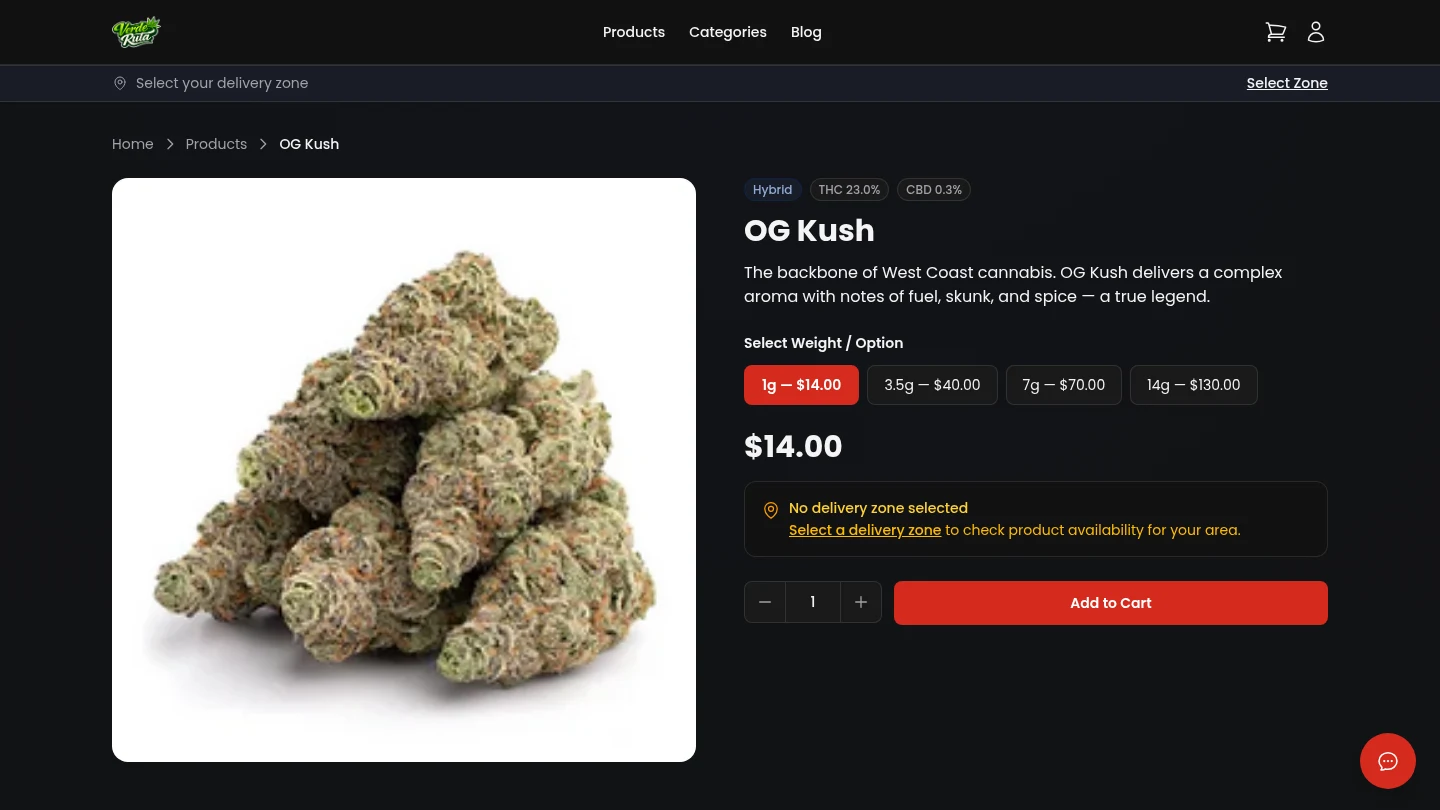
DabDash works the opposite way. Your customers visit your subdomain. They bookmark your URL. They share your link. Every return visit builds name recognition for your brand — not for a third-party marketplace.
Your DabDash storefront lives at your own URL — every visit builds your brand, not a marketplace's.
2. What a Leafly Listing Actually Costs
Leafly does not publish its monthly rates publicly, which is itself a signal worth noticing. Based on industry reporting and dispensary operator accounts, the range is wide:
Starter plan: Entry-level listing with a basic map marker, limited deal postings, and standard placement in search results
Pro plan: Upgraded placement across Leafly, unlimited deals, competitive analytics via Leafly Insights, mobile banner spotlights, and access to their paid "Boosts" advertising product
Leafly Ads: Short-term amplification including top-five placement in the dispensary directory, geotargeted hero deals, and display advertising across Leafly.com and its mobile app
Operators who have shared their costs publicly report paying anywhere from $500 to over $4,000 per month once Boosts and advertising are included. One dispensary owner reported paying $5,400 annually for a Leafly listing and finding the ROI lower than other channels they used. Another was promised 35,000 impressions for a paid campaign and averaged fewer than 100.
The most important thing to understand about this cost: you are paying for visibility on someone else's platform. When you stop paying, you disappear. There is no equity building, no domain authority accumulating, no URL that customers have bookmarked. You are renting space in a directory.
DabDash is a flat monthly subscription. Your storefront, your Google-indexed menu, your order management, and your delivery tools are all included. The moment you publish your menu, it starts building search equity on your own domain.
3. Leafly's SEO Works Against You
This is the uncomfortable truth about paying for a Leafly listing: Leafly's own search engine dominance means you are partly funding a competitor for your customers' attention.
Leafly receives roughly 5 million organic search visits per month. When a customer in your city searches "cannabis delivery near me" or "buy Blue Dream online," there is a strong chance Leafly appears above your website in the results. That is Leafly's domain authority at work — built over a decade of cannabis content.
When you pay for a Leafly listing, you are paying to appear prominently within a site that already outranks you. The customer still found Leafly first, not you. You did not improve your own position in Google. You just bought better placement inside a competitor's search results.
There is also the iframe problem. If your Leafly menu is embedded on your website as an iframe, every product page, strain name, and category that customers click belongs to Leafly's domain authority in Google's eyes — not yours. You are serving Leafly's SEO with your own inventory data.
Industry data confirms the trend: Weedmaps and Leafly have collectively lost roughly 9 million monthly organic visits over the past two years, while the top independent dispensary websites have grown organic traffic by over 100% in the same period. Dispensaries that moved to native, Google-indexable menus on their own domains captured search traffic that platforms used to own.
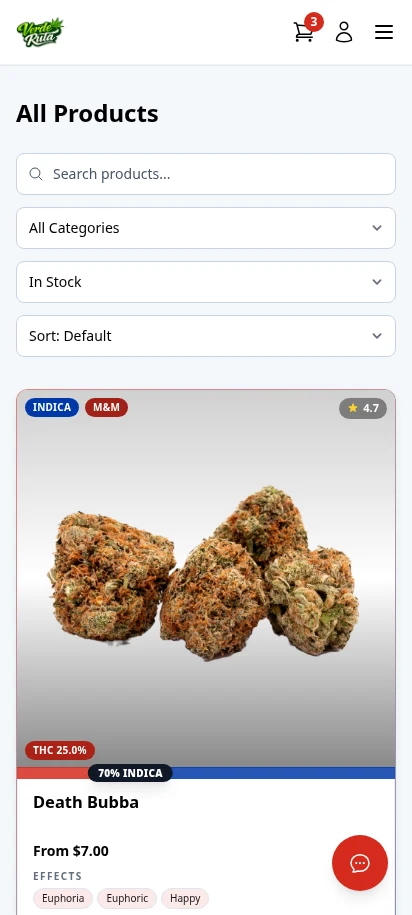
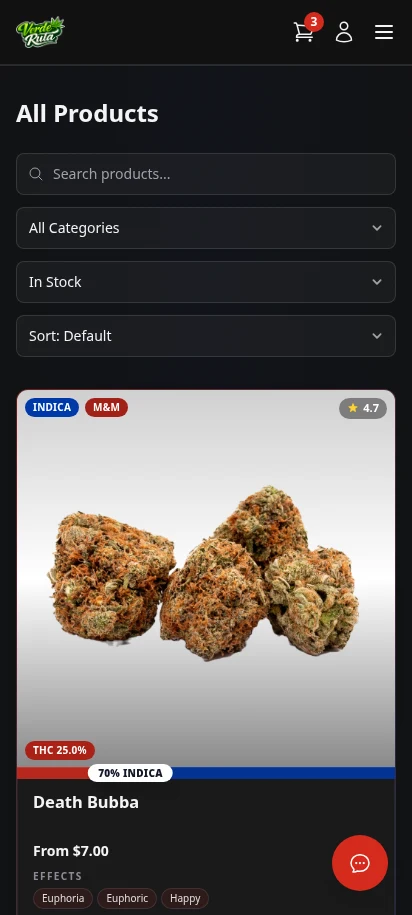
DabDash menus are native HTML — no iframes, no embedded third-party content. Every product page lives on your subdomain and is crawlable by Google. Your menu data builds your search presence, not ours.
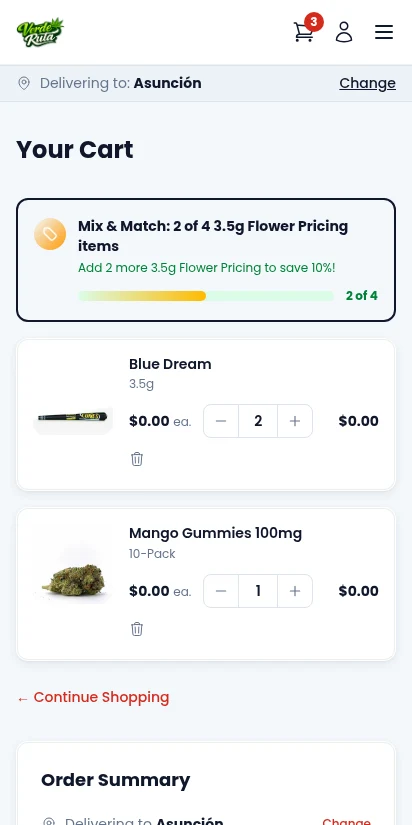
Mobile — light mode. A clean, indexed product menu your customers can bookmark and share.
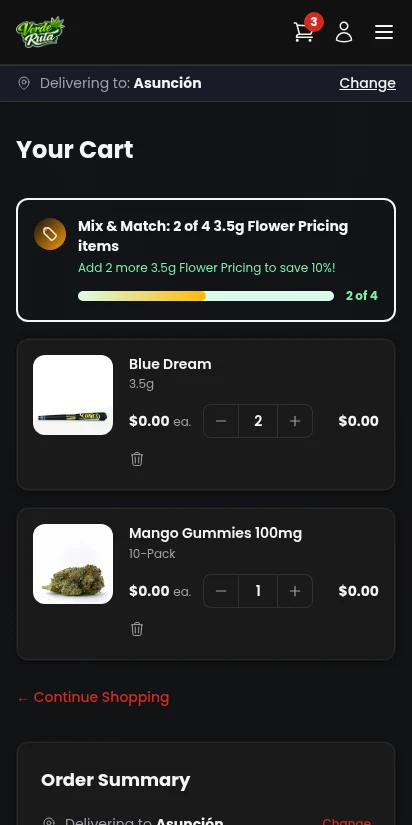
Mobile — dark mode. Every product page builds search equity on your domain, not a third party's.
4. Who Owns the Customer?
When a customer places an order through Leafly's pickup or delivery integration, Leafly collects their name, phone number, date of birth, email address, and purchase history. That data powers Leafly's email campaigns, review requests, and personalization — all driving the customer back to Leafly for their next purchase.
You get the order. Leafly gets the customer relationship.
This matters enormously for repeat business. Cannabis delivery has high repeat purchase rates. Customers who like your products will order again and again — but only if they come back to you. If their next search starts on Leafly, they may end up at a competitor who is paying for better placement that week.
With DabDash, every customer who orders through your storefront is your customer. Their order history, their preferences, their contact details all belong to your account. You can see who your top customers are, which products they reorder, and when they last visited. That data stays with your business — not with a platform that can change its pricing or terms at any time.
5. The Stability Question
Leafly went public via SPAC in 2021 at a valuation of approximately $532 million. Since then, the company has faced sustained financial pressure that has translated into multiple rounds of significant layoffs:
October 2022: 56 positions eliminated (21% of workforce), $16 million in annual cost cuts
August 2023: Another 40 positions eliminated (21% of workforce again), citing softer advertising spend
Late 2023: Nasdaq sent a non-compliance notice after Leafly's market capitalization fell to approximately $20 million — far below the $50 million minimum listing requirement
Three rounds of workforce reductions in two years, each cutting roughly a fifth of the company, represent meaningful operational disruption. Product development slows. Support quality declines. Strategic roadmaps get shelved.
This is not a prediction about Leafly's future. It is a risk factor worth understanding when you are considering building part of your customer acquisition strategy around their platform. Platforms that depend on advertising revenue from an industry where advertising is heavily restricted are structurally fragile.
DabDash is built specifically for cannabis delivery operators. Your storefront, your customer data, and your order history live in your account and are portable. Your organic Google presence, once built, belongs to your domain regardless of what any third-party platform does.
6. Delivery-First vs. Pickup-First
Leafly's original product was a dispensary directory. Its core user journey — browse strains, find a nearby store, visit in person — is fundamentally a foot-traffic model. Over time, Leafly added pickup pre-orders and delivery integrations, but these features are layered onto a platform designed around brick-and-mortar discovery.
If you run a delivery-only or delivery-first operation, Leafly's entire UI works against you. Customers browsing Leafly see a map of nearby dispensaries. They compare store hours, physical addresses, and in-store menus. Your delivery range, your zone coverage, your ETA estimates — none of this is surfaced prominently in the core Leafly experience.
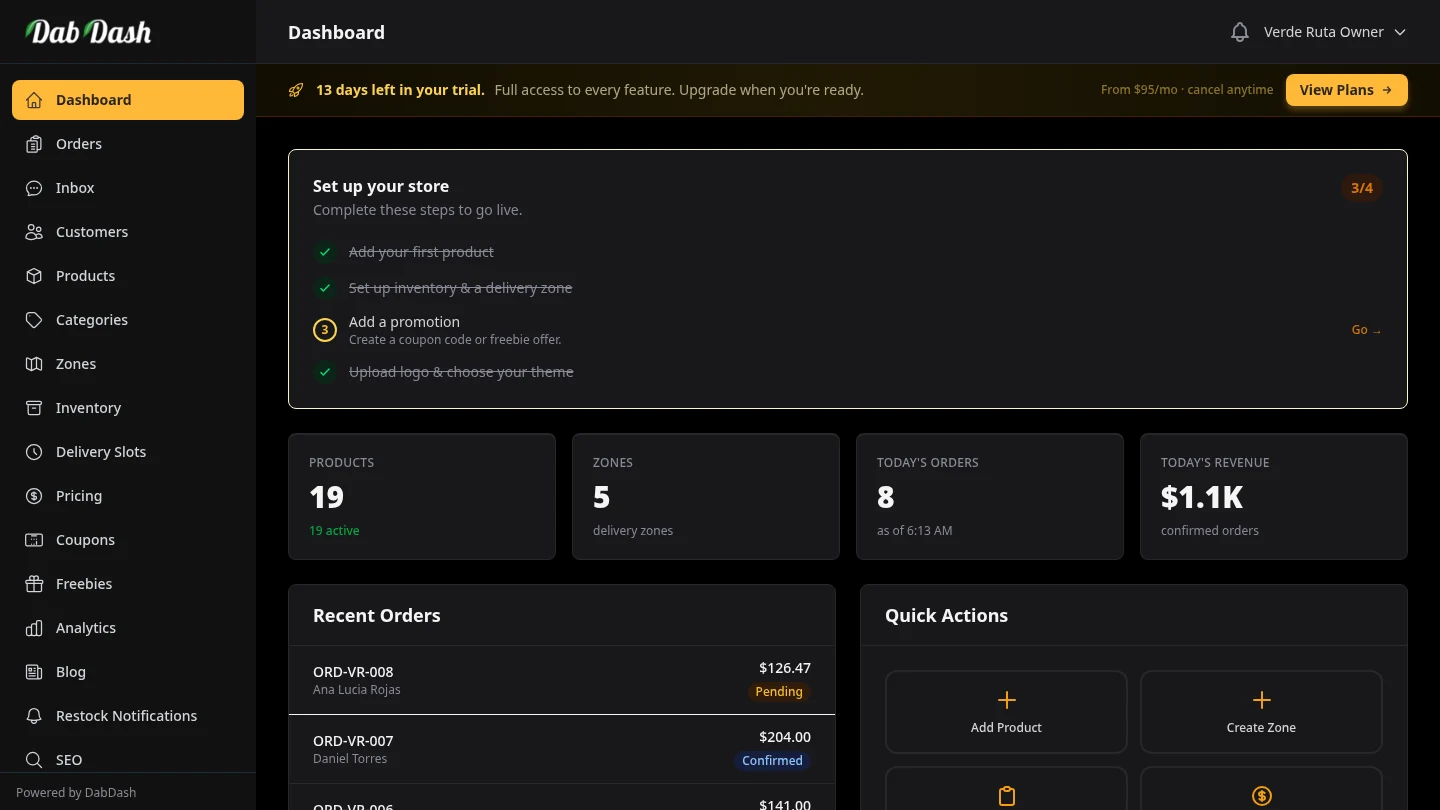
DabDash was designed from the ground up for delivery operators. Customers who land on your storefront see a delivery-first experience: your menu, your coverage area, your estimated delivery window. There is no physical store to walk into because your model does not need one. The entire customer journey — from landing on your page to completing checkout — is built for cash-on-delivery fulfillment.
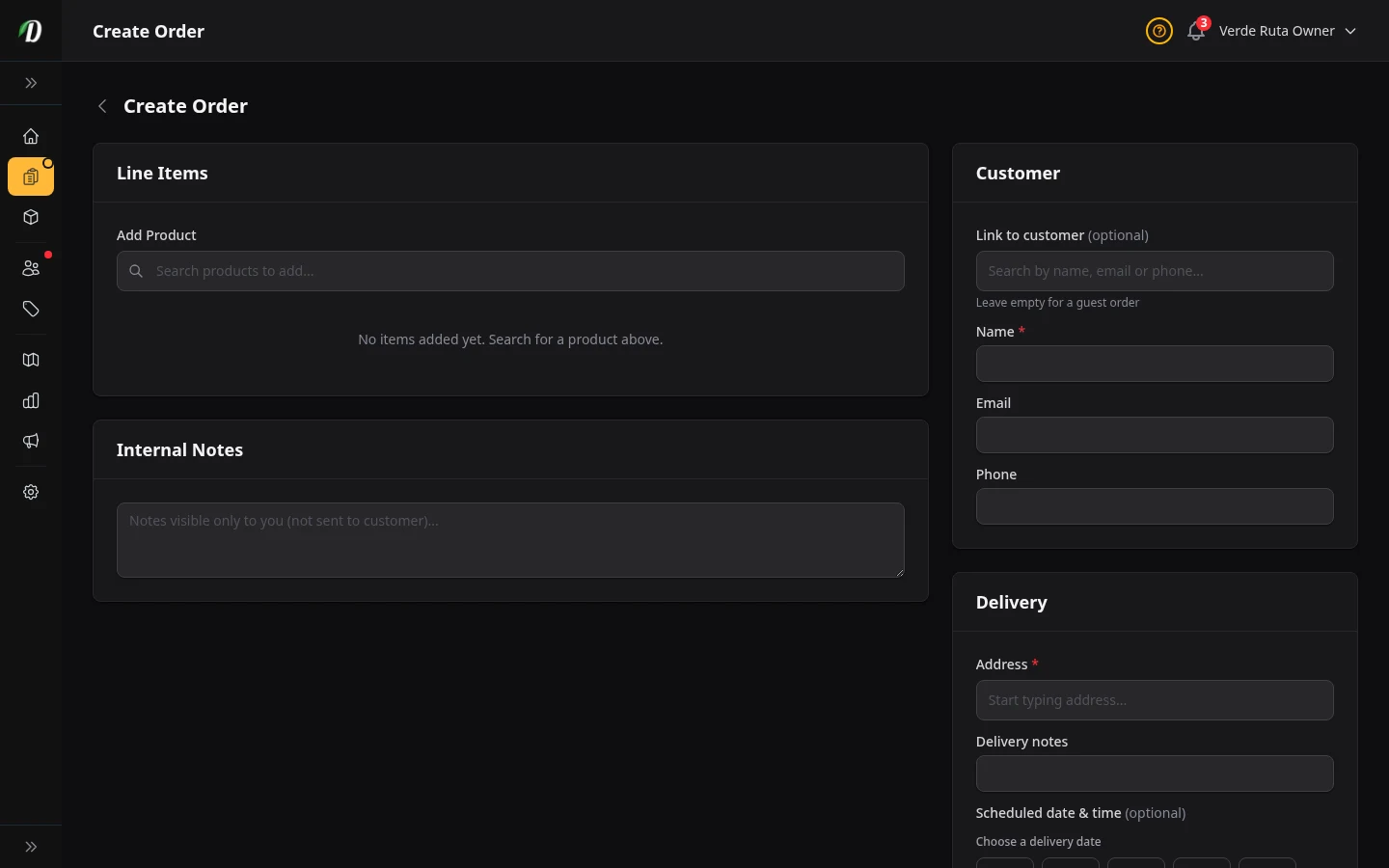
The DabDash vendor dashboard — built for delivery operators, not adapted from a walk-in retail model.
Checkout — light mode. Cash on delivery, no card forms, no payment processor friction.
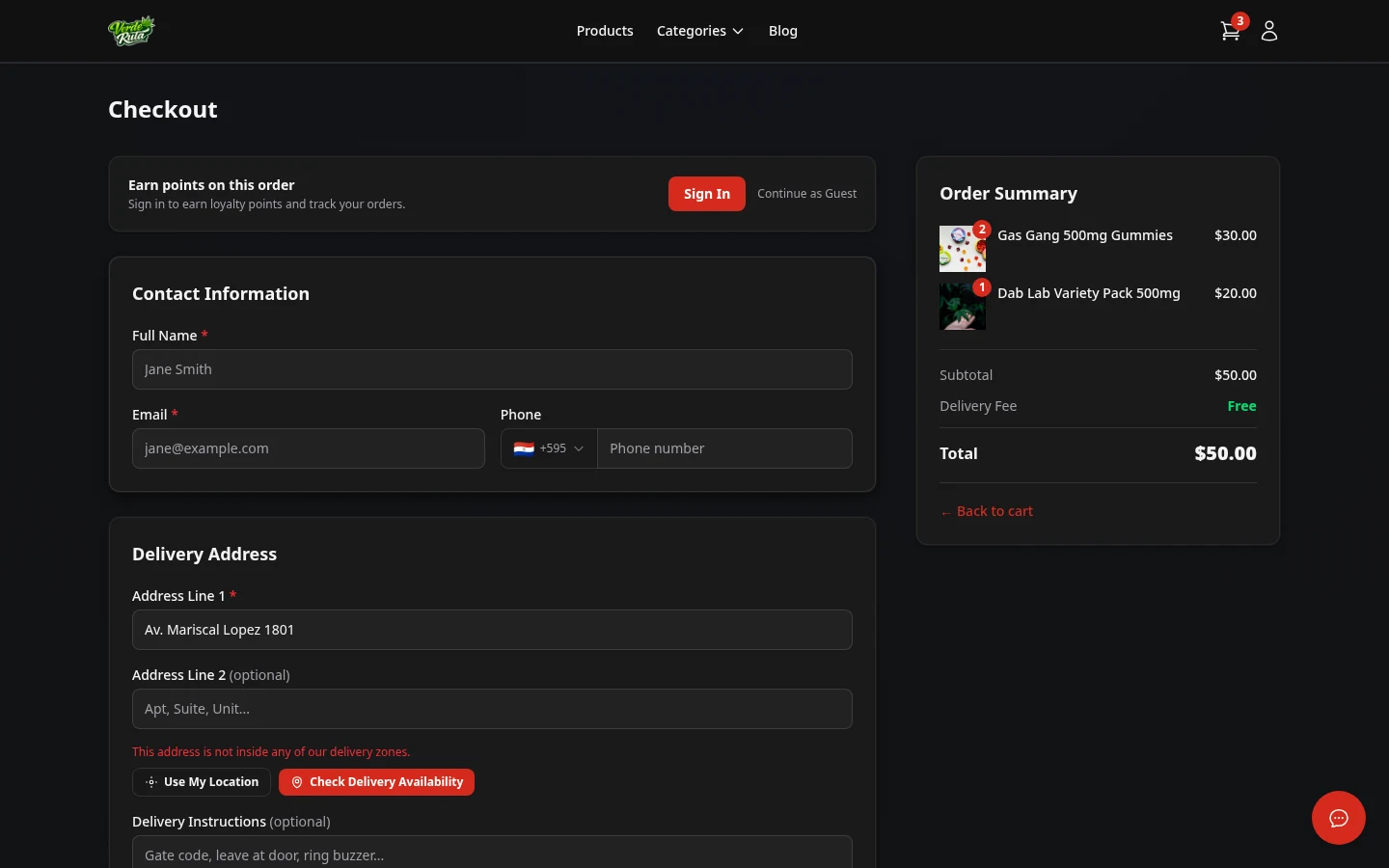
Checkout — dark mode. The entire flow is optimized for delivery, not walk-in retail.
7. Listing vs. Brand: The Compounding Difference
The most important distinction between paying for a Leafly listing and running a DabDash storefront is not a feature comparison — it is a compounding difference in where value accumulates over time.
Every month you pay Leafly, you buy visibility for that month. When you stop paying, the visibility stops. No domain authority carried forward. No customer list you own. No URL that ranks organically for your city and your products.
Every month you run a DabDash storefront, Google indexes more of your product pages. Customers search your name directly. Your menu builds review signals and repeat visit patterns that compound into organic ranking. The customers who order from you know your URL, not Leafly's.
Leafly is a tool for getting discovered inside a marketplace. DabDash is a tool for building a brand that can be discovered, bookmarked, and returned to — independently of any platform's pricing decisions.
One model rents you an audience. The other helps you build one.
Side-by-Side: Leafly vs. DabDash
Leafly Business Listing
DabDash
Primary focus
Strain discovery & directory listing
Delivery-first storefront & order management
Your URL
leafly.com/your-store
yourstore.dabdash.com (custom domain supported)
Google indexing
Leafly's domain gets the credit
Your domain gets the credit
Customer data
Shared with Leafly platform
Yours entirely
Cost structure
$500–$4,000+/month, pay-to-play visibility
Flat monthly subscription, no visibility auctions
Delivery model
Adapted from a walk-in retail discovery tool
Built delivery-first from the ground up
Platform risk
Multiple rounds of layoffs, Nasdaq compliance issues
Purpose-built SaaS for cannabis delivery operators
What you own after two years
Nothing you did not pay for this month
Domain authority, customer data, order history, brand recognition
When Leafly Makes Sense
This post is not arguing that Leafly is useless for every operator. There are scenarios where a Leafly listing adds real value:
New market entry: If you just opened in a new city and need immediate discovery while your own SEO builds, a Leafly listing can generate early-stage awareness.
Highly competitive urban markets: In dense metros where consumers actively use Leafly to compare nearby options, a presence on the platform makes sense as part of a broader strategy.
Strain enthusiast audiences: If your product differentiation is heavily strain-focused — rare genetics, small-batch cultivars — Leafly's strain-curious audience may convert better for you than in other channels.
The key word is supplement. A Leafly listing might make sense as a top-of-funnel awareness tool alongside a DabDash storefront that captures the actual customer relationship. What it should not be is your primary — or only — customer acquisition channel.
Building your delivery business on a rented listing in someone else's directory is like running a restaurant where every customer thinks they are eating at the food court — they liked the meal, but they will go back to the mall, not to you.
The Bottom Line
Leafly earned its reputation by building the best strain database on the internet. That content moat is real and it brings millions of cannabis consumers to the platform every month. If you want to be visible where those consumers are browsing, a Leafly listing will put you there.
But visibility inside Leafly is not the same as owning a customer relationship. It is not the same as building a brand that people search for by name. And it is not the same as having a Google-indexed storefront that earns organic traffic every month, whether you are paying for amplification or not.
DabDash gives delivery operators an SEO-ready storefront, a complete delivery management system, and full ownership of their customer data — for a flat monthly fee, with no pay-to-play visibility auctions and no platform that outranks you for your own customers.
Leafly is a library worth knowing about. Your business needs a store worth coming back to.
FAQ
Common Questions About DabDash vs. Leafly: Is Your Cannabis Business a Listing or a Brand?
Quick answers to the most common follow up questions readers search after exploring this topic.
How much does a Leafly business listing cost per month?
Leafly does not publish its pricing publicly. Based on dispensary operator reports, costs range from approximately $500/month for a basic Starter listing up to $4,000/month or more once Pro plan features and paid Boosts or ad placements are added. Pricing varies by market and is negotiated through Leafly's sales team.
Does Leafly own my customer data when orders come through the platform?
When customers order through Leafly's menu integration, Leafly collects names, phone numbers, email addresses, and order history to power their own platform experience. The customer relationship is tied to the Leafly account, not your storefront. With DabDash, your customer data belongs entirely to your account.
Can a Leafly listing hurt my own website's Google ranking?
If your Leafly menu is embedded on your website via an iframe, Google credits all that product content to Leafly's domain, not yours. This means your inventory data builds Leafly's search authority instead of your own. DabDash menus are native HTML on your domain, so every product page indexes under your URL.
Is Leafly a good fit for delivery-only cannabis businesses?
Leafly was designed around a dispensary discovery and foot-traffic model. Its core experience helps consumers find nearby stores to visit in person. Delivery features were added later and are not the primary customer journey. DabDash is designed delivery-first: no POS hardware, no walk-in retail assumptions, just a menu-to-checkout flow for cash-on-delivery operations.
What happened with Leafly's layoffs and financial challenges?
Leafly has gone through multiple significant workforce reductions since 2022 — cutting roughly 21% of staff in October 2022, another 21% in August 2023, and facing a Nasdaq non-compliance notice after its market capitalization fell below the $50 million minimum required for exchange listing. These are risk factors worth considering when evaluating long-term platform dependence.
What is the difference between a Leafly listing and a DabDash storefront?
A Leafly listing gives you a page inside Leafly's directory. Visibility requires ongoing payment, customer data stays with Leafly, and search equity builds on Leafly's domain. A DabDash storefront is your own branded URL with a Google-indexed menu, full customer data ownership, delivery management tools, and a flat monthly subscription with no pay-to-play visibility auctions.
Can I use both Leafly and DabDash at the same time?
Yes. Some operators use a Leafly listing for top-of-funnel awareness in competitive markets while running their DabDash storefront as the destination for direct orders and repeat customers. The key is ensuring your DabDash storefront, not Leafly, is where the ongoing customer relationship lives.
Does DabDash require any POS hardware to get started?
No. DabDash is a fully cloud-based delivery platform. You need a browser and an internet connection. There is no hardware to purchase, no tablets to install, and no counter-based setup required. It is built for delivery operators who take orders online and fulfill them at the customer's door.