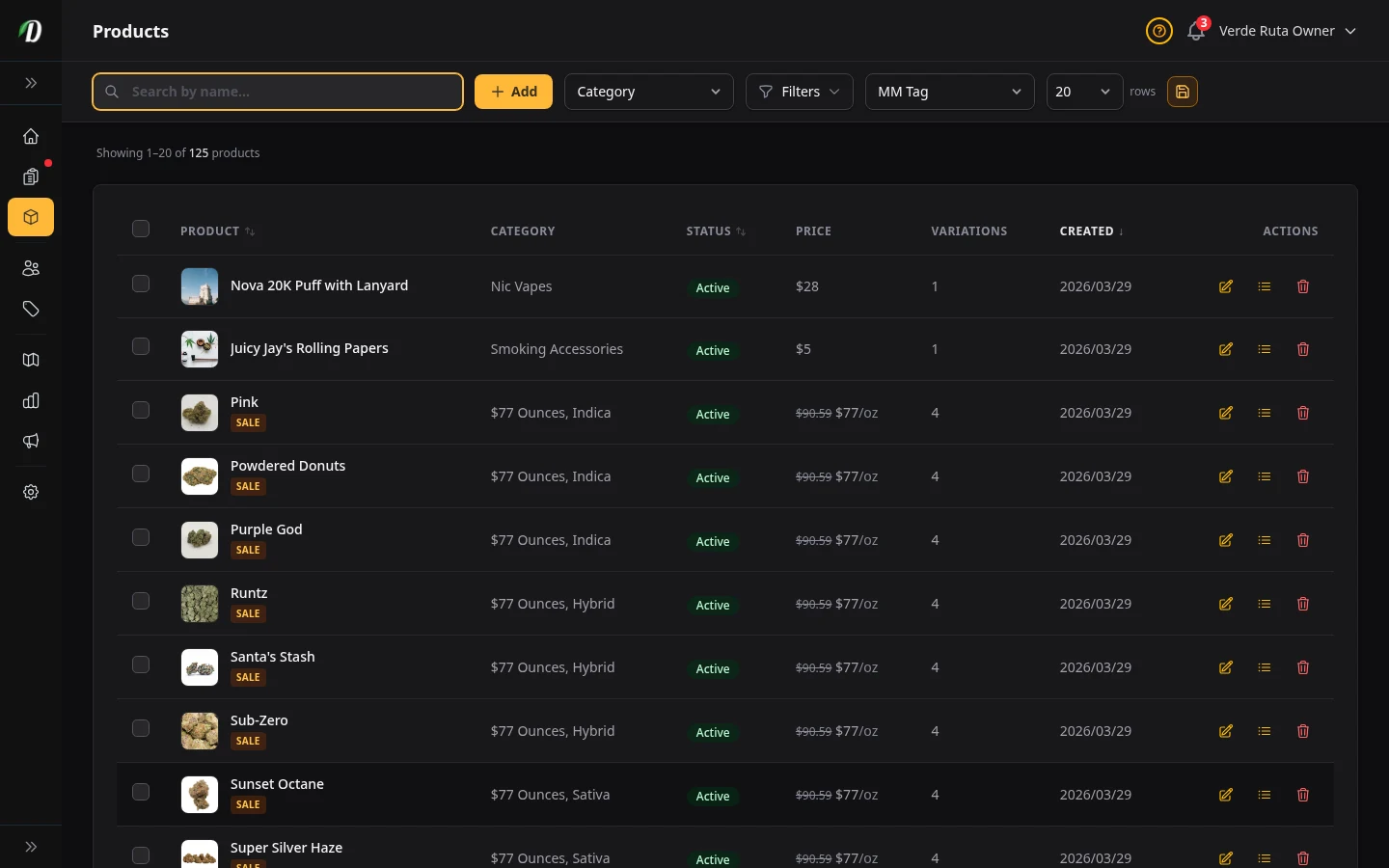
Meadow built its platform for California dispensaries running retail and delivery together. If your operation is delivery-first — or outside California — you may be paying for a POS, hardware, and compliance tooling you will never use.
“Unified” is one of the most seductive words in B2B software. One system. One login. One monthly invoice. No integration headaches between your POS, your online menu, and your delivery dispatch. Meadow has built its entire brand around this premise — and for a California dispensary running in-store retail alongside a delivery fleet, that unified pitch has genuine appeal.
For a delivery-first operator outside California — or even within it — that same unified system means you are paying for retail floor workflows, in-store checkout hardware, and California-specific compliance integrations that exist solely because Meadow was built in San Francisco for San Francisco dispensaries. You are buying the whole platform whether you use all of it or not.
Here is what that actually costs, and why it matters for your bottom line.
1. Meadow Is a California Company, Through and Through
Meadow was founded in 2014 in San Francisco. It graduated from Y Combinator’s Winter 2015 class as the first cannabis company to do so, raised $2.1 million in seed funding from Silicon Valley investors including Reddit co-founders Steve Huffman and Alexis Ohanian, and spent its formative years building software specifically for California’s delivery regulations.
That origin is still visible in every layer of the product. Meadow supports California’s hub-and-spoke delivery model, California’s dynamic “ice cream truck” delivery model, and real-time Metrc compliance reporting — all deeply California-specific regulatory requirements. Their blog is filled with guides titled “How to Start a Cannabis Delivery Service in California” and “Why California Dispensaries Need a California-Specific POS.”
Meadow did not expand beyond California until 2022, when they partnered with a Michigan operator to enter that state. Massachusetts, New York, New Jersey, and Washington D.C. followed. As of 2026, Meadow operates in six jurisdictions. That is meaningful growth — but it is also a product that was purpose-built for one regulatory environment and is being adapted, state by state, to others.
If you are operating outside those six markets, Meadow is not an option at all. If you are in one of those markets but not California, you are using software that was designed around California regulations and retrofitted for yours.
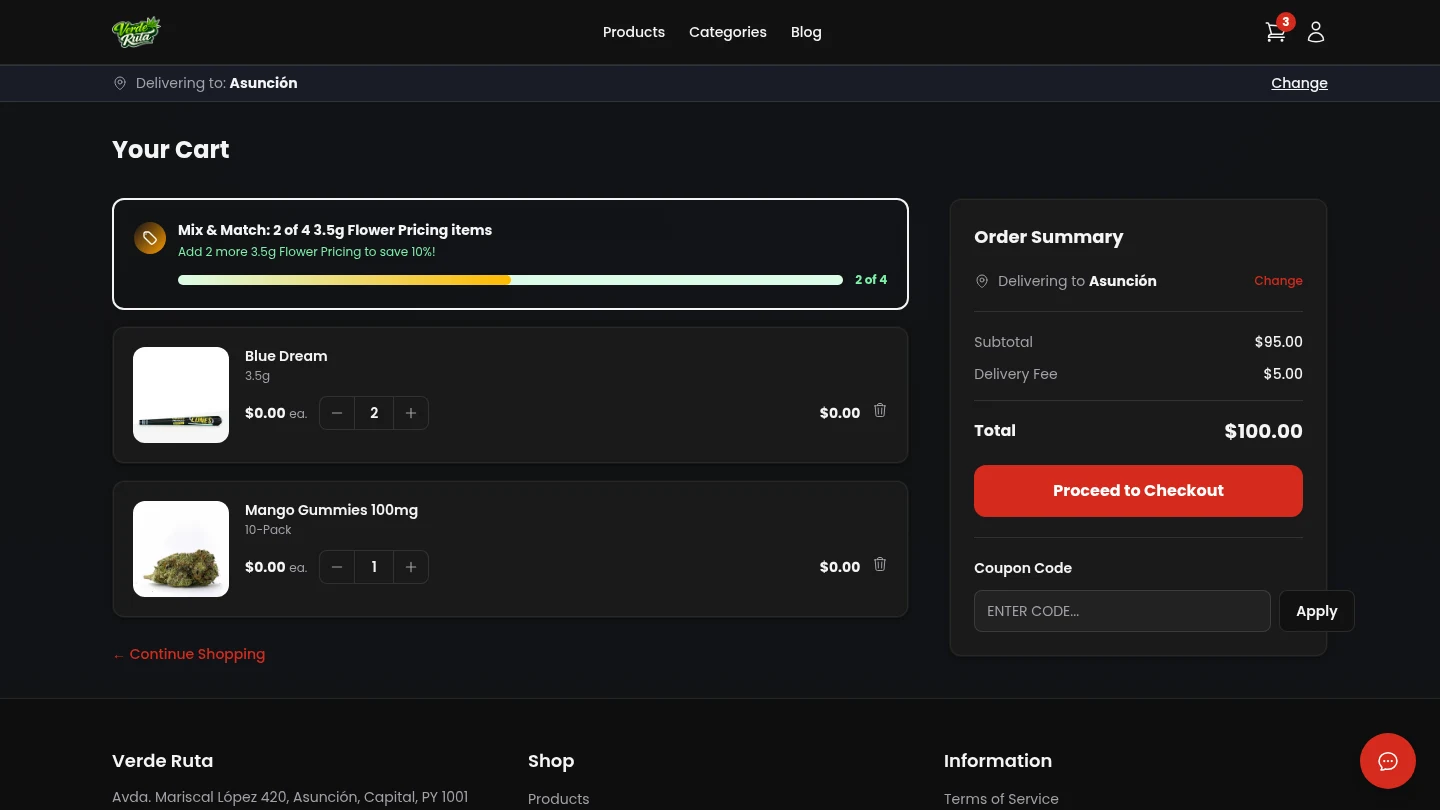
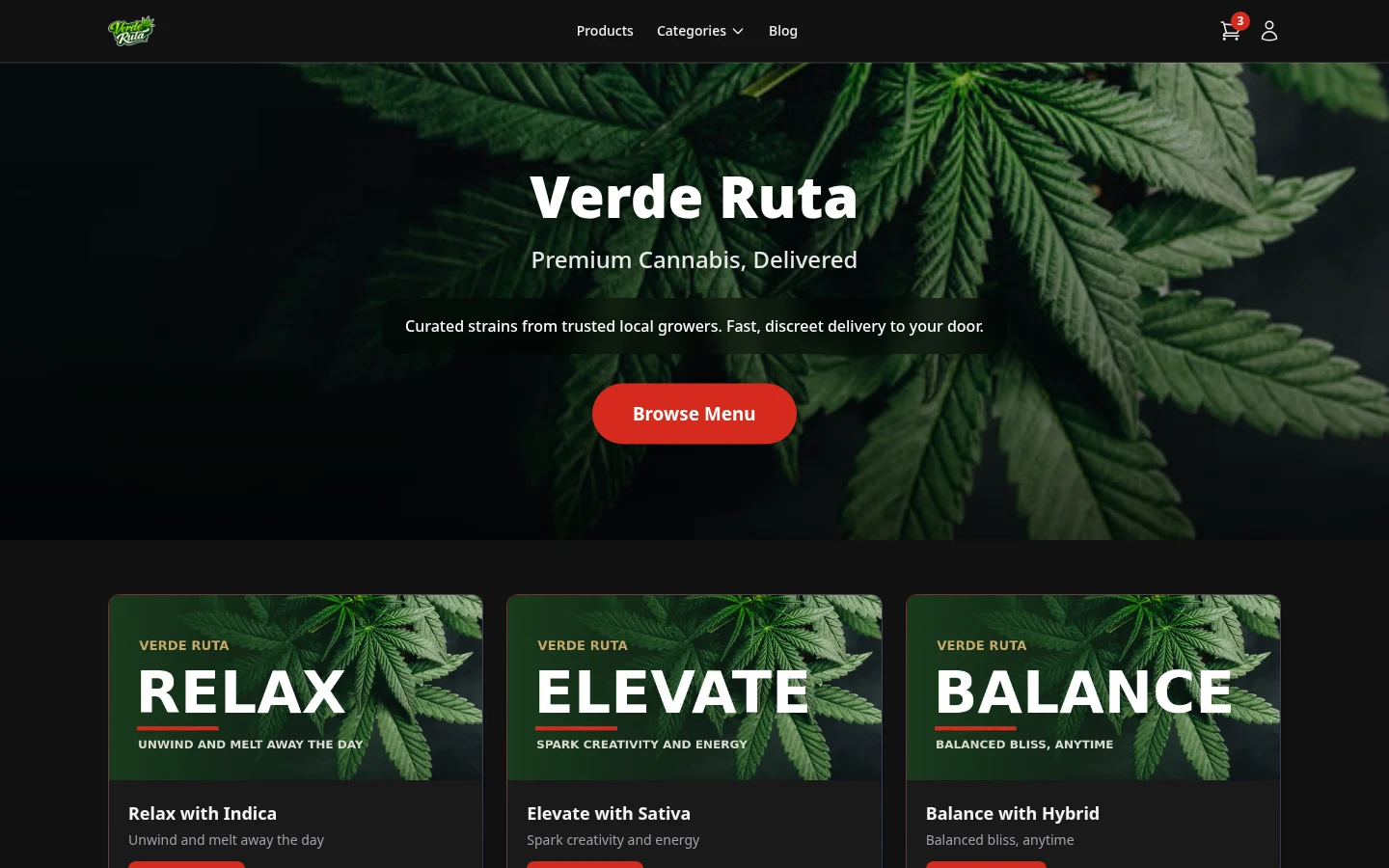
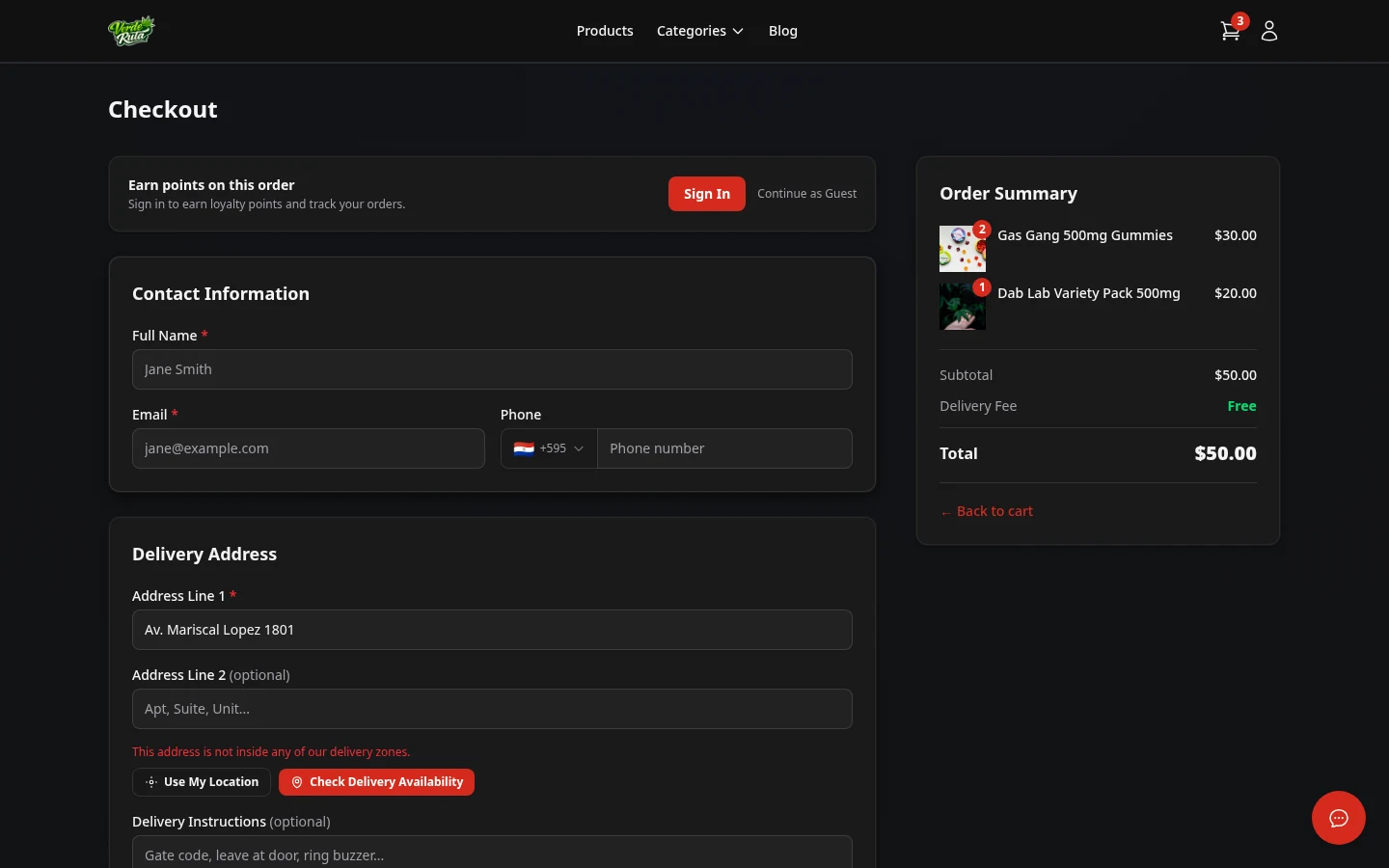
DabDash storefronts are yours from day one — fully branded, Google-indexed, and built for delivery anywhere cannabis delivery is legal.
2. The “Unified” Price Tag: You Pay for Everything, Use Half
Meadow does not publish its prices. What is known from third-party review aggregators is that Meadow typically ranges from $150 to $400 per user per month, depending on the modules selected and your business size. Their plans are structured around three operational modes: Storefront (retail only), Storefront & Delivery (combined), and Delivery (delivery only).
That last option sounds like it might be the right fit for a delivery operator. But here is the catch: the pricing is “unified” too. Getting a number requires a sales call, a demo, and a quote tailored to your specific setup. There is no public pricing page with clear tier breakdowns. You negotiate a number with a salesperson who gets paid to sell you the full platform.
For comparison, here is how the two platforms stack up on cost transparency and what you actually get:
Cost Factor
Meadow
DabDash
Pricing visibility
Quote required — no public pricing
Published flat rate
Estimated monthly software
$150–$400 per user
One flat price
Hardware required
Yes — iPad(s) running iPadOS 15+
None
eCommerce / online menu
MenuPro (included, embedded widget)
Full independent storefront (included)
Delivery management
Included (CA-compliant hub & spoke)
Included (core feature)
Geographic availability
CA, MI, MA, NY, NJ, DC only
Any legal delivery market
Metrc compliance
Yes (CA, and select states)
Cash-on-delivery, no state compliance layer needed
Contract required
No long-term contract
No long-term contract
The “unified” pricing model works in Meadow’s favour: because you cannot pick and choose modules, you cannot find out what the delivery-only piece of their platform actually costs. You get the whole system or you go elsewhere.
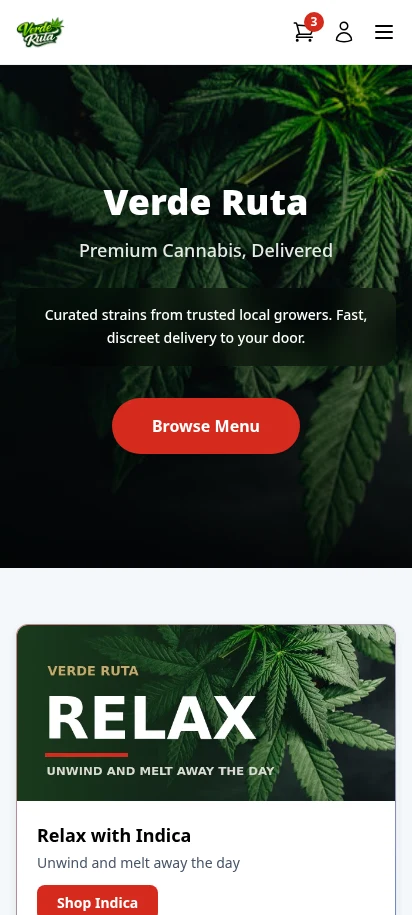
Mobile — light mode. Your storefront, your brand, no sales call required.
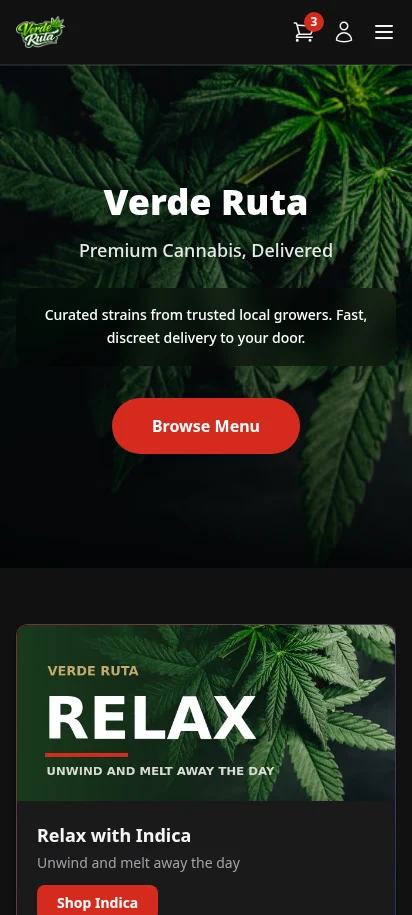
Mobile — dark mode. Live and taking orders the same day you sign up.
3. The eCommerce Difference: MenuPro vs. Your Own Storefront
Meadow’s eCommerce product is called MenuPro. It is a widget you embed into your existing website. The pitch is that it gives you “the speed of an iframe with the SEO power of a native menu” — meaning Meadow has built the embeddable code to be crawler-friendly, generating SEO URLs for product pages rather than loading everything inside an opaque iframe that Google ignores.
That is a genuine improvement over older iframe-based menus. But there is an important distinction between what MenuPro delivers and what you actually want as a delivery operator: MenuPro is a widget embedded inside your website. DabDash is your website.
The difference matters for several reasons:
Domain authority: MenuPro-generated pages live on your domain if you configure it correctly — but you still need to build and maintain a separate website around it. You are responsible for hosting, design, the CMS, and the surrounding content that makes Google trust your domain. DabDash gives you a complete, SEO-ready storefront with no separate site to maintain.
Branding consistency: An embedded menu inside a website you built elsewhere means two design systems to maintain. Your product pages may look slightly different from your landing pages. DabDash is one cohesive system, designed for delivery businesses.
Upload your products in DabDash and they are live on your Google-indexed storefront immediately — no separate website to build, no embed code to configure.
4. Hardware: One More Thing You Did Not Budget For
Meadow’s POS runs on iPads — specifically iPadOS 15.0 or later. If you are running a delivery operation from your existing laptop or phone, you will need to purchase one or more iPads just to operate the POS system. Meadow does not sell hardware bundles directly, so you procure your own devices before you can run the software you are paying for.
For a delivery-only operator, this hardware requirement is pure overhead. Your drivers do not need iPads. Your dispatch does not need a POS terminal. The retail-floor checkout workflow that Meadow’s POS was designed around is not part of your business model — but you are paying for it and buying hardware to support it.
DabDash requires no hardware. Your vendors manage orders from any browser. Your customers order from any phone. There is no hardware line item, no procurement process, and no iPadOS version requirement standing between you and your first order.
5. Delivery Management: Deep California Compliance vs. Simple Delivery Operations
Where Meadow genuinely earns its “unified” reputation is in delivery operations for California-licensed operators. The platform supports hub-and-spoke delivery (drivers depart from a licensed premises), dynamic delivery (drivers carry inventory and sell from the vehicle — the “ice cream truck” model), and hybrid models that mix both. Every step is built to comply with California’s Metrc inventory ledger requirements, automatic regulatory reporting, and geofencing rules.
That depth of California compliance infrastructure is genuinely valuable — if you are a California dispensary operating under CDFA or BCC licensing and you need your software to handle Metrc automatically. If you are not in California, you are carrying compliance tooling that was built for a regulatory environment you do not operate in.
DabDash is built around the simplest, most reliable delivery model: a customer orders online, your team prepares the order, a driver delivers it, and cash changes hands at the door. No Metrc. No CDFA compliance layer. No California-specific geofencing logic. Just delivery, done cleanly, in any market where cannabis delivery is legal.
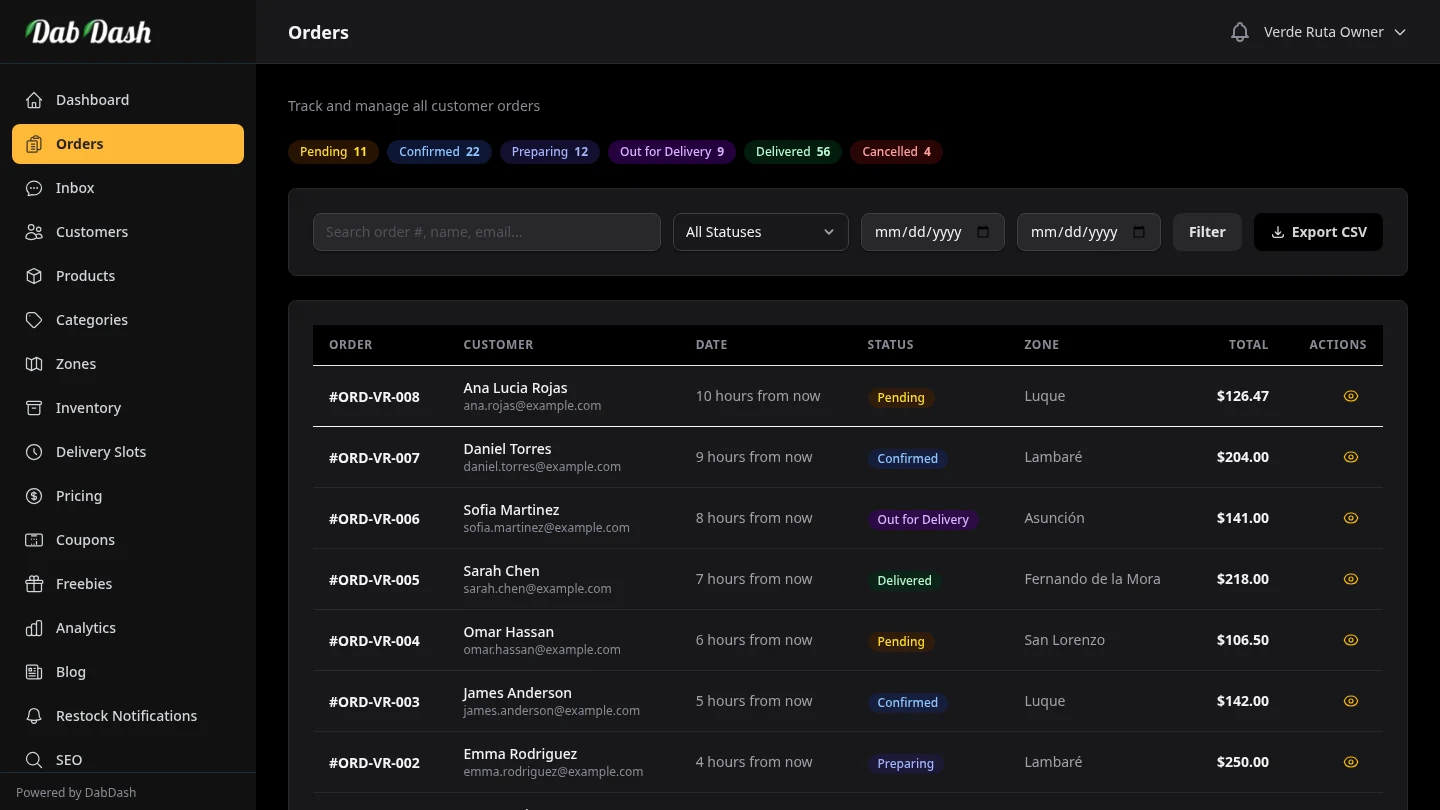
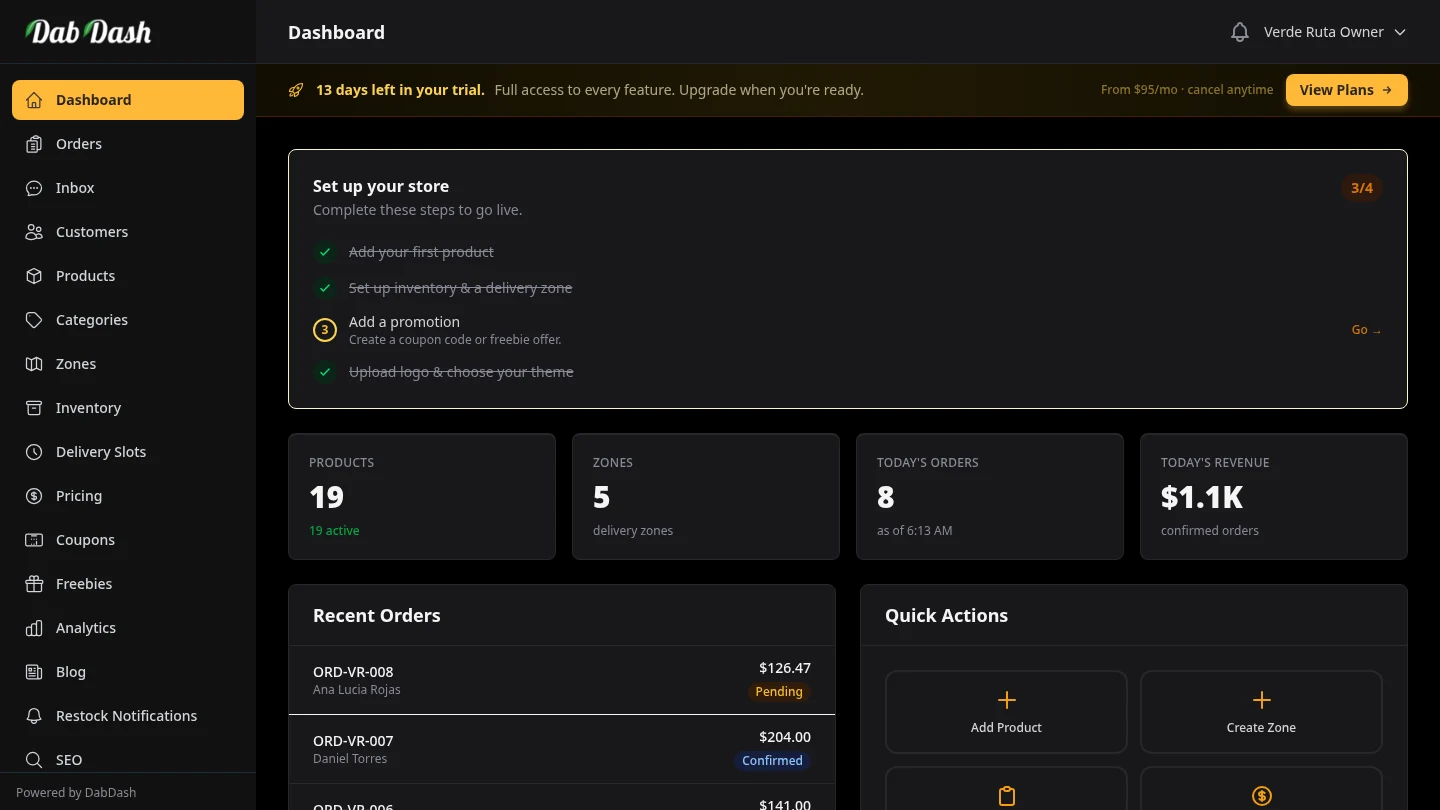
Every order in one place — no Metrc sync, no compliance layer to configure. Just your deliveries, clearly managed.
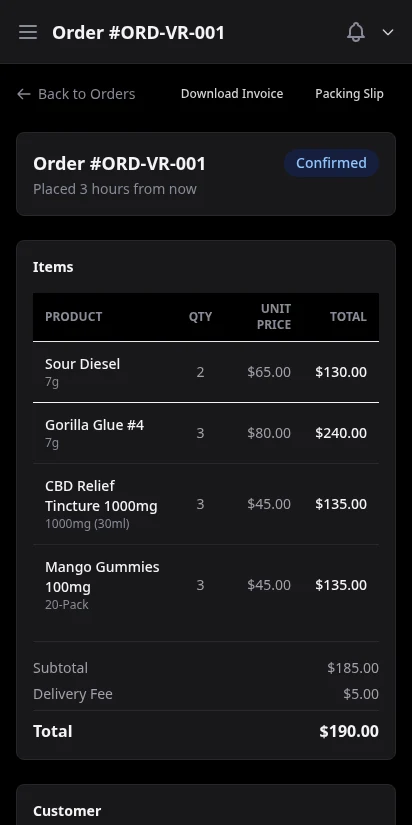
Order detail — dark mode. Everything your driver needs, on any phone.
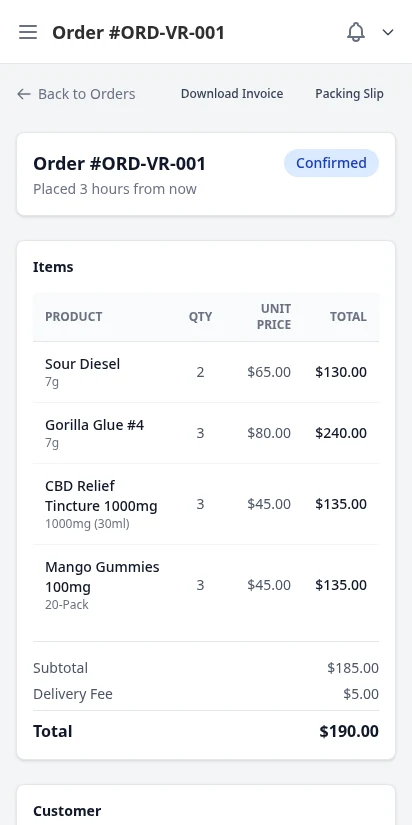
Order detail — light mode. No hardware, no compliance layer, no friction.
6. Cash on Delivery vs. Payment Processing Complexity
Meadow is built for dispensaries that need payment infrastructure — integrated cash management, cashless ATM support, and reconciliation tools that tie back to your POS receipts. For a retail dispensary handling hundreds of in-store transactions a day, that tooling adds up to real value.
For a delivery operator, every layer of payment processing is a layer of risk. Cannabis banking remains complicated. Merchant accounts get frozen. Cashless ATM processors exit the space overnight. ACH workarounds attract regulatory scrutiny. Every month you run a payment processing relationship in cannabis is a month where your cash flow depends on a fintech partner staying in business and staying compliant.
DabDash is Cash on Delivery only. Your customer places an order online. Your driver delivers it. Your customer hands over cash. You keep every dollar without a processing fee, interchange cut, or fintech intermediary. The oldest transaction in retail — and in cannabis delivery, still the most reliable one.
7. The “Unified” Trap in Practice
Here is the question worth asking before you book a Meadow demo: which half of the “unified” platform do you actually need?
Meadow’s pitch is a single system covering retail POS, delivery dispatch, online ordering, loyalty, marketing, and compliance reporting. For a California dispensary running a hybrid retail-plus-delivery operation with a full staff, a licensed premises, and a compliance team managing Metrc — that unified model is a real solution to real problems.
For a delivery-first operator — one driver, one hub, a phone-based team, and customers ordering online and paying cash at the door — you are paying for:
An in-store POS system your operation does not have a counter for
California compliance tooling for regulations that do not apply to your state
iPad hardware to run a checkout flow your drivers will never touch
A sales process with no public pricing and a quota-driven rep on the other end
Unified software charges a unified price. The retail half of that price does not go away just because your operation is delivery-only.
The Quick Breakdown
Feature
Meadow
DabDash
Built for
California hybrid retail + delivery dispensaries
Delivery-first cannabis operators, any legal market
Geographic availability
CA, MI, MA, NY, NJ, DC only
Any market where delivery is legal
Pricing transparency
Quote required — no public pricing
Published flat rate
Hardware required
Yes — iPads (iPadOS 15+)
None — any browser
Online store
MenuPro embed widget for your existing site
Complete storefront included
Compliance layer
Deep California Metrc compliance
No compliance overhead — simple COD model
Payment model
Cash management + cashless ATM integration
Cash on delivery only
Setup time
Sales call, demo, quote, onboarding
Same day
Google-indexed storefront
Via MenuPro widget on your own website
Full storefront on your domain, included
The Bottom Line
Meadow is a genuinely well-built product for the customer it was designed for. If you are running a licensed California dispensary with a storefront, a delivery fleet, and a compliance team managing Metrc — and you want one platform to tie all of it together — Meadow delivers on its promise. Its G2 reviews are strong, its uptime record is solid, and the team clearly knows the California regulatory environment inside out.
But if you are a delivery-first operator — outside California, or inside it but without a retail floor — Meadow’s unified model means paying for unified complexity. You will negotiate pricing with no public reference point, buy iPad hardware for a POS your operation does not need, and carry California compliance infrastructure built for a regulatory environment you may never operate under.
DabDash is built for exactly one thing: delivery operators who want a Google-indexed storefront, simple order management, and cash in hand at the door — with nothing to configure and nothing to pay for that you do not use.
Common Questions About DabDash vs. Meadow: Are You Paying for "Unified" Features You'll Never Use?
Quick answers to the most common follow up questions readers search after exploring this topic.
Is DabDash a good alternative to Meadow for cannabis delivery operators?
Yes — especially for delivery-first operators outside California. Meadow was built in San Francisco for California-licensed dispensaries running hybrid retail and delivery operations, with deep Metrc compliance and California-specific delivery models built in. For delivery-only operators, or those in markets Meadow does not serve, DabDash offers a simpler, purpose-built alternative with a published flat rate, no hardware requirements, and no compliance overhead.
What states does Meadow cannabis software support?
As of 2026, Meadow operates in California, Michigan, Massachusetts, New York, New Jersey, and Washington D.C. The company expands state by state to customize its compliance integrations for each jurisdiction. Operators outside those six markets cannot use Meadow. DabDash is available in any legal cannabis delivery market.
How much does Meadow cannabis software cost?
Meadow does not publish its pricing publicly. Based on third-party review aggregators, Meadow typically ranges from $150 to $400 per user per month depending on the modules selected and the size of your operation. Getting an exact quote requires booking a demo and speaking with a sales representative. DabDash publishes its pricing transparently with a flat monthly rate.
Does Meadow require hardware?
Yes. Meadow's POS system runs on iPads (iPadOS 15.0 or later). Meadow does not sell hardware bundles directly, so you need to procure your own iPads before you can run the POS. For delivery-only operators who do not operate a retail floor, this hardware is an additional cost for functionality you may never use. DabDash requires no hardware — your team manages everything from any browser.
How does Meadow's eCommerce work?
Meadow's online ordering product is called MenuPro. It is an embeddable widget you add to your existing website. MenuPro generates SEO-friendly URLs for product pages, which is an improvement over traditional iframes that Google cannot index. However, you still need to build and maintain a separate website to host the widget. DabDash is a complete independent storefront — you do not need a separate website.
Does Meadow support delivery operations outside California?
Meadow has expanded delivery support to Michigan, Massachusetts, New York, New Jersey, and Washington D.C. since 2022. However, Meadow's delivery infrastructure was originally built around California's specific regulatory requirements, including Metrc compliance and California's hub-and-spoke and dynamic delivery models. Operators in non-California states use a platform that was designed for California and adapted for their jurisdiction.
Does DabDash support Metrc compliance?
No — and for many delivery operators, that is not a drawback. DabDash is a Cash on Delivery platform: customers order online, pay the driver in cash, and there is no state-level compliance integration needed for the transaction itself. If your operation requires Metrc reporting, you should verify whether DabDash fits your compliance model before signing up.
What payment model does DabDash use compared to Meadow?
DabDash is Cash on Delivery only. Customers order online and pay the driver in cash when their order arrives — no payment processing, no bank integrations, no interchange fees. Meadow supports in-store cash management and cashless ATM processing for retail dispensaries. For delivery-only operators who want to avoid the risks of cannabis fintech (account freezes, processor exits, regulatory scrutiny), DabDash's COD-only model is simpler and more reliable.