WebJoint built a deep US compliance suite around an in-store register. DabDash built delivery from scratch — and lets you keep your own payment processor anywhere in the world. Here is what that difference means for a delivery-first operator.
WebJoint has built a genuinely deep platform. Starting from a dispensary point-of-sale system, the company has layered on delivery dispatch, AI route optimization, an e-commerce storefront, native consumer apps, a discount engine, loyalty, and a full managed-marketing arm. For a multi-location US dispensary that wants one vendor to handle the in-store register, the delivery fleet, and state compliance, WebJoint calls itself "the operating system for cannabis retail" — and it means it.
But here is the question that framing never quite answers: what if you only run delivery — and what if you are not in the United States?
WebJoint added delivery to a retail POS, built tightly around US state compliance and its own payment rails. DabDash built delivery from scratch, kept payments out of the platform entirely, and runs anywhere in the world. For operators who do not have a storefront counter, do not need a METRC integration in their market, and do not want a platform taking a cut of every transaction, the difference matters more than any feature checklist suggests.
1. WebJoint Started as a Dispensary POS
WebJoint's foundation is the in-store register. Its product is organized around a dispensary floor: budtender checkout, an iPad point of sale, kiosk mode for self-service ordering, payment terminals, and an inventory system designed to keep a physical shop compliant in real time.
Delivery came as one pillar among four — POS, delivery, e-commerce, and marketing. That breadth is the entire pitch. But it also shapes how the system feels: delivery lives inside the same suite as in-store checkout, kiosk hardware, and budtender workflows. Those capabilities exist whether your business uses them or not.
For a dispensary running a storefront and a delivery fleet under one roof, that consolidation is genuinely valuable. For a delivery-only operator, the same breadth is overhead — extra modules to configure, extra concepts to learn, and a platform sized and priced around a retail operation you do not run.
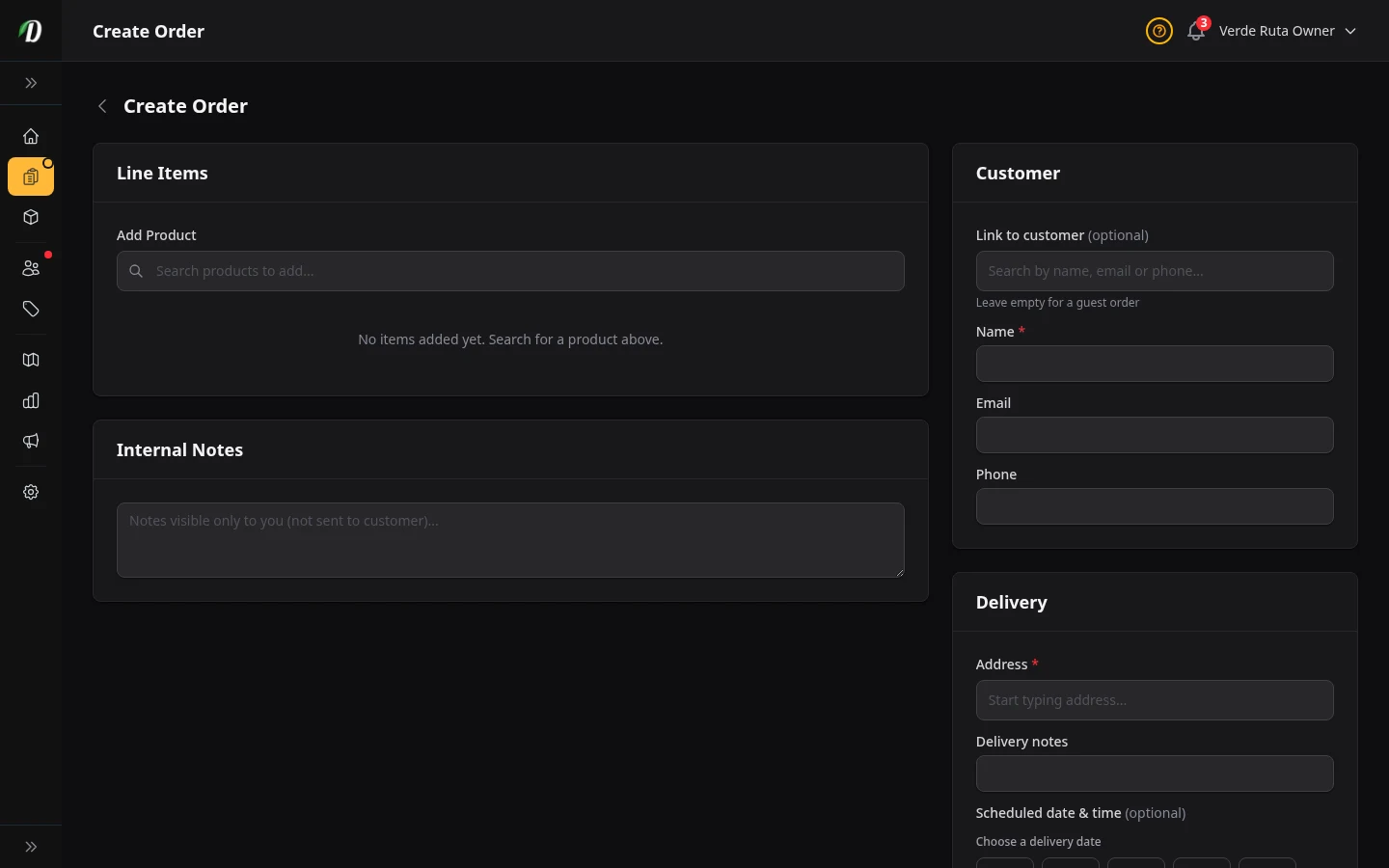
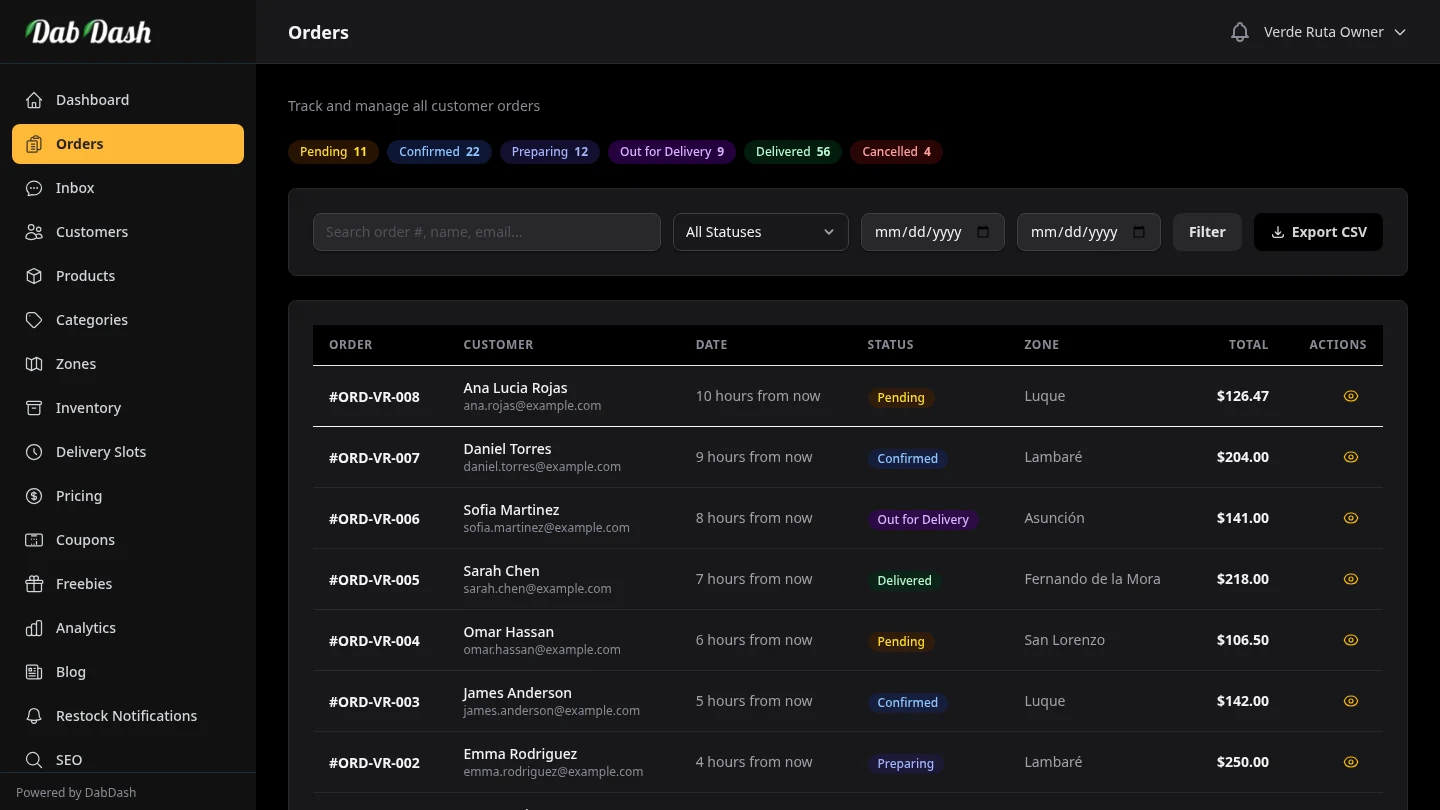
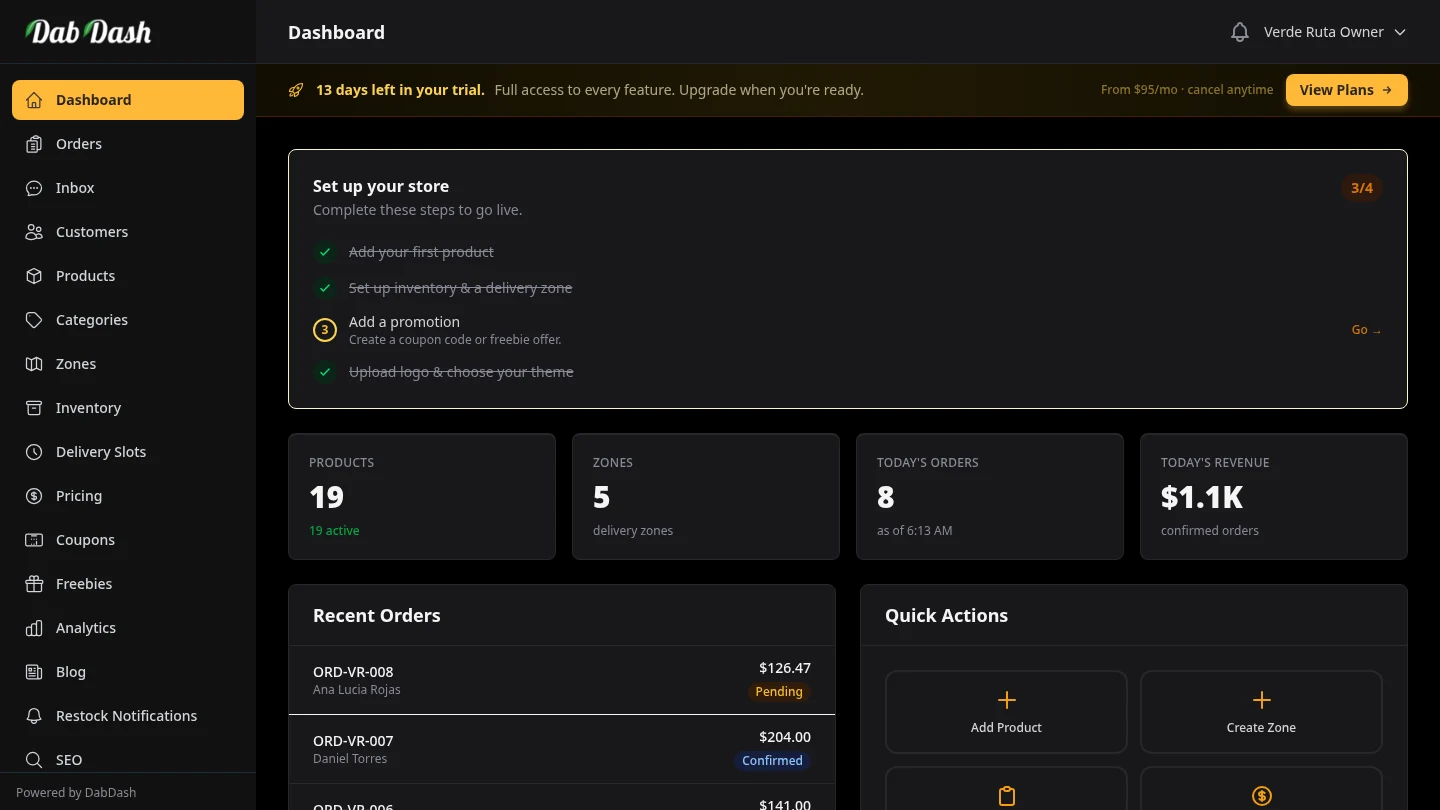
Creating a delivery order in DabDash — no POS terminal, no kiosk, no in-store checkout. Just the delivery tools you actually use.
2. The METRC Question — Essential in the US, Irrelevant Everywhere Else
A huge amount of WebJoint's value is its METRC integration. In most US cannabis states, every sale has to be reported to METRC, the state track-and-trace system, and WebJoint automates that reporting end to end. If you operate in California, New York, Michigan, or another METRC state, that automation is not a nice-to-have — it is the difference between a clean license and a compliance violation.
But METRC is a United States system. It does not exist in Canada, Thailand, Germany, South Africa, Mexico, Spain, or any of the other markets where cannabis delivery is now a real business. A platform built tightly around METRC is built tightly around one country's regulator.
DabDash takes a different stance: compliance is built to fit your market, not one country's. Age and ID verification, zone-based coverage that keeps you inside your licensed area, and purchase limits are enforced by the system wherever you operate — and where US METRC reporting is required, DabDash automates that too. The result is a platform that works in California and in Cape Town, rather than one that assumes everyone sells under the same regulator.
3. How WebJoint Pricing Actually Works
WebJoint does not publish pricing publicly. Every path on their site leads to "Book a Demo" — there is no plan page, no free trial, and no way to see a number without talking to a salesperson first. Pricing is quoted after a demo based on your operation, and their managed-marketing arm publishes SEO retainers starting around $1,500 to $3,000 per month, which signals the size of operator they are built for.
Here is what that means in practice:
The platform: custom quote, demo required before you see a price
Payment processing: bundled, with a revenue share on transactions
Full-service SEO and ads: a separate managed retainer through their marketing arm
Native consumer app: positioned as part of the broader subscription
It is a sales-led model aimed at larger operators who expect a demo, a contract, and an account manager. DabDash is the opposite: pricing is public, there is a free trial, and you sign up and launch yourself. One flat monthly rate covers your storefront, delivery zone management, order management, and driver dispatch. No demo gate, no module list, and no sales call before you can see what it costs.
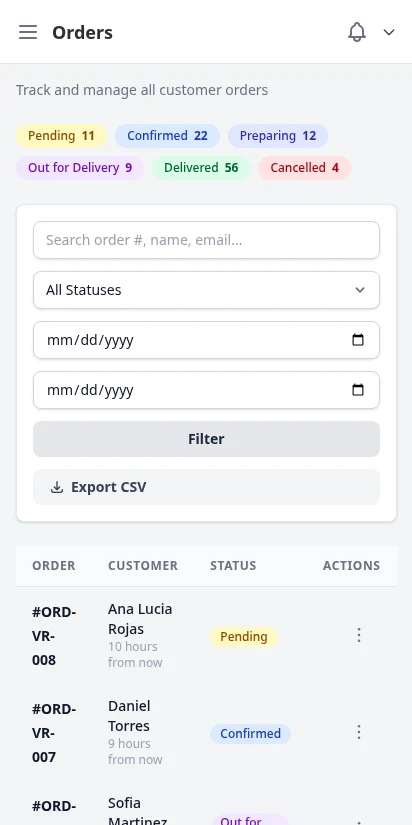
Mobile — light mode. Manage every active order from your phone.
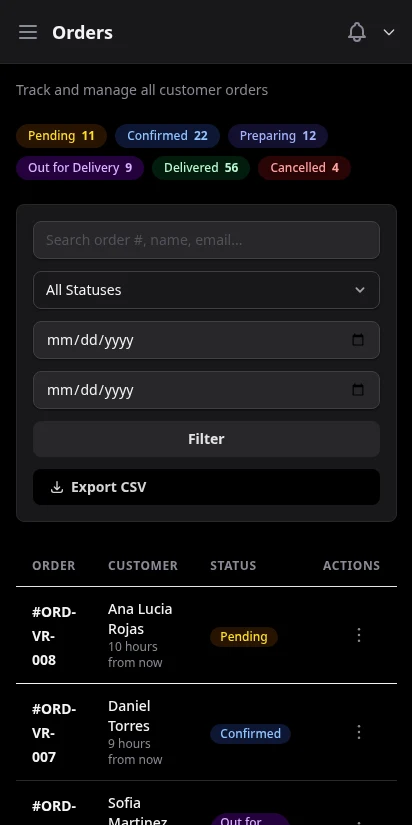
Mobile — dark mode. No demo to book before you see it work.
4. Bundled Payment Processing vs. Bring Your Own Processor
This is the difference that drives most of the others. WebJoint bundles its own payment processing and frames it as a perk — the platform handles cashless debit, ACH bank transfers, and integrated terminals, and high-volume operators can earn processing credits that offset their software cost. "Get paid to use our POS" is a real part of the pitch.
Read it carefully, though, and it is a revenue share. The platform sits in your money flow and takes a slice of each transaction, and it only works in markets where its payment partners operate. That is fine if you are a US dispensary inside their supported banking footprint. It is a hard wall if you are anywhere else.
DabDash does not sell you a payment processor and does not take a cut of your sales. You bring your own — the model we call BYOPP, bring your own payment processor. Run cash on delivery, a payment link to your own checkout, a QR-code bank rail, a webhook handoff to your processor or middleware, or crypto. Each order fires a signed webhook to whatever rails you already use, and our team helps you wire it up. No revenue share, no interchange skim, and no dependency on one country's banking system. That is exactly why DabDash runs in markets a bundled-processor platform simply cannot reach.
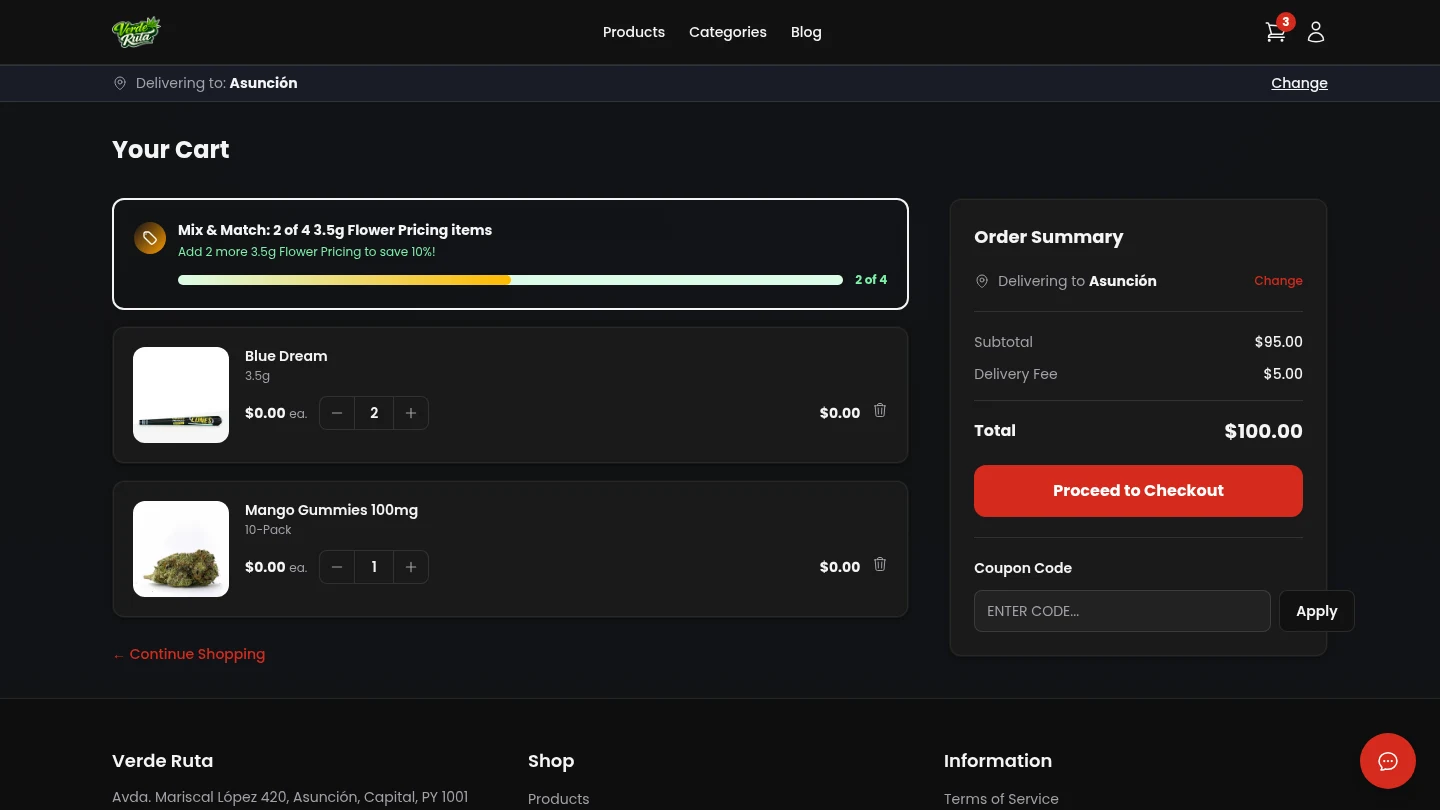
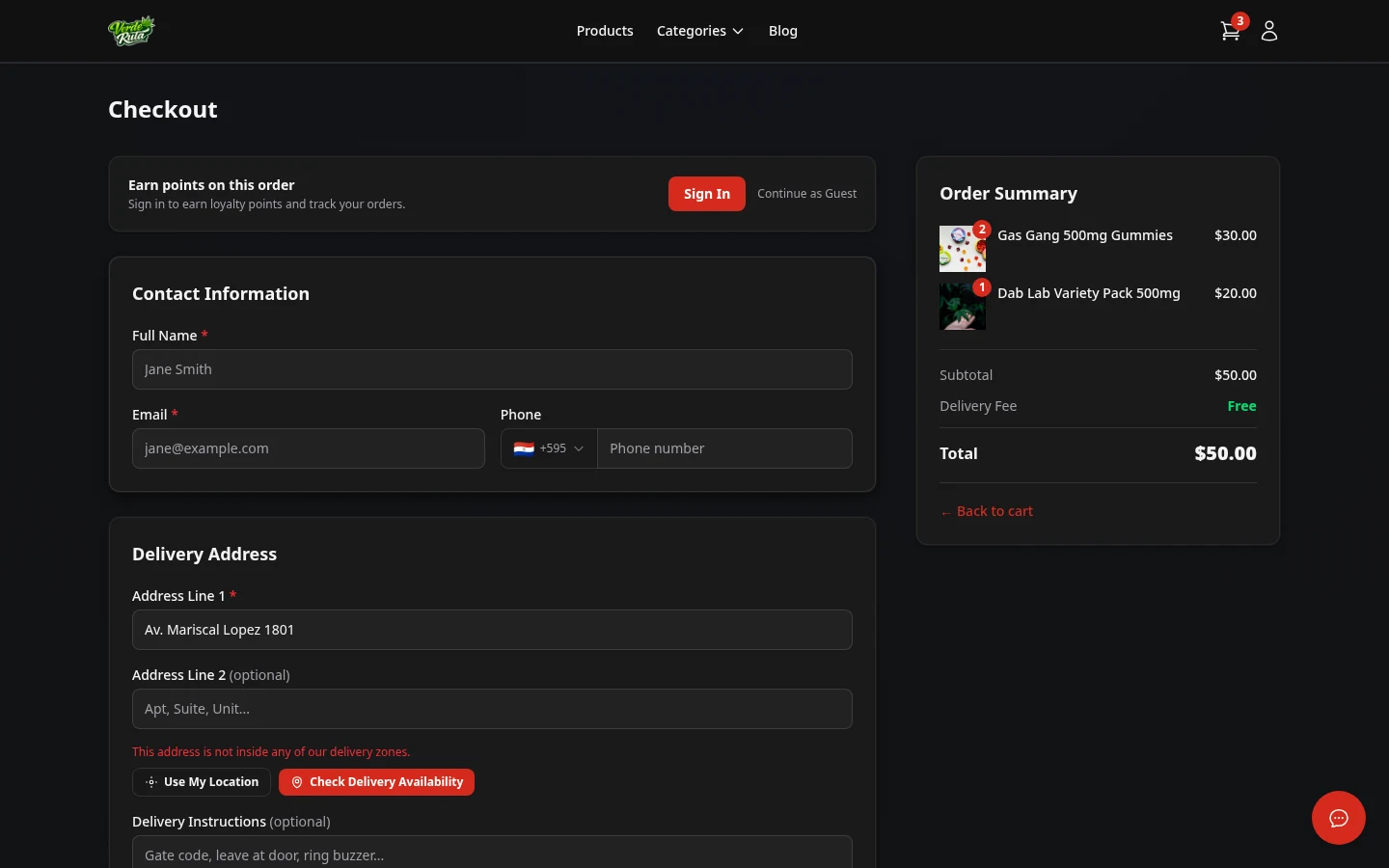
Simple checkout for customers — add products, confirm address, pay however your market actually pays.
5. Route Optimization — Both Have It, One Charges a Premium
WebJoint markets AI route optimization as a headline delivery feature: orders are auto-assigned to the fastest available driver, routes are kept tight, and dispatchers get a live command center with drag-and-drop rebalancing. It is a strong delivery feature set, genuinely built for high-volume multi-driver fleets.
DabDash gives delivery-first operators the same core capability — automatic zone detection, a live dispatch view, and smart route optimization that assigns each order to the driver who can reach it fastest and sequences stops to cut wasted miles. The difference is not whether you get route optimization. It is that on DabDash it is simply part of running delivery, not a premium tier inside a four-pillar retail suite.
One real contrast worth naming: WebJoint gates the customer behind an address entry before they can browse, and splits menus into "Express" (what is loaded in the delivery vehicle) and "Full" (warehouse inventory). DabDash detects each customer's delivery zone automatically — no zone picker, no address gate to shop — and shows them a menu, fees, and minimums tuned to where they live. The customer never has to think about zones at all.
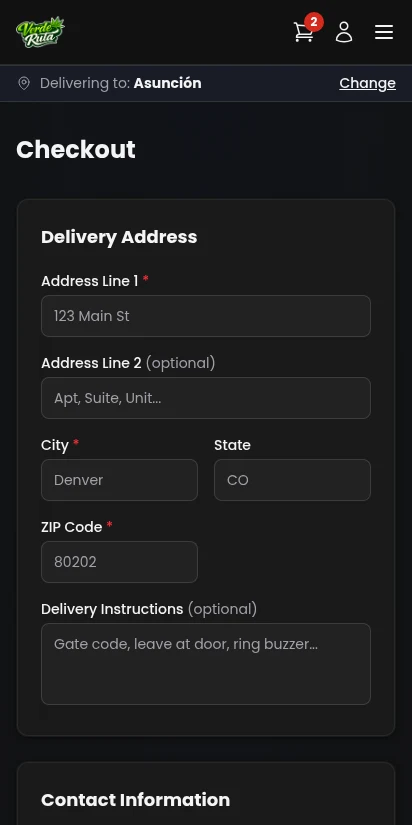
Mobile — dark mode. Zone detected automatically from the address. No zone picker.
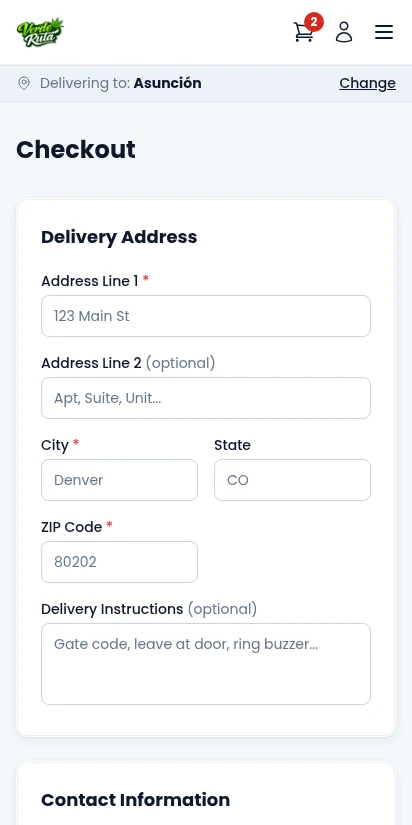
Mobile — light mode. Checkout converts on any phone, no app to install.
6. The Native App vs. a Mobile-First Storefront
WebJoint offers a true native, white-labeled iOS and Android consumer app, published under your own developer accounts. For a large dispensary with a loyal repeat base, an app icon on a customer's home screen is a real retention asset, and the push notifications that come with it sidestep some cannabis SMS-marketing restrictions.
It also comes with native-app overhead: app-store review, developer accounts to maintain, and customers who have to download something before they can order. DabDash takes the other path — a branded storefront on your own subdomain that is fully mobile-optimized and server-side rendered, so customers shop and order from their phone with nothing to install and every product page indexed by Google from day one. For a delivery operator whose goal is to convert a local search into a cash order tonight, a fast mobile web storefront covers the same need without the app-store tax.
7. Marketing Built In vs. an Agency Retainer
WebJoint's marketing pillar leans heavily on a partner arm, Nexvato, for full-service SEO, compliant Meta ads, email, and reputation management — a managed agency layered on top of the software, with the SEO retainers mentioned earlier. It is a real service for operators who want to outsource growth and have the budget for it.
DabDash builds the growth tools into the platform instead of renting them out. Loyalty, a promotions and discount engine, and native storefront SEO are part of the product — your storefront is built to rank, and you own that traffic rather than paying a monthly retainer to a marketing team. If WebJoint's pitch is "we'll run your marketing for you," DabDash's is "the tools are already in your dashboard."
The Quick Breakdown
Feature
WebJoint
DabDash
Built for
Retail POS suite + delivery added on
Delivery-first cannabis operators
Markets
United States (METRC states)
Global — not tied to US banking
Pricing
No public pricing; demo required
Public pricing, free trial, flat rate
Payments
Bundled processor with revenue share
Bring your own processor (BYOPP) — no cut
Delivery zones
Address-gated menu; Express vs. Full
Automatic detection — no zone picker
Route optimization
AI route optimization (in a 4-pillar suite)
Smart routing + live dispatch, included
Consumer app
Native iOS/Android app
Mobile-first web storefront, nothing to install
Marketing
Managed agency retainer (Nexvato)
Loyalty, promotions, SEO built in
Onboarding
Demo, contract, configuration
Self-serve — launch the same day
Who Should Use WebJoint
WebJoint is a serious platform for serious US multi-location retailers. If you run a dispensary with a physical storefront, budtender checkout, a kiosk, payment terminals, and a delivery fleet — all inside a METRC state — WebJoint's all-in-one suite genuinely reduces the number of vendors you have to manage, and its METRC automation is exactly the compliance backbone a licensed US operator needs. If you also want a native consumer app and a managed marketing team, WebJoint has an answer for each of those too.
Who Should Use DabDash
DabDash is for operators who run delivery and want to do it cleanly, quickly, and without paying for a retail suite they will never use. If you do not have a storefront counter, do not need a kiosk or payment terminals, and especially if you operate outside the United States or want to keep your own payment processor, you should not have to work around any of that.
DabDash gives you a Google-indexed delivery storefront, automatic zone detection, order dispatch with smart routing, and a checkout that uses whatever payment rails are legal and normal in your market. Your subdomain is live from the moment you sign up. Your driver uses their phone. Your customers order on any device, and you keep one hundred percent of what you process.
No demo to book. No revenue share. No US-banking dependency before your first order.
Common Questions About DabDash vs. WebJoint: Do You Need a US Compliance Suite to Run Delivery?
Quick answers to the most common follow up questions readers search after exploring this topic.
Is DabDash a good alternative to WebJoint for delivery-only operators?
Yes — particularly if you do not run a physical storefront or operate outside the United States. WebJoint is a US POS suite built around METRC compliance, with bundled payment processing and a demo-gated, sales-led purchase. DabDash is built exclusively for delivery: your storefront, zone detection, order management, dispatch, and route optimization are included at one flat monthly rate, you bring your own payment processor, and you sign up yourself with no demo required.
Does WebJoint work outside the United States?
WebJoint is built for US METRC states — its compliance automation and bundled payment processing are tied to the US system and US banking partners. DabDash is not tied to any single country's regulator or banking system, so operators run it across multiple countries, with age and ID verification, zone coverage, and purchase limits enforced wherever they operate.
How much does WebJoint cost?
WebJoint does not publish pricing publicly — every path leads to booking a demo, after which pricing is quoted based on your operation. Their managed-marketing arm publishes SEO retainers starting around $1,500 to $3,000 per month, which signals the size of operator they target. DabDash publishes its pricing, offers a free trial, and charges one flat monthly rate with no sales call required to see it.
Does WebJoint take a cut of my sales?
WebJoint bundles its own payment processing and takes a revenue share on transactions, framed as 'get paid to use our POS' through processing credits. DabDash charges a flat platform fee and takes no percentage of your sales — you bring your own payment processor and keep one hundred percent of what you process.
What is BYOPP, and how is it different from WebJoint's payments?
BYOPP means 'bring your own payment processor.' Instead of selling you a processor and sitting in your money flow like WebJoint does, DabDash hands each order off to the rails you already use — cash on delivery, a payment link, a QR bank rail, a signed webhook to your processor, or crypto. There is no revenue share and no US-banking dependency, so the same platform works in very different markets. Our team helps you configure the webhook handoff.
Does DabDash have route optimization like WebJoint?
Yes. WebJoint markets AI route optimization as a headline feature inside its four-pillar suite. DabDash includes the same core capability for delivery-first operators — automatic zone detection, a live dispatch view, and smart routing that assigns each order to the fastest driver and sequences stops to cut wasted miles — as part of running delivery, not as a premium tier.
Does DabDash have a native mobile app like WebJoint?
WebJoint offers a native iOS and Android consumer app. DabDash delivers a branded, fully mobile-optimized web storefront on your own subdomain — customers shop and order from their phone with nothing to install and every product page indexed by Google. For most delivery operators the mobile web storefront covers the same need without app-store review, developer accounts, or a download step before customers can order.
How quickly can I launch with DabDash vs. WebJoint?
DabDash operators typically take their first order the same day they sign up — no demo, no contract, no hardware, and no implementation call. WebJoint onboarding starts with a sales demo, followed by contract and module configuration. If you want to launch delivery this week without a sales process, DabDash is built for that.