Sweed bets on loyalty automation — SMS campaigns, reward points, and re-engagement sequences. Those tools are genuinely powerful, but only after you have customers to retain. For delivery operators still growing their list, organic search visibility comes first. Here is why DabDash builds that foundation instead.
Sweed has a genuinely compelling pitch: one platform for POS, eCommerce, loyalty points, SMS campaigns, email automations, referral programs, and AI-powered checkout upsells. The marketing promises a customer journey that starts the moment someone walks in your door and never lets them forget you exist.
For a well-established dispensary with a loyal walk-in base, a physical showroom, and a team dedicated to running retention campaigns, that ecosystem makes a lot of sense.
For a delivery-first cannabis operator still trying to grow their customer list? Sweed is asking you to invest in loyalty infrastructure before you have solved the more fundamental problem: getting found on Google.
You cannot retain customers you never acquired.
1. What Sweed Actually Is
Sweed was founded in Sweden and now operates primarily in the US cannabis market. It positions itself as an "all-in-one dispensary platform" — and in fairness, the feature set is genuinely broad: point of sale, inventory management, online menu, marketing automation, loyalty programs, SMS messaging, email campaigns, self-service kiosks, a customer-facing AI display, and built-in delivery capabilities.
Sweed merged with Leaf Trade in 2023, bolstering its B2B wholesale capabilities alongside retail. That gives multi-level operators (both retail and wholesale) a case for a single vendor relationship. For a pure delivery operator, the wholesale angle is irrelevant overhead built into a platform you are already paying for.
The platform's design DNA is retail-floor first. Their hardware catalog includes POS tablets, ID scanners, self-service kiosks, customer-facing screens, and receipt printers — purpose-built for a physical store where customers stand in line. Delivery is a module layered on top of that core, not the other way around.
DabDash is delivery-first by design — no retail counter, no kiosk, no hardware setup required.
2. The Loyalty-Before-Discovery Problem
Sweed's strongest selling point is its marketing and loyalty engine. It is one of the only cannabis POS platforms approved for 10DLC SMS messaging, which means compliant text campaigns sent directly to customers. The drag-and-drop workflow builder lets operators set up automated re-engagement sequences: win-back emails for customers who have not ordered in 30 days, birthday discounts, post-purchase follow-ups, referral bonuses.
These are genuinely useful tools. The catch is the implicit assumption baked into every one of them: you already have a customer list worth re-engaging.
Loyalty points reward repeat visits. SMS win-backs only work if a customer came in once. Referral programs need an existing base to spread from. None of these tools bring a single new customer to your storefront from a Google search.
Delivery operators, especially newer ones or those in freshly legalized markets, face a different first-order problem: discoverability. Their most urgent question is not "how do I keep customers coming back?" It is "how does someone searching for cannabis delivery near me find my business instead of a competitor?"
The answer to that question is organic search — Google-indexed product pages, fast load times, structured data, and a URL you own. Not a loyalty points dashboard.
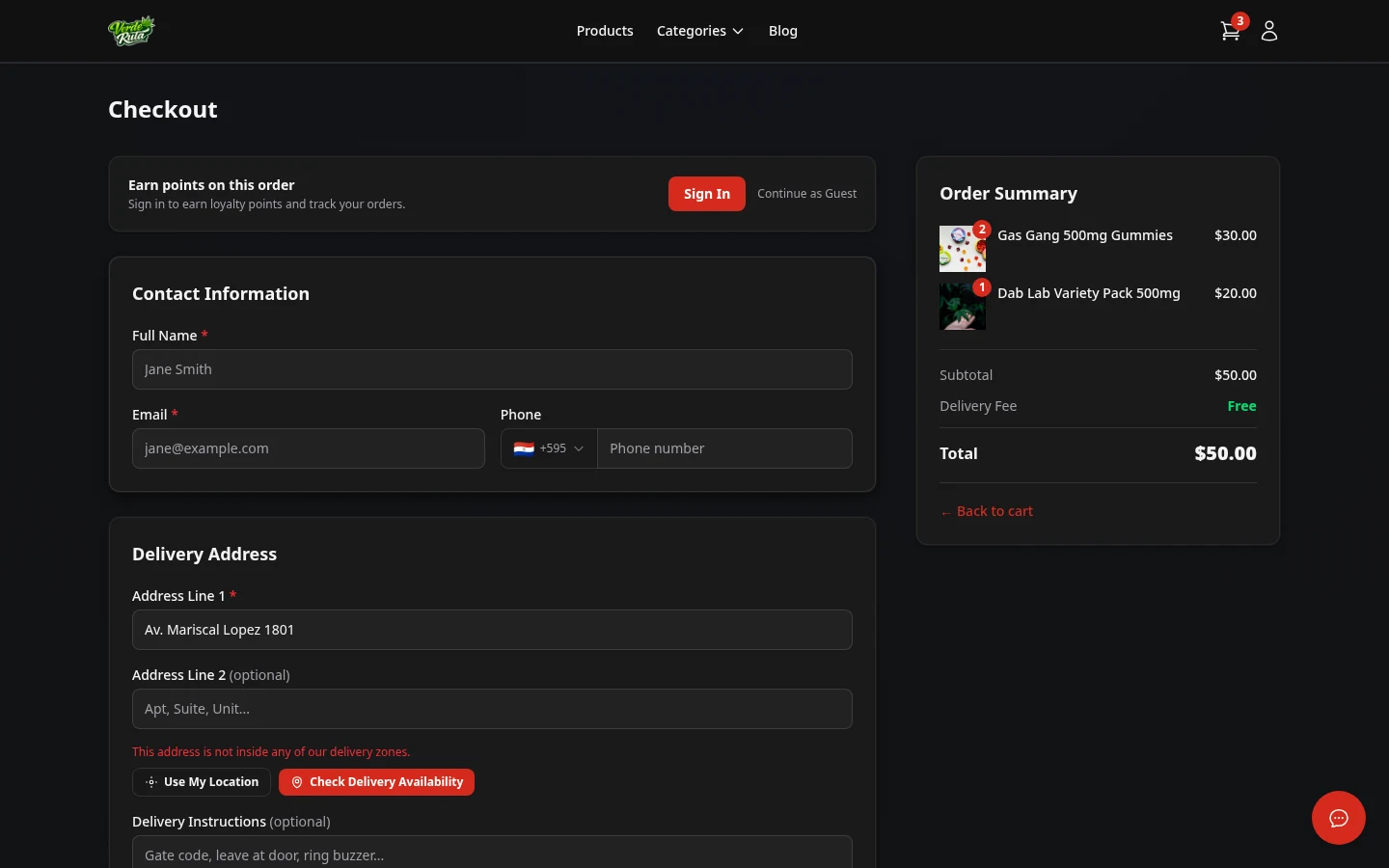
Every product page on DabDash is Google-indexable — no iframe, no login wall.
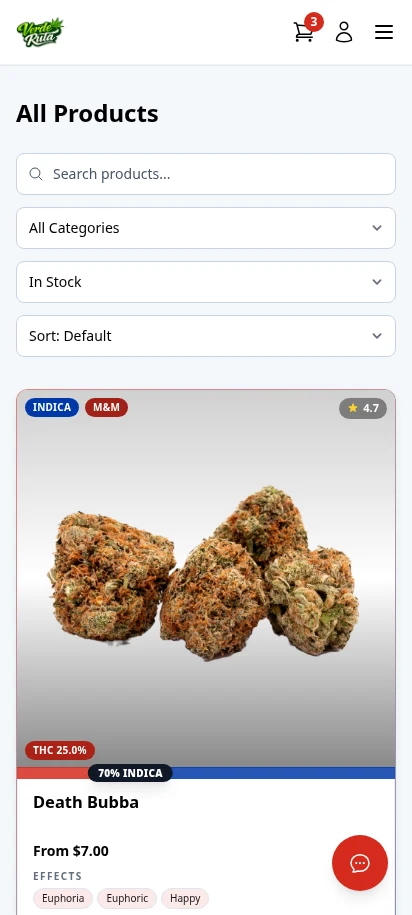
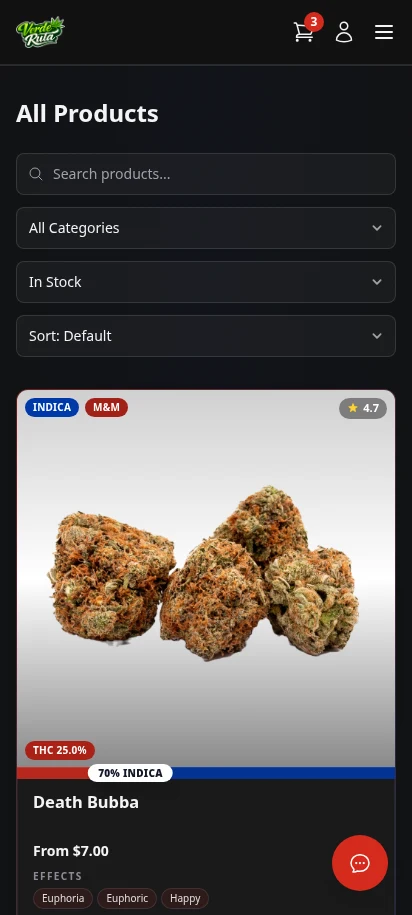
Dark mode, mobile-first — your menu loads fast on every device, every network.
3. Sweed's eCommerce: Better Than Average, Still Not Delivery-Native
To Sweed's credit, they have invested in SEO. Their eCommerce module claims fully crawlable product pages (no iFrames), automated sitemap generation, schema.org structured data, and Core Web Vitals compliance. That is meaningfully better than platforms that still serve menus inside JavaScript embeds or iFrames that Google cannot read.
But "better than iFrames" is a low bar, and the context matters. Sweed's eCommerce is a component of a retail platform — it was built to extend a physical store's reach online, not to be the primary channel. The mental model is "store that also sells online," not "delivery business that lives and dies by its website."
When your entire revenue depends on that online menu converting, the difference shows up in the details: how product pages are structured for local search, how zone-based delivery areas are communicated to customers, how checkout friction is minimized for a guest who found you on Google and has never heard of your brand. Those details are where delivery-native platforms earn their keep.
DabDash was designed from day one as a delivery platform. The storefront is not an add-on module. It is the product — every routing decision, every component, every default behavior is oriented around a customer on their phone at 9pm trying to place an order quickly.
4. Pricing: Contact Sales
Sweed does not publish pricing publicly. Like many enterprise-positioned cannabis platforms, you need to contact their sales team for a quote. This is common in the space, but it is worth noting: platforms that serve established multi-location dispensaries typically price accordingly. Operators in public forums report that Sweed's all-in-one platform, hardware, and onboarding can represent a significant investment before a single order is fulfilled.
For delivery operators, the mismatch cuts deeper than the monthly fee. Sweed's value proposition is bundled around capabilities you may not need yet: physical POS hardware, in-store kiosk software, an AI customer display designed for face-to-face checkout moments, wholesale B2B connectivity via the Leaf Trade merger. You are not just paying for delivery software — you are subsidizing a retail platform and using maybe 30 percent of what you are paying for.
DabDash is priced as a delivery SaaS. No hardware. No retail floor software. No wholesale marketplace. You pay for what a delivery business actually uses.
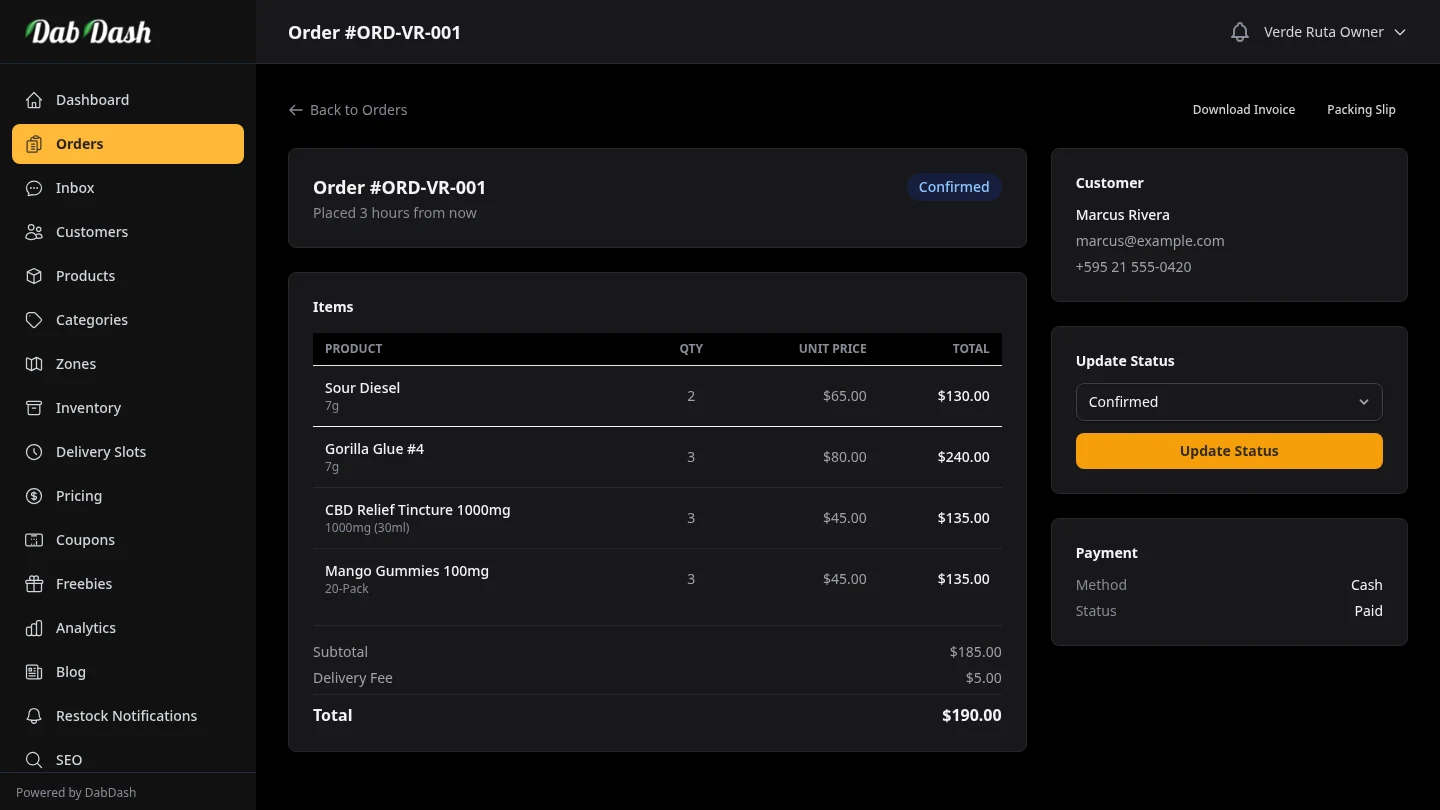
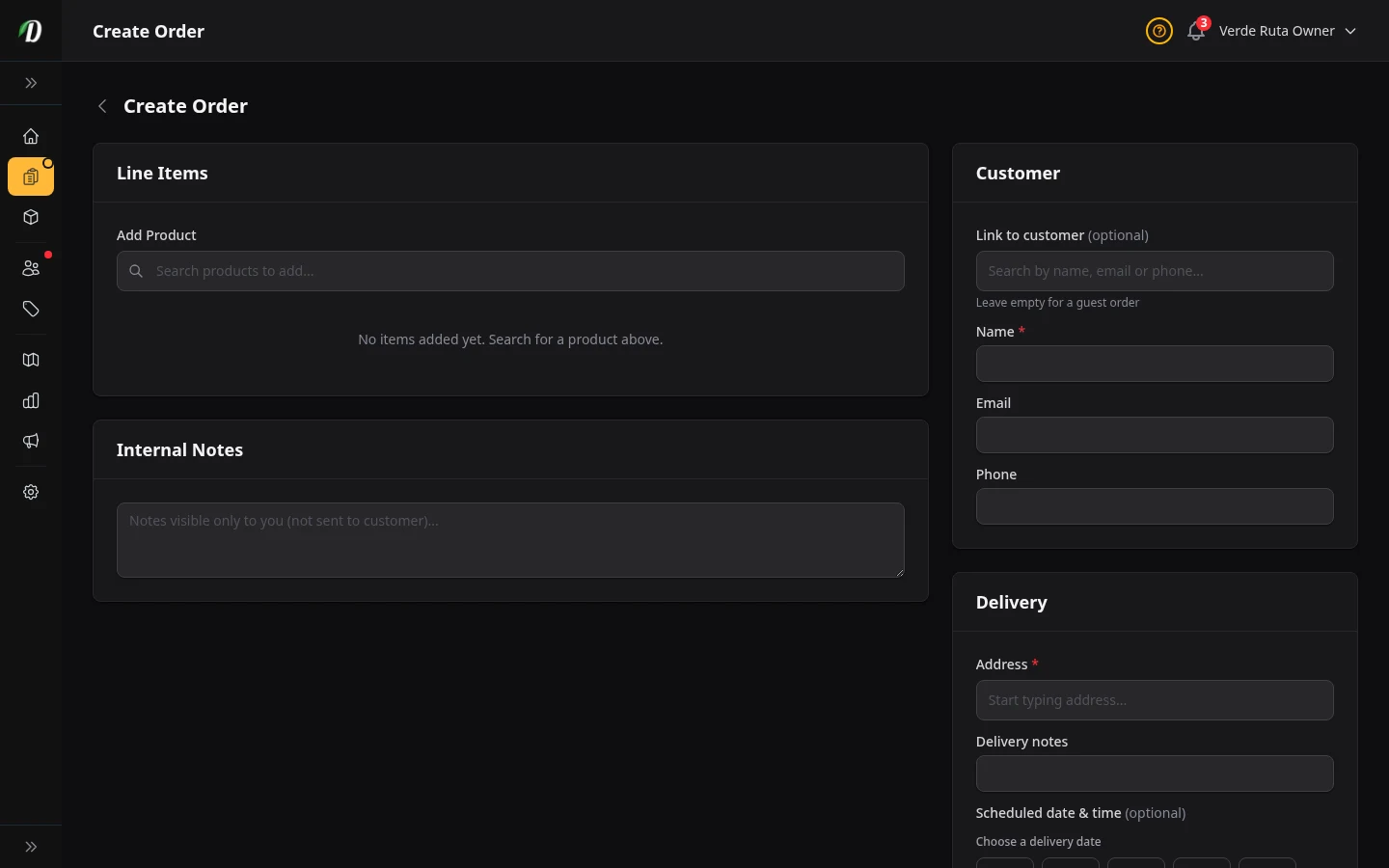
Order management built for delivery — driver dispatch, status tracking, and cash-on-delivery confirmation in one view.
5. Delivery Management: Module vs. Core
Sweed does have delivery features. Their delivery module supports order handoff, basic routing, driver instructions, and compliance syncing with Metrc and BioTrack. Drivers get real-time updates and navigation support. Curbside pickup, scheduled deliveries, and on-demand orders are all supported.
Industry analysis of cannabis delivery platforms categorizes Sweed as best suited for operators who "prioritize sales, loyalty, and customer engagement while running predictable, low-volume routes." That framing is honest. Sweed's delivery is solid for a dispensary that does a few dozen deliveries a day alongside its walk-in traffic. It was not designed for operators whose entire business model is moving product door to door, at scale, with no physical retail component.
DabDash was built in the opposite direction. There is no POS module, no kiosk software, no in-store checkout flow. The delivery management tools — zone mapping, driver dispatch, order routing, cash-on-delivery confirmation — are not layered on top of a retail platform. They are the foundation everything else is built around.
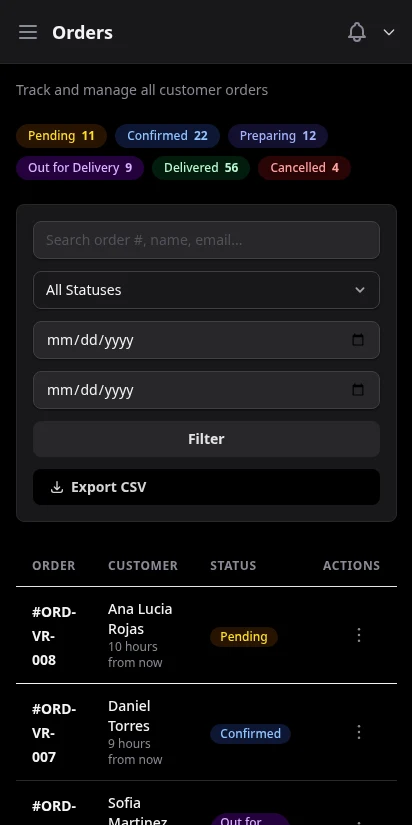
Manage delivery orders from your phone — no desktop required, no POS counter to check.
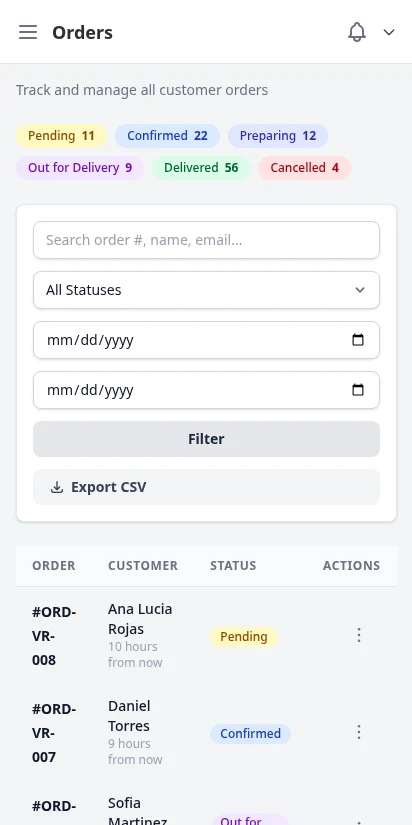
Light mode — same clear order view, same fast dispatch workflow.
6. Sweed's Marketing Automation: Powerful, Complex, Premature for Growing Operations
Sweed's marketing stack is genuinely sophisticated. The drag-and-drop campaign builder supports email, SMS, and push notifications from a single interface. The AI-powered customer segmentation can identify your highest-value customers, lapsed buyers, and likely churners. The loyalty program supports tiered rewards, hybrid point structures, and white-label branding.
For a dispensary with thousands of customer records and an established operational rhythm, that toolkit creates real revenue. Re-engaging a lapsed customer via a well-timed SMS costs almost nothing and converts at rates that justify the platform investment.
The question is sequencing. A delivery operator in their first or second year — or one entering a newly legalized market — does not have the customer history for segmentation to work well. The AI has no patterns to learn from. The win-back campaigns have no one to win back. The loyalty tiers are empty.
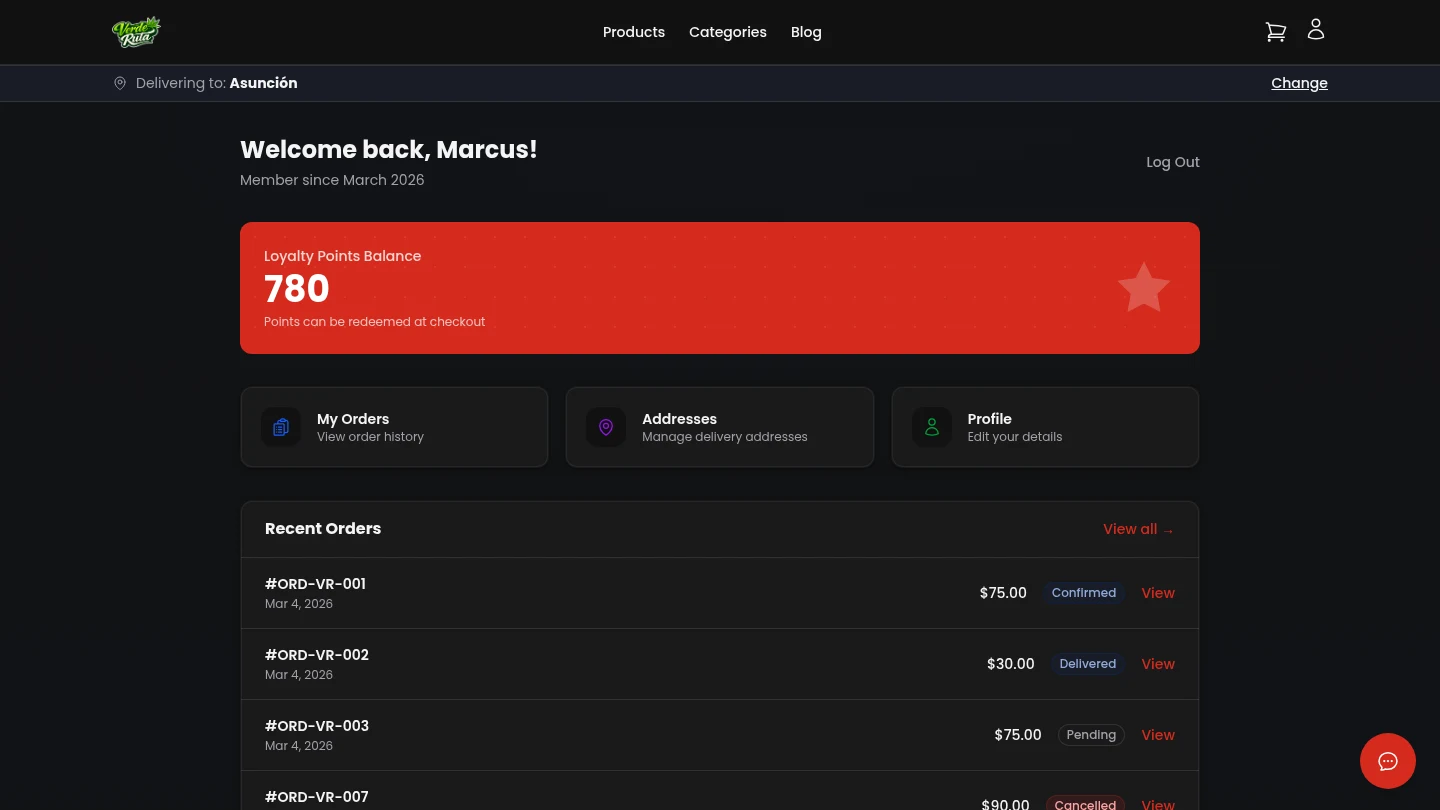
Before you can run a retention campaign, you need a customer to retain. Before you can retain a customer, they need to find you. Before they find you, your storefront needs to rank. The funnel starts at discovery, not loyalty.
DabDash invests first in what gets that discovery: a fast, Google-indexed storefront with clean product URLs, schema markup for menu items, automatic sitemap generation, and zone-based local SEO signals. Once you have a steady flow of new customers, retention tools become valuable. DabDash grows with that progression — you are not paying for an automation platform before you have any automations worth running.
7. The Hardware Question
Sweed's hardware catalog includes POS tablets, ID scanners, self-service kiosks, customer-facing AI displays, and receipt printers. Their hardware partner PLS provides installation, configuration, and go-live support for retail setups.
None of that applies to a delivery operation.
A delivery business needs a phone, a driver, and a reliable order management system accessible from anywhere. You do not need a customer-facing display for a customer who is not in your store. You do not need an ID scanner mounted to a counter when your driver checks ID at the door. You do not need a receipt printer when every delivery confirmation is digital.
DabDash has zero hardware requirements. The vendor dashboard runs in any browser. Driver management works on any smartphone. There is no hardware to buy, configure, replace, or troubleshoot. That is not a limitation — it is the correct architecture for delivery.
8. Who Should Actually Consider Sweed
Sweed earns its place in the market. For operators with the right profile, it is a strong platform:
Established brick-and-mortar dispensaries with high walk-in volume who want to bolt on delivery as a secondary channel
Multi-location retailers who need unified POS, inventory, and compliance across several storefronts
Operators with an existing customer base where loyalty and re-engagement campaigns will actually have data to work with
Cannabis businesses that do both retail and wholesale, where the Leaf Trade integration creates genuine workflow efficiency
If you are running a delivery-only operation, or a hybrid operation where delivery is the primary revenue channel, Sweed is solving problems you do not have and charging you for tools that will not move the needle on your most important metric: new customers finding your menu on Google.
DabDash: The Sweed Alternative Built for Delivery Operators
DabDash is not trying to compete with Sweed on loyalty points or SMS automation. Those are problems for later in a business's growth curve. DabDash competes on the thing that matters first: building a delivery operation that new customers can find, trust, and order from quickly.
The core difference in a single sentence: Sweed is a retail platform with delivery capabilities. DabDash is a delivery platform, full stop.
What that means practically:
SEO-first storefront — every product page is server-rendered HTML, indexed by Google, with schema markup and canonical URLs you own
Delivery zone management — draw your delivery area on a map, set minimum orders and fees per zone, manage it all without a developer
Cash-on-delivery native — no payment processor to set up, no card-not-present compliance headaches, no SaaS payment markup on every transaction
Zero hardware — the entire platform runs in a browser. Your driver needs a phone. That is it.
No retail overhead — you pay for what a delivery business uses. Nothing more.
If your growth plan starts with being found on Google before it ends with re-engaging loyal customers, DabDash is the platform built to serve that sequence.
FAQ
Common Questions About DabDash vs. Sweed: Do You Need Loyalty Software Before You Have Loyal Customers?
Quick answers to the most common follow up questions readers search after exploring this topic.
What is Sweed POS used for?
Sweed POS is an all-in-one cannabis dispensary platform covering point of sale, inventory management, eCommerce, loyalty programs, SMS marketing, email automation, and delivery management. It is designed primarily for brick-and-mortar dispensaries that want to unify retail and online operations in a single platform.
How much does Sweed POS cost?
Sweed does not publish pricing publicly. You need to contact their sales team for a quote. Based on industry reporting, costs vary depending on the number of locations, terminals, and modules required. Hardware (POS tablets, ID scanners, kiosks) represents an additional upfront investment before software fees.
Does Sweed POS support cannabis delivery?
Yes, Sweed includes a delivery module with order management, driver dispatch, basic routing, and Metrc/BioTrack compliance syncing. However, Sweed's delivery features are built on top of a retail POS platform. Industry analysts note it is best suited for operators running low-to-moderate delivery volume alongside physical store traffic, rather than delivery-only businesses.
Is Sweed POS good for SEO?
Sweed claims fully crawlable product pages without iFrames, automated sitemap generation, and schema.org structured data. This is a meaningful improvement over embed-based menus. However, Sweed's eCommerce was built to extend a physical store online. Delivery-native platforms like DabDash are designed from the ground up for organic search performance as the primary customer acquisition channel.
What are the main differences between DabDash and Sweed?
Sweed is a retail-first platform that includes delivery capabilities alongside POS hardware, in-store kiosks, and a marketing automation suite. DabDash is a delivery-first platform with no hardware requirements, no retail floor features, and an SEO-indexed storefront built specifically for cash-on-delivery operations. DabDash is designed for operators who grow through Google discoverability; Sweed is designed for established dispensaries that want to retain an existing customer base.
Does Sweed require hardware?
Sweed offers an extensive hardware catalog including POS tablets, ID scanners, self-service kiosks, customer-facing displays, and receipt printers. For their retail POS to function as intended, hardware is effectively required. Delivery-only operators using just Sweed's eCommerce and delivery modules may be able to operate without in-store hardware, but the platform's value proposition is built around that physical retail stack.
Is DabDash a good Sweed alternative for small delivery operators?
Yes. DabDash is built specifically for cannabis delivery operators who do not run a physical storefront. There is no hardware to buy, no retail POS modules to pay for, and no loyalty software to configure before you have enough customers to use it. DabDash focuses on getting new customers to your menu through Google, processing their order, and dispatching it for delivery — the exact workflow a delivery-first business needs.
Does Sweed's loyalty program help attract new customers?
No. Loyalty programs, SMS win-back campaigns, and re-engagement automations are retention tools — they work on customers who have already ordered from you. They do not help new customers discover your business. For operators still growing their customer list, organic search visibility (SEO) produces more first-time orders than any retention automation. DabDash prioritizes that discoverability foundation; loyalty features can be added later as the customer base grows.