Treez is enterprise retail software built for multi-state operators with dozens of locations. If you run a cannabis delivery business, here is what that means for your operation — and what a delivery-first alternative looks like.
You run a cannabis delivery operation. You have drivers, zones, a menu, and customers who expect their order at the door. You need software that handles that specific job cleanly. What you probably don't need is an enterprise retail platform built to manage a chain of 40 dispensaries across six states, with compliance dashboards for a team of analysts, complex retail-floor POS hardware, and an implementation process that requires a dedicated project manager.
That's the core tension when evaluating Treez. It is genuinely impressive software for the problem it was designed to solve. That problem just isn't yours if you're running a delivery-first cannabis business.
What Treez actually is
Treez launched in 2016 and has grown into one of the most recognized enterprise commerce platforms in cannabis retail. The company positions itself as the technology backbone for serious retail operators — processing over $4 billion in transactions annually across hundreds of licensed dispensaries, primarily in California and other high-volume regulated markets.
The platform centres on in-store point of sale. Its strongest features are the ones retail floors need most: physical register management, real-time Metrc compliance sync (it was the first cannabis POS to integrate Metrc Connect via open API), retail analytics dashboards, cashless payment processing through its TreezPay product, and robust multi-location inventory management. If you're a multi-state operator with 10 or more retail locations trying to standardize operations and compliance reporting across the chain, Treez is built for exactly that.
The target customer shows in every product decision. Enterprise implementation teams. Dedicated customer success managers assigned per account. A partner ecosystem of 30-plus third-party integrations. An analytics layer designed for category managers who need to query product performance across locations. These are not features a single-location delivery operator will ever use — but they are what the platform is built around.
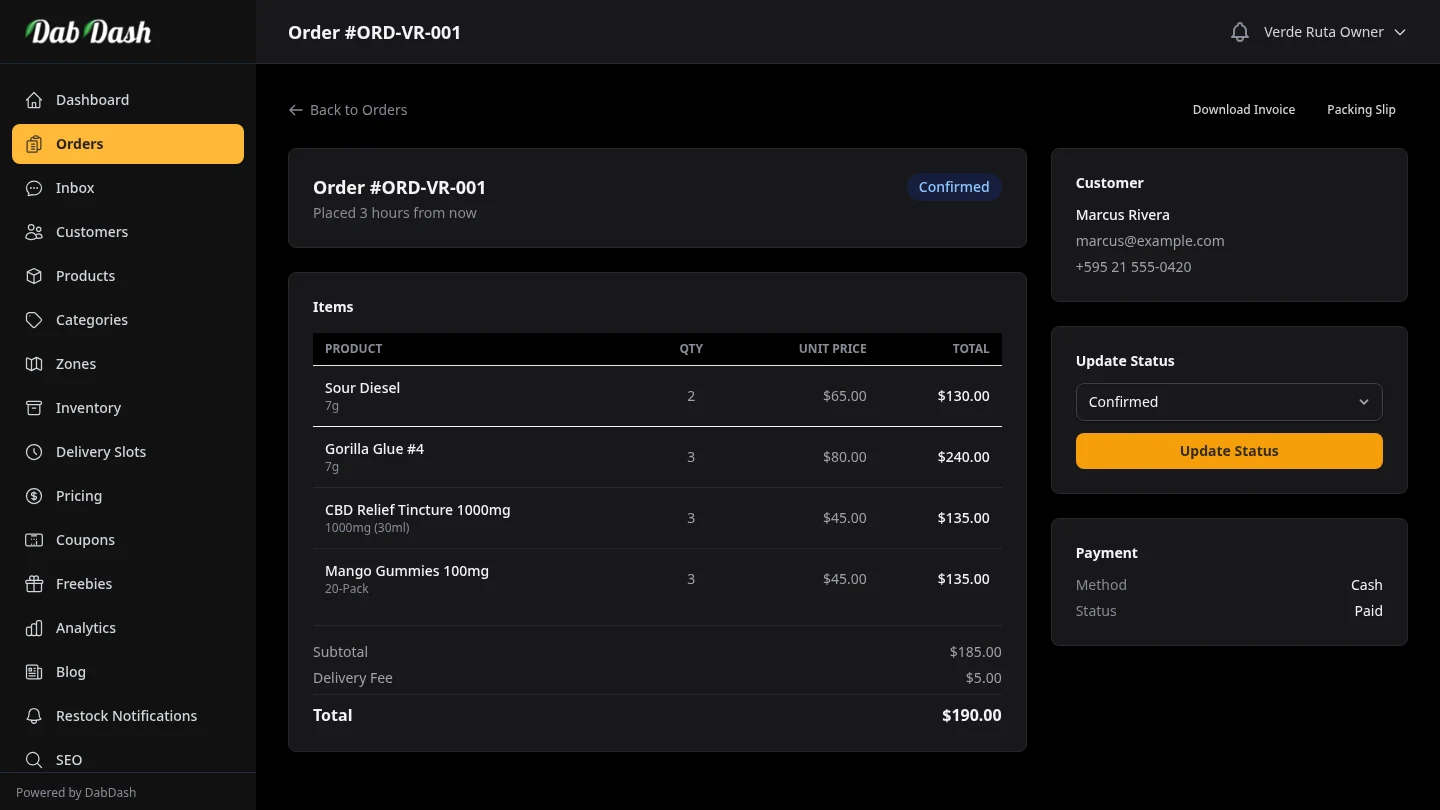
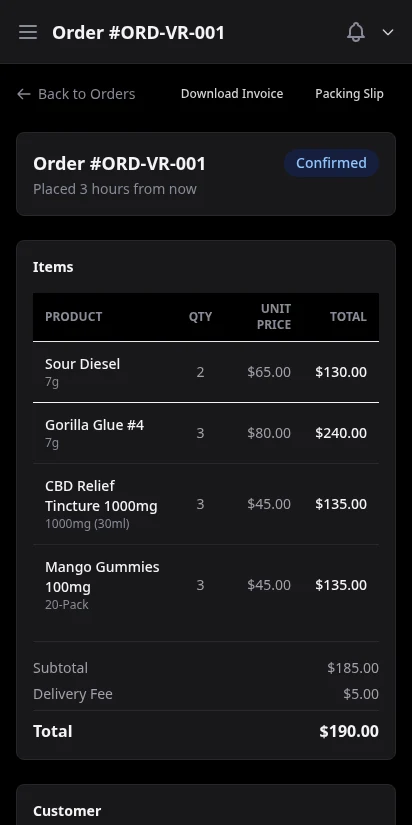
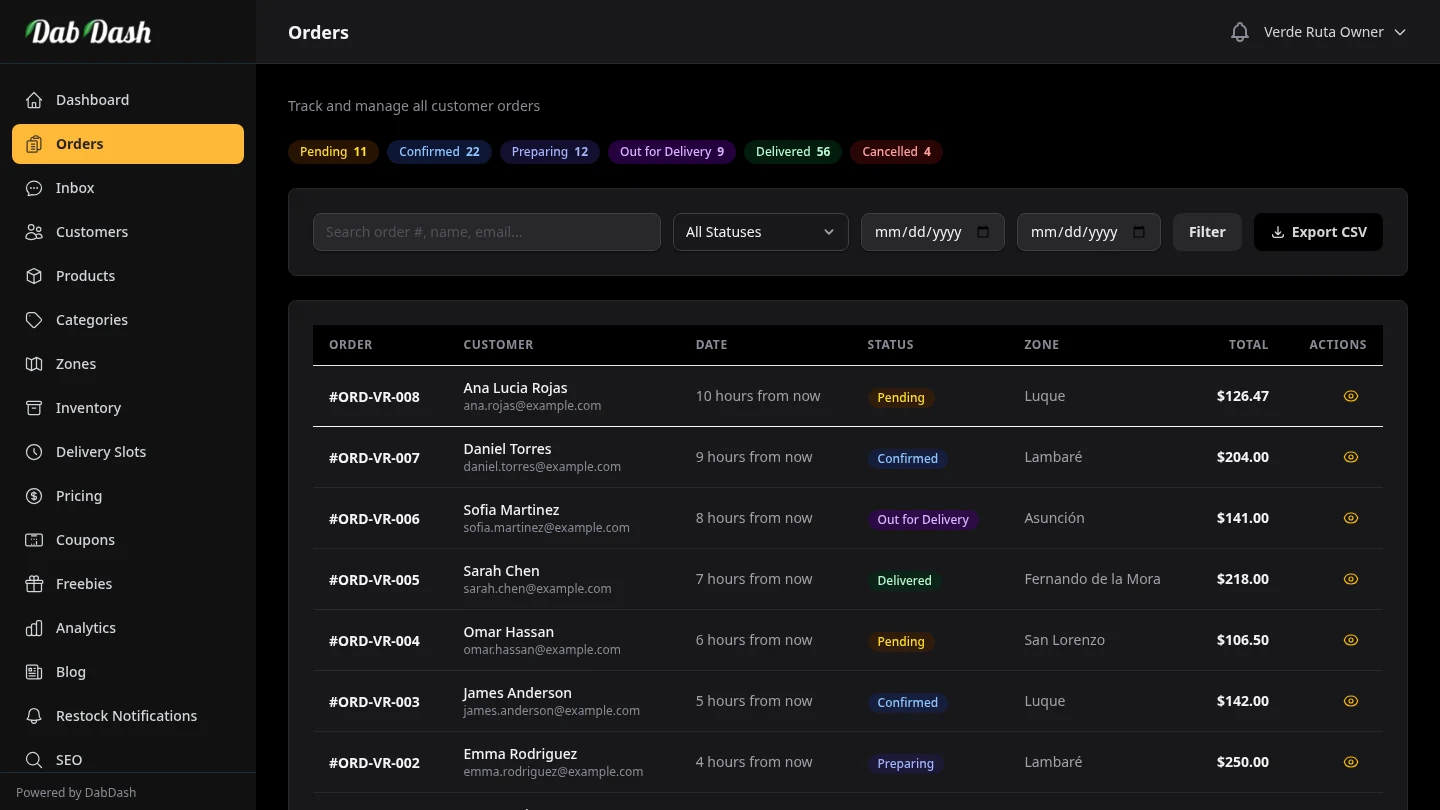
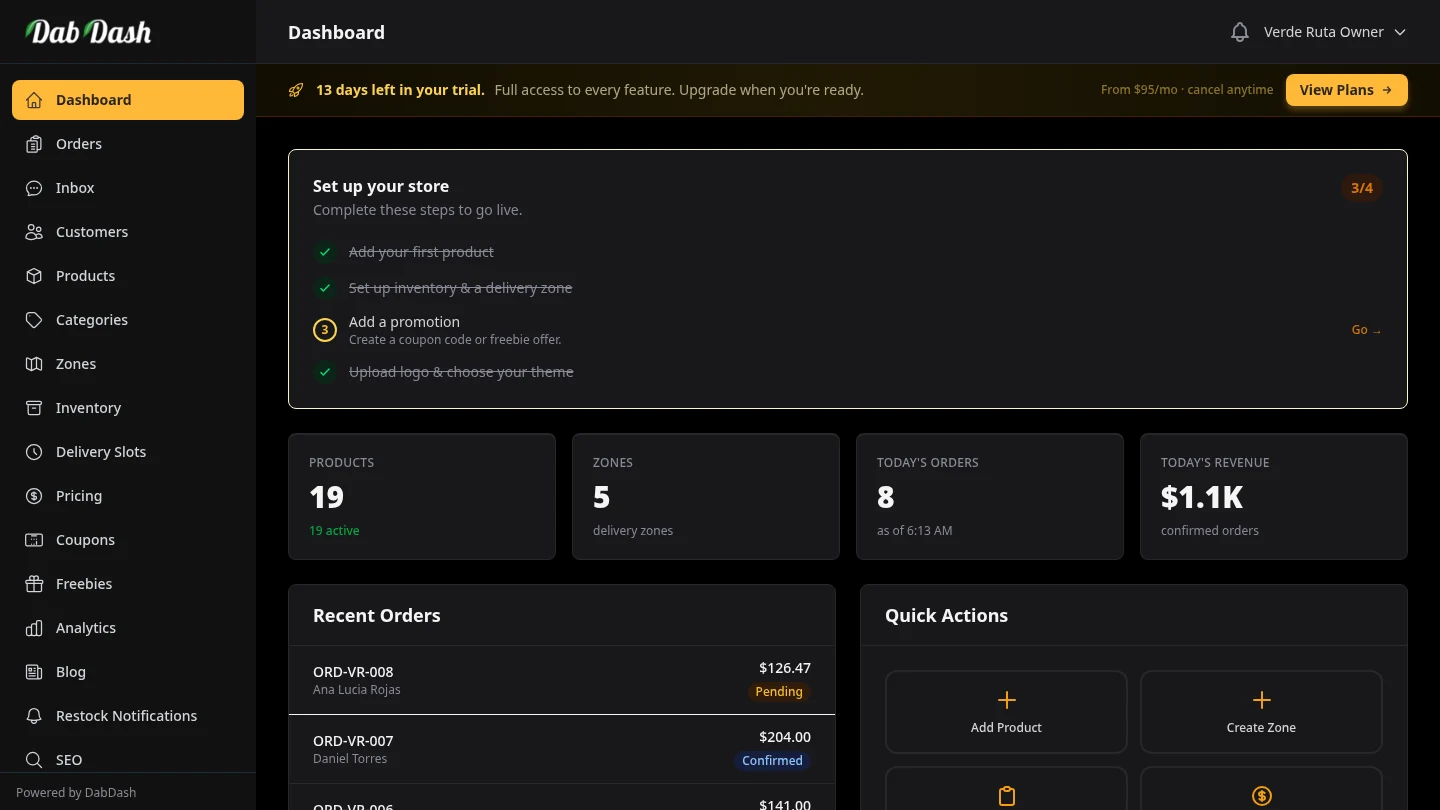
DabDash shows every order in one clean screen — items, customer, address, driver status. No POS hardware required.
Pricing: no self-serve, no public numbers
Treez does not publish pricing. Every path on their website leads to "book a demo." Industry sources cite starting packages in the range of $299 to $500 per month per location for a basic setup, with full-featured configurations reported at $1,000 or more per month — before add-ons for eCommerce, analytics modules, or payment processing. None of these figures are confirmed by Treez directly.
What the pricing model structure tells you is meaningful on its own: this is not self-serve software. There is no free trial, no instant signup, and no transparent tier table. You speak to a sales representative, go through a discovery call, get a custom quote based on your number of registers, locations, and required modules, and then begin an onboarding process that includes an implementation manager and a customer success manager. That process is appropriate for a retailer spending six figures a year on software. For a single-location delivery operator trying to launch quickly, it adds weeks before you're operational.
DabDash, by contrast, offers a free trial with instant access. No sales call required. You can have your storefront live, your delivery zones set, and your first order processed in the same day you sign up.
Delivery: third-party, not native
Treez supports delivery operations — but not natively. Their delivery workflow pushes orders to Onfleet, a separate third-party delivery management platform, via a one-way API integration. Orders that reach a configurable status in the Treez POS are automatically sent to Onfleet, where drivers receive assignments and GPS routing kicks in.
That architecture works for a retailer who already uses Onfleet and wants to connect it to their POS. It adds complexity and cost for anyone who doesn't. You're now managing two vendor relationships, two billing accounts, two support channels, and a data sync that can break. GPS-powered delivery updates and turn-by-turn directions — things Treez's website highlights as delivery features — are actually Onfleet features that Treez pipes into.
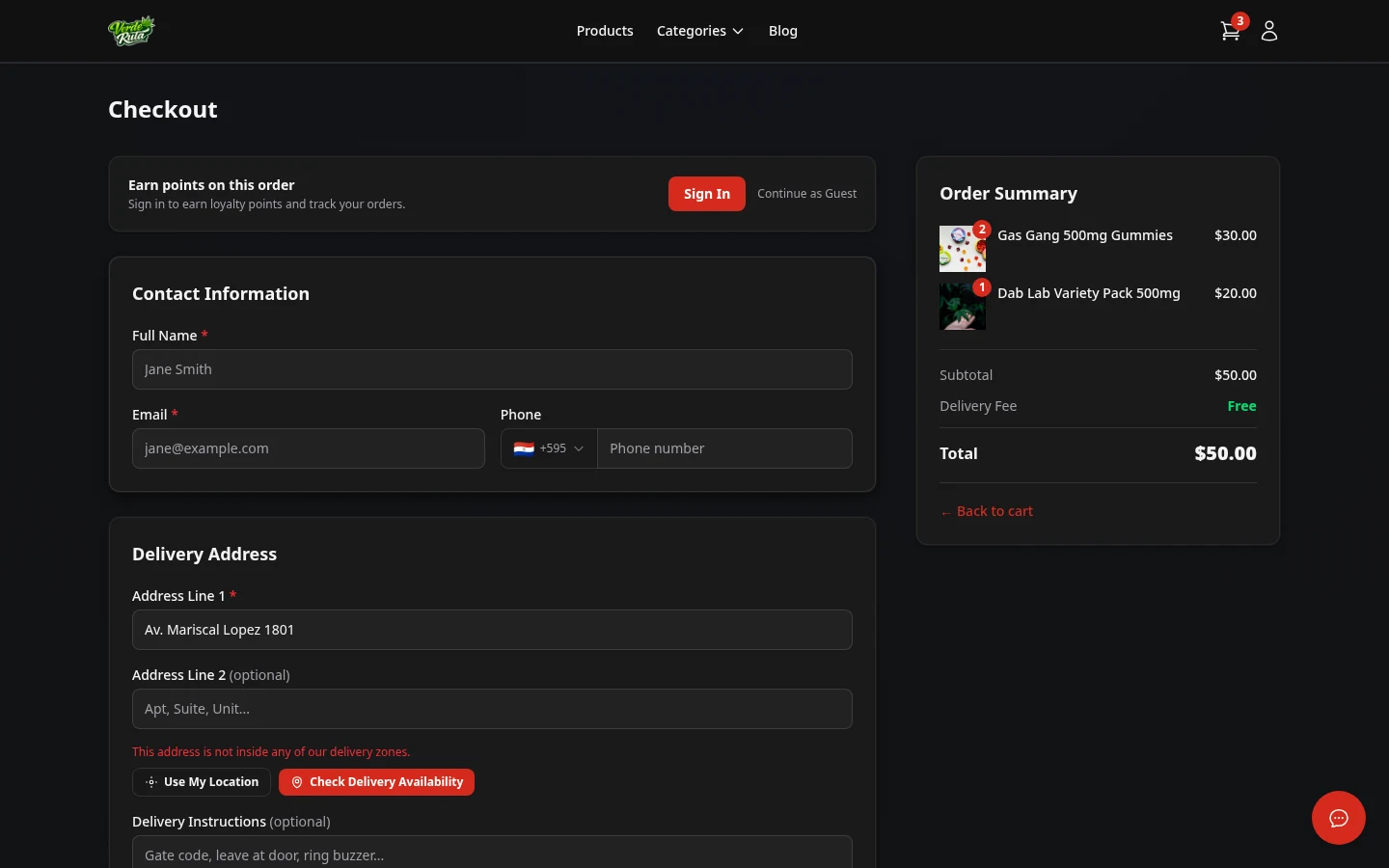
DabDash includes delivery zone management as a core part of the platform. Zones are drawn on a map, customers are automatically detected based on their address, and orders flow through the same system that manages your inventory and storefront. There is no separate delivery app to configure or pay for.
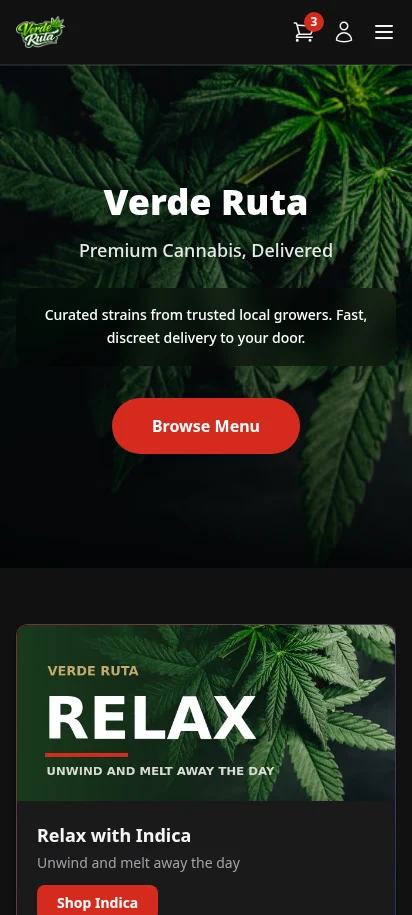
The DabDash storefront on mobile — delivery coverage is checked automatically when a customer arrives.
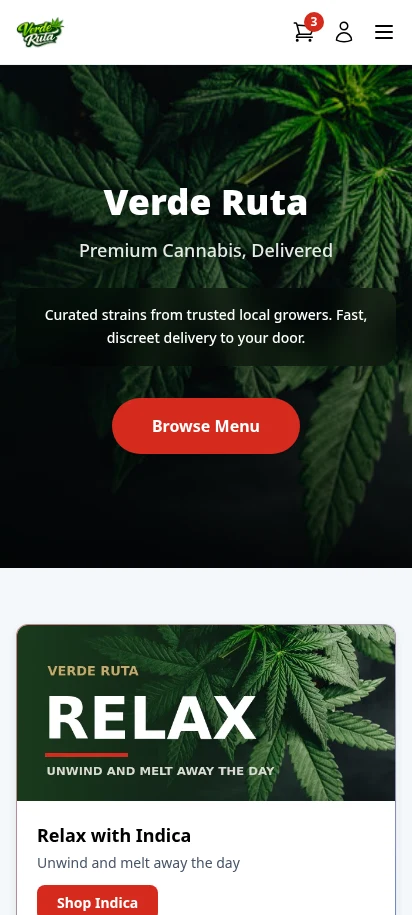
Light mode storefront — same seamless experience, fully branded to your business.
eCommerce: a newer addition, still add-on territory
Treez launched its own eCommerce product in April 2024, described as a "retailer-first" online storefront that integrates directly with the SellTreez POS. Before that, online ordering was handled entirely through third-party partners like Dutchie or Jane Technologies, which plugged into the Treez backend.
The native eCommerce product is real and offers meaningful features: SEO optimization, product pages, curbside pickup, and delivery ordering. It is available exclusively to existing Treez POS customers, meaning you need to be fully committed to the Treez ecosystem before you can access it. It's also a separate module — one more line item to negotiate into your contract.
For a delivery-only business, the storefront isn't an add-on to a POS — it is the entire customer experience. DabDash was designed with that priority from day one. Your storefront is SEO-indexed, mobile-optimized, and live immediately. There is no separate eCommerce module to negotiate or configure.
Implementation complexity: built for teams, not solo operators
Treez provides dedicated implementation managers for every new customer. That is not a luxury feature — it's a necessity for their product. Configuring a multi-register POS with Metrc compliance integration, cashless payment processing, loyalty programs, and analytics dashboards is a substantive IT project. Independent reviewers consistently note that the setup process can be complicated, especially for operators without technical staff.
Competitors reviewing Treez in 2025 and 2026 specifically flag implementation complexity as a con: "complex setup — implementation may be overly complicated for new operators," and "steep learning curve for non-technical staff" appear repeatedly in third-party comparisons. The platform is also noted as being "cost-prohibitive for early-stage single-location dispensaries."
If your background is operations or retail — not IT — a platform that requires a project manager to launch is a real friction cost. DabDash is built so that a non-technical operator can get from signup to first sale without touching a line of code or calling support.
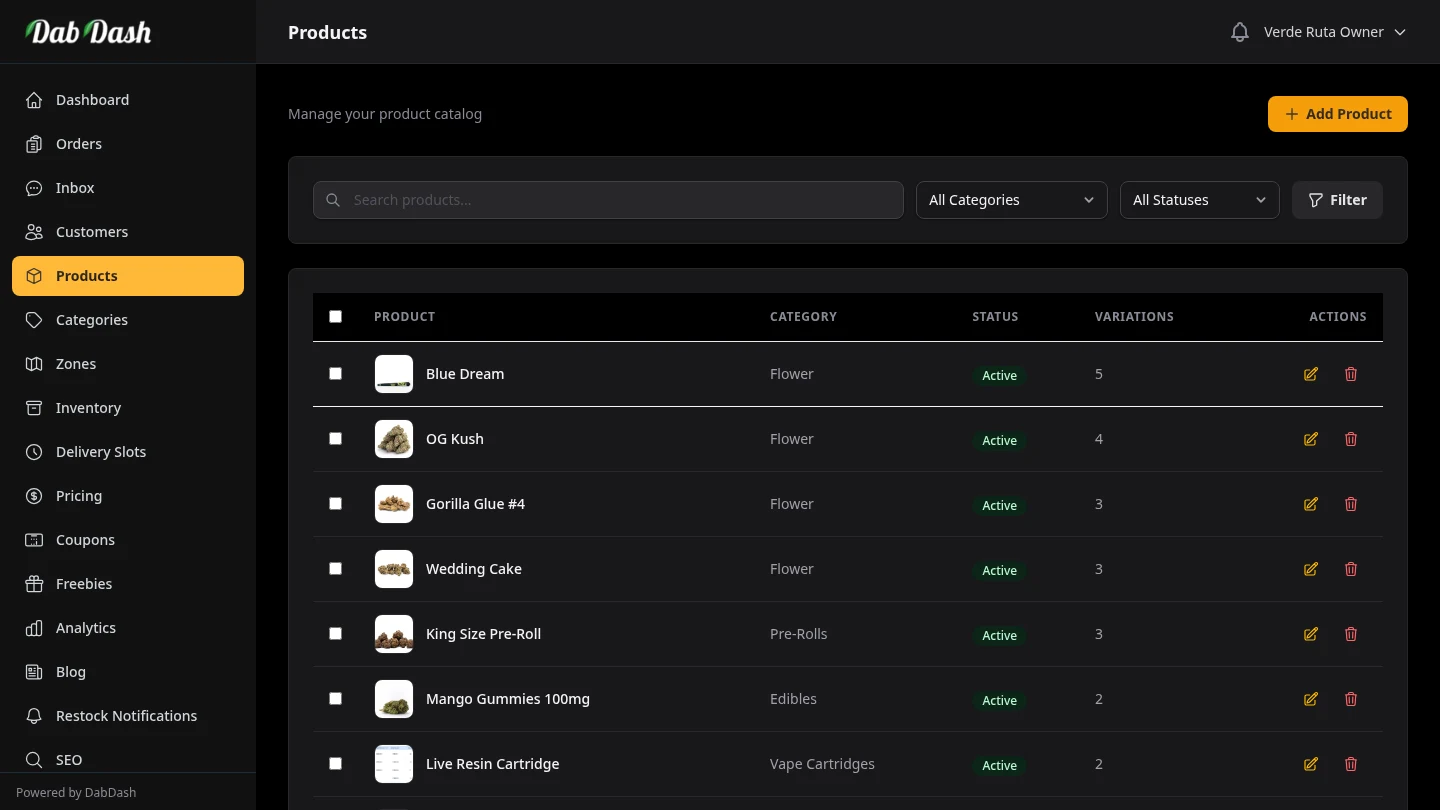
Product management in DabDash — add products, set pricing tiers, and publish to your storefront in minutes.
Where Treez wins
Being direct here matters: Treez is not a bad product. For the right operator, it may be the right product.
If you run multiple retail locations with physical storefronts, walk-in customers, and compliance obligations across more than one state, Treez's enterprise feature set — Metrc automation, multi-location analytics, retail-floor POS hardware support, and a dedicated support team — is genuinely valuable. The platform has real scale and has processed billions in cannabis transactions. That track record counts for something.
The question is whether those features are solving problems you actually have. Most cannabis delivery operators in Canada and regulated US markets have one location, no retail floor, and a handful of drivers. The features that make Treez powerful at scale are the same features that make it expensive, slow to implement, and over-engineered for your operation.
Order management on mobile — check status, review items, and update orders from anywhere.
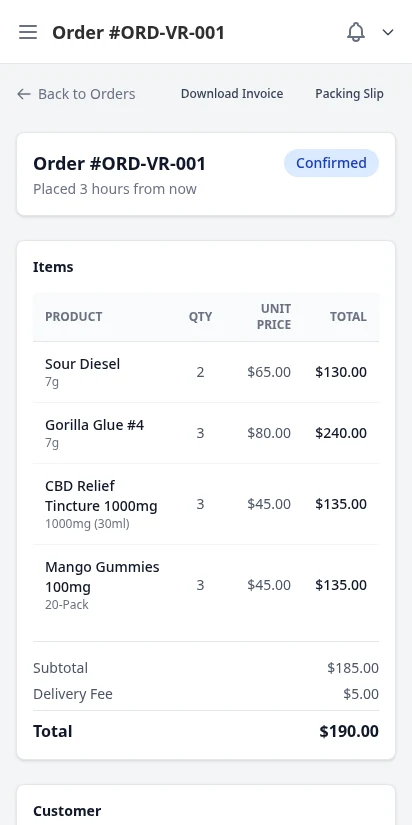
Light mode vendor admin — the same full order detail, optimized for any device.
DabDash vs. Treez: side by side
Treez
DabDash
Best for
Enterprise MSOs, multi-location retail
Delivery-first operators, single location
Pricing
Custom quote, no public pricing
Transparent plans, free trial
Setup
Dedicated implementation manager required
Self-serve, live same day
Online storefront
Add-on module (Treez eComm, POS customers only)
Built-in, SEO-indexed, included
Delivery management
Via Onfleet integration (third-party)
Native delivery zones and order flow
In-store POS hardware
Full retail POS suite
Not applicable (delivery-only)
Multi-location support
Core feature
Single-location focus
Compliance (Metrc)
Deep native integration
Delivery compliance tooling
Customer payments
TreezPay (debit/ACH, in-store)
Cash on delivery
eCommerce SEO
Available via eComm module
Built-in, every page indexed
The bottom line
Treez is enterprise software priced and built for enterprise operators. If your business has multiple retail locations, a compliance team, and a budget that supports custom software contracts, it may be the right tool. But "enterprise-grade" is not a synonym for "better" — it means more complex, more expensive, and slower to move.
Cannabis delivery is a focused problem. You need a storefront customers can find and use on their phone, a clean way to manage your menu and inventory, and a reliable order flow from placement to doorstep. You do not need retail POS hardware, multi-store analytics dashboards, or an implementation project manager to get started.
DabDash was built specifically for delivery operators. The storefront is built in and SEO-ready. Delivery zones are drawn and managed without third-party tools. Orders flow through a single system. You can start a free trial today and be operational before the end of the week.
Start your free DabDash trial and see how a delivery-first platform handles the specific job you're actually trying to do.
FAQ
Common Questions About DabDash vs. Treez: Do You Really Need Enterprise MSO Software for Your Delivery Shop?
Quick answers to the most common follow up questions readers search after exploring this topic.
Is DabDash a good Treez alternative for small delivery operators?
Yes. Treez is enterprise software designed for multi-location retail dispensaries with physical storefronts. DabDash is built specifically for delivery-first cannabis operators, with a built-in SEO storefront, native delivery zone management, and self-serve setup that gets you operational the same day you sign up — no sales calls or implementation managers required.
How much does Treez cost?
Treez does not publish pricing. All plans are custom-quoted through a sales process after a demo call. Industry sources estimate starting packages in the range of $299 to $500 per month per location, with full-featured configurations reported at $1,000 or more per month before add-ons. DabDash offers transparent, publicly listed pricing with a free trial and no custom contracts.
Does Treez support cannabis delivery operations?
Treez supports delivery through a third-party integration with Onfleet, a separate delivery management platform. Orders are pushed from the Treez POS to Onfleet in real-time, where GPS routing and driver dispatch happen. This means delivery operators need a separate Onfleet subscription and account. DabDash includes delivery zone management natively — no additional tools or subscriptions required.
What is Treez built for?
Treez is an enterprise cannabis retail platform built primarily for multi-location dispensaries and multi-state operators (MSOs) running physical retail storefronts. Its core strengths are in-store POS, Metrc compliance automation, retail analytics, multi-location inventory management, and cashless payment processing for walk-in customers. It is not purpose-built for delivery-only operations.
Does Treez include eCommerce and online ordering?
Treez launched its own eCommerce product in 2024, available as an add-on module exclusively for existing Treez POS customers. Before that, online ordering was handled through third-party integrations. The eCommerce module offers SEO features, delivery ordering, and curbside pickup, but requires you to already be on the full Treez platform. DabDash includes a built-in, SEO-indexed online storefront for every account at no extra cost.
How long does Treez implementation take?
Treez provides a dedicated implementation manager for every new customer, which signals that setup is a structured multi-step project rather than a self-serve process. Third-party reviews consistently flag implementation complexity as a con, particularly for operators without technical staff. DabDash is self-serve: you can create your account, configure your zones, add your products, and launch your storefront without any onboarding assistance.
Does DabDash handle cannabis compliance reporting?
DabDash includes compliance tooling designed for delivery operations. For deep Metrc integration on the retail-floor side — the kind that syncs across multiple physical registers and locations — Treez has more extensive built-in compliance features. DabDash focuses on the compliance requirements delivery operators actually face, without the overhead of a full retail compliance suite.
Can I switch from Treez to DabDash?
Yes. You can start a free DabDash trial and build out your storefront, delivery zones, and product catalog in parallel before committing to a switch. DabDash is designed for delivery-first operations, so if you are moving away from a retail-POS-heavy platform like Treez toward a delivery model, the transition is straightforward. Your product data, customer records, and order history from Treez are yours to export.